


Weak Regulation Fuels Election Violence: TIB
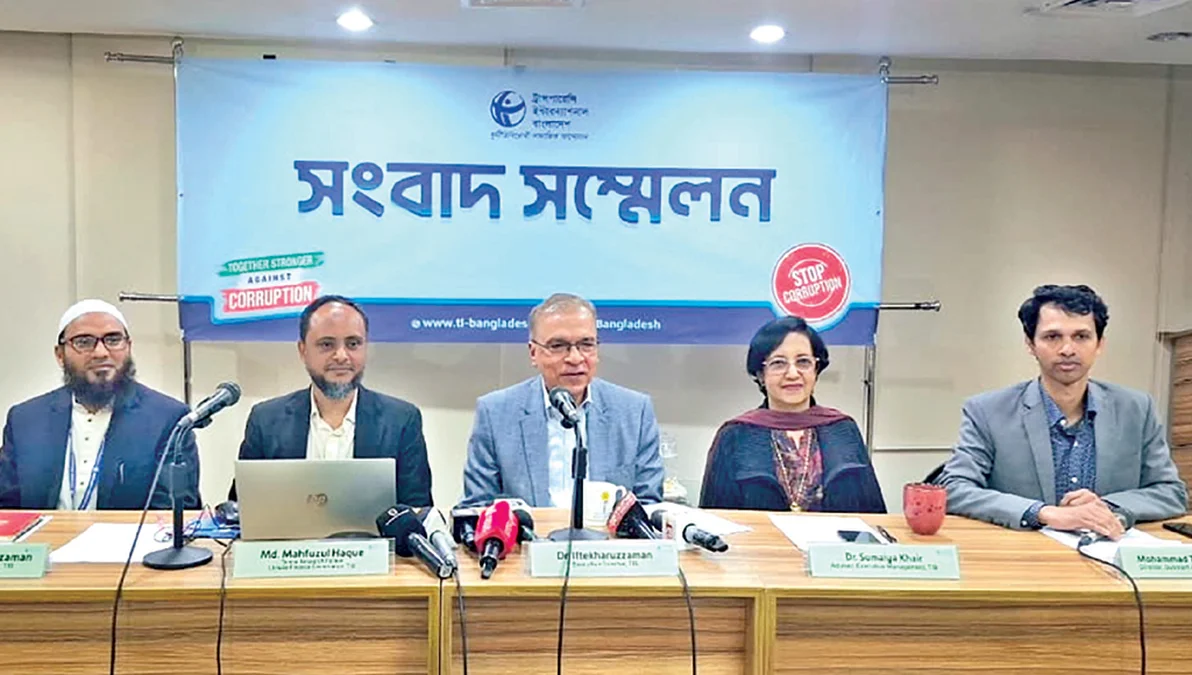
Transparency International Bangladesh (TIB) on Sunday said that most political parties and candidates contesting the 13th Jatiya Sangsad election continue to practise traditional violent politics, raising serious concerns about the overall electoral environment.
In a briefing on the pre-election situation, the anti-corruption watchdog also warned of significant election-time risks, noting that competing parties are conducting campaigns through muscle power, excessive use of money and the misuse of religion.
Speaking to journalists at the MIDAS Centre in Dhaka, TIB Executive Director Dr Iftekharuzzaman said it has become increasingly clear that the Election Commission and other regulatory bodies lack the capacity to ensure a free, impartial and transparent election.
He said these institutions have also failed to create a level playing field for all contestants or to guarantee a peaceful polling process.
According to him, the Election Commission, largely due to its inability to take decisive action, appears to be overlooking widespread violations of the electoral code of conduct and other irregularities committed by political parties and candidates at almost every stage of the election, including both online and offline campaigning.
Earlier at the briefing, Iftekharuzzaman strongly condemned the military’s pickup of all staff members of a news outlet on Saturday night. Describing the incident as a serious threat to media freedom in Bangladesh, he termed the action an example of medieval-style repression, although the journalists were later released.
At the briefing, Md Mahfuzul Haque presented TIB’s observations on the pre-election and referendum situations. Citing TIB research, he said that 33.8 per cent of candidates exceeded the official election spending ceiling. On average, those candidates spent Tk 11,961,310 between December 4, 2025 and February 1, 2026.
He also noted that despite a commitment in the July National Charter 2025 to ensure at least 5 per cent nominations for women, women accounted for only 4.05 per cent of total nominations in the election.
In addition, 29 political parties failed to nominate a single candidate from religious or ethnic minority communities, he said.
According to the TIB study, Bangladesh Television allocated a total of 446 hours and 19 seconds of its 8:00pm prime-time news to election-related coverage involving political parties and candidates between October 1, 2025 and January 31, 2026. The estimated advertising value of this coverage stood at Tk 401,68500, and the coverage was dominated by a particular political party, although the party was not named.
Addressing the referendum issue, Iftekharuzzaman said the interim government’s hurried decisions, including the issuance of the relevant ordinance to appease major political parties, had created confusion, controversy and debate regarding the content and questions of the referendum.
He questioned the plan to hold the general election, referendum and upper house vote on the same day, calling it contentious.
He also criticised the lack of consultation and coordination between the Election Commission and the interim government, particularly before both institutions took a public position in favour of a ‘yes’ vote in the referendum.
“As a result of unilateral and arbitrary actions by both the interim government and the Election Commission, unnecessary controversies have emerged surrounding the referendum,” he said.
TIB Executive Management Adviser Professor Sumaiya Khair and Research Director Muhammad Badiuzzaman were also present at the press briefing.