
ARSA–RSO Clash with Arakan Army, Panic Spreads on This Side of the Border
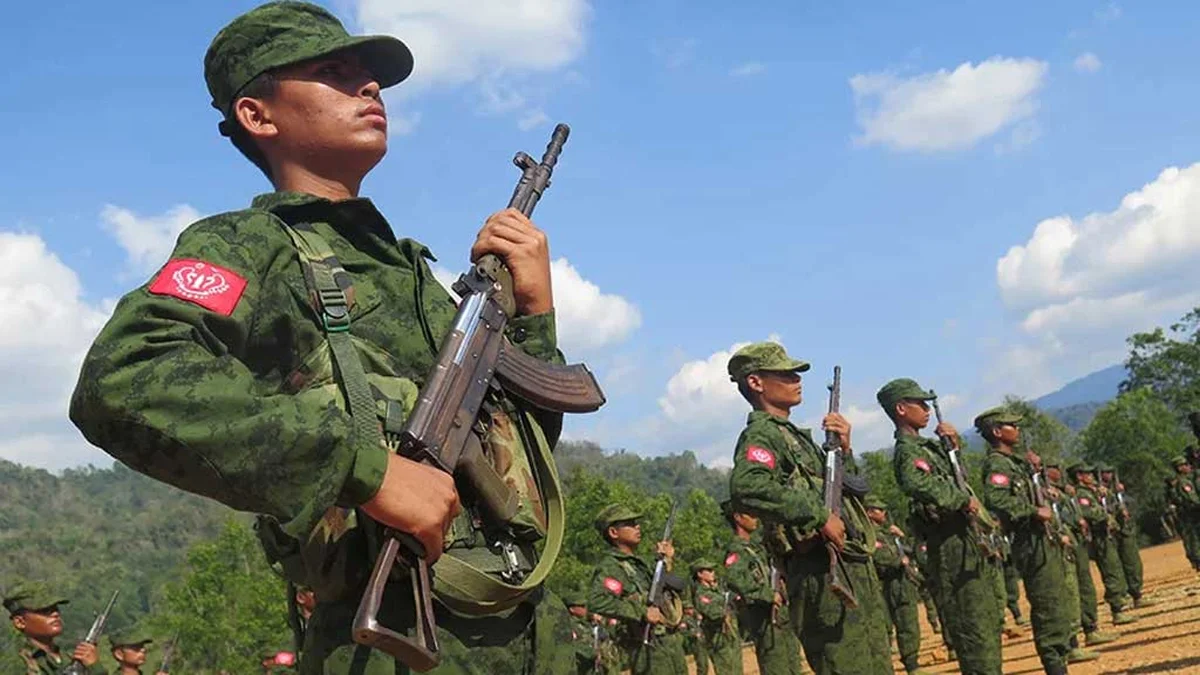
After the armed rebel group Arakan Army (AA) took “absolute control” of Rakhine State from the Myanmar military junta, the Bangladesh–Myanmar border remained somewhat calm for a while. But recently, renewed clashes across the border have once again caused panic among residents of Ukhiya and Teknaf.
Bullets and shells fired from about two and a half kilometres away across the Naf River have been falling inside the homes of people in Teknaf’s Hwaikyang Union. On October 25, a bullet that crossed the border injured Chenwara Begum of the Techhibridge area.
One bullet even landed inside a nearby shop that same day. The following day, October 26, a bullet pierced the tin roof of the house of Ayub Islam in Amtali village.
If the Myanmar military has retreated, then who is fighting the Arakan Army?
Mohammad Siddique, a majhi (block leader) at Rohingya Camp-3 in Ukhiya, said, “My friends and relatives across the border (in Rakhine) are saying that deadly fighting is taking place between the Arakan Army (AA) and ARSA members in areas like Shahab Bazaar and Kyauk Pan Du. We heard that several fighters from both sides have been killed.
“Some Rohingya from the camps have also been injured in the clashes. I heard that there was a group of around 17 people—some of them have been killed, and some are still missing.”
Rohingyas displaced from their homes in Maungdaw and Buthidaung say that both the Myanmar junta forces and ARSA–RSO are fighting against the Arakan Army. The junta wants to regain its lost bases, while the Rohingyas hope to return to their homeland.
Amid this, the inevitable consequences of conflict in Rakhine have turned the 217-kilometre Bangladesh–Myanmar border into a zone of fear.
Landmine explosions, stray bullets, fishermen being detained at sea, Rohingyas fleeing across the border in fear, and injured fighters crossing into Bangladesh for treatment—these incidents are occurring frequently.
Public representatives and law enforcement officials do not want to speak openly about these issues. However, international media have been publishing reports on Myanmar’s violence, including descriptions of the situation in Rakhine and the activities of the Arakan Army.
‘Success’ in the Past and Signs of a ‘Stalemate’
The sweeping successes achieved in 2024 by Myanmar’s rebel groups against the junta included the Arakan Army’s “Rakhine victory.”
According to the BBC, the “Brotherhood Alliance” that fought the Myanmar military comprised three armed groups—the Arakan Army (AA), the Ta’ang National Liberation Army (TNLA), and the Myanmar National Democratic Alliance Army (MNDAA).
The international context surrounding Myanmar, the supply of heavy weapons, and the unification and resource-sharing among rebel groups helped drive the military junta out of key trade routes and strategic bases. Riding on these successes, the Arakan Army quickly captured 14 out of Rakhine State’s 17 administrative regions.
But within a year, the Myanmar military has begun regaining control in Shan and Kachin states, forcing rebel groups to retreat. MNDAA has now agreed to stop fighting the junta. As a result, observers monitoring Myanmar’s conflict say that the “success story” of a year ago now appears to be turning into a “stalemate.”
They add that although the Arakan Army has not yet fallen into a situation as dire as the rebels in Shan or Kachin, it is struggling to control its bases in Rakhine and maintain discipline due to the increasing activities of ARSA and RSO.
Recently, AA chief Tun Myat Naing even accused “Bangladeshi officials” of supporting ARSA and RSO in their attacks—an allegation the Border Guard Bangladesh (BGB) dismissed as “misleading.”
BGB stated that it considers both ARSA and RSO as threats to border stability.
“Longstanding conflicts in northern Maungdaw have pushed the Arakan Army into deep crisis. Involvement in the drug trade, disputes over loot-sharing, declining morale, and mental exhaustion have caused many fighters to desert,” BGB said.
War, Gunfire, and Widespread Fear
Officials and locals believe that ARSA and RSO have increased the pace of their armed operations. Residents say that heavy gunfire is heard almost every night from across the border, along with occasional explosions.
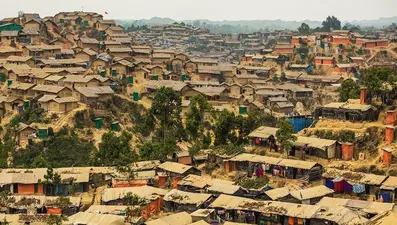
Villages such as Rahmater Beel, Dhamankhali, Thaingkhali, Balukhali in Palongkhali Union, and Tumbru West Para in Naikhyangchhari have all experienced panic due to stray bullets.
Komroddin Mukul, a teacher from Thaingkhali, said, “We heard intense gunfire at night. It seemed like a major battle was happening. I’ve never heard such sounds before.”
A Rohingya majhi said that fighting between ARSA and the Arakan Army is ongoing in the Dhekubonia area of Maungdaw District across the border.
Palongkhali Union Parishad chairman and member-secretary of the Rohingya Repatriation Struggle Committee, Md. Gafur Uddin Chowdhury, said, “We frequently hear gunfire and explosions across the border. And just one kilometre from here lies the massive Rohingya camp. We locals are living in extreme uncertainty. Shells often fall into nearby villages. At night, the sound of gunfire creates panic among residents. Border security is now truly under threat.”
He added, “These conflicts are Myanmar’s internal issues. But we are suffering their consequences daily in Bangladesh’s border areas.”
However, in Alikadam of Bandarban, Kurukpata Union Parishad chairman Kratpung Mro said, “We haven’t heard gunfire for a week. Before that, shots were heard every few days.”
He added that last year, around 8–10 thousand Rohingyas crossed the Poamuhuri border into Alikadam and spread to various places. “Especially the brokers—who were previously involved in cattle smuggling—know every path in the hills and guide people in exchange for money.”
He said some Rohingyas were “pushed back” by BGB, but brokers helped others disperse into different areas.
‘Crossing Into Bangladesh After Being Wounded in Battle’
There is information that injured ARSA or RSO members have crossed into Bangladesh for treatment, and many of them are residents of Rohingya refugee camps.
APBn, responsible for camp security, says they are unaware of such incidents.
BGB said, “Any attempt by armed groups or individuals from Myanmar to infiltrate Bangladesh will be strictly prevented.”
But bdnews24.com spoke to an injured teenage boy from Rohingya Camp-7 in Ukhiya who claimed that he crossed the Naf River with several others and fought for ARSA to “liberate the motherland.” He said they had received training in the deep forests of Rakhine.
According to him, after being shot, his comrades carried him to the border. Others on the Bangladeshi side rescued him and took him first to a hospital in Ukhiya, and later to a hospital in Cox’s Bazar as his condition worsened.
Another 28-year-old Rohingya from the same camp said the conflict between ARSA and the Arakan Army has intensified in recent months.
Claiming to be a “fighter,” he said, “They cannot stop us. We have captured around seven camps so far, which were previously controlled by the Arakan Army. Many people have been killed.”
He added that ARSA’s bases are in the forests of Maungdaw and that they now possess heavy weapons and drones, though he does not know the source.
Majhi Siddique said he also heard that many injured Rohingyas have recently crossed into Bangladesh.
“I heard that several wounded Rohingyas have arrived at Shah Porir Dwip in Teknaf. But we could not confirm their identities.”
He reiterated that a group of 17 fighters had been involved in recent clashes—some killed, others missing.
From conversations with contacts across the border, Siddique learned that the situation in Myanmar’s border areas is becoming more complex, and many Rohingya villages have become nearly empty due to continuous fighting.
BGB Says ‘Strict’, APBn Says ‘No Information’
APBn-8 commander Riaz Uddin Ahmed said that any information about border crossings would be with the BGB. “We have no such information from the camp side. If we get any, we will inform the authorities.”
Lt. Col. Mohammad Jasim Uddin, BGB-64 Commander in Ukhiya, said, “Conflicts occur inside Myanmar from time to time, but none of this is happening inside Bangladesh. We are on maximum alert. BGB is always ready to maintain peace at the border and protect national sovereignty.”
He added that extra patrols and equipment have been deployed and urged border residents to remain cautious but not panic, and to avoid rumours.
About ARSA and RSO
ARSA is an armed Rohingya insurgent group formed over a long period. The group has also been accused of asserting dominance in the Rohingya camps, engaging in drug trafficking, and causing violence.
In March this year, ARSA chief Ataullah Abu Ammar Jununi was arrested in Mymensingh city and remains in prison. Police had said most of the accused in the case against him were residents of Rohingya camps.
Malaysia has designated ARSA as a terrorist organisation. There are allegations that ARSA collaborates with Myanmar’s military junta.
RSO, both a political and armed group, emerged in 1982 amid military operations in Rakhine. After Myanmar’s 2021 coup, the group rearmed.
Due to repeated genocides and persecution by the Myanmar military, around 1.3 million Rohingyas have sought refuge in Bangladesh over time. ARSA and RSO are now accused of fighting alongside the junta against the Arakan Army.
RSO has long opposed ARSA. It has also been accused of forcibly recruiting Rohingya children from camps in Bangladesh.
Source: bdnews24