
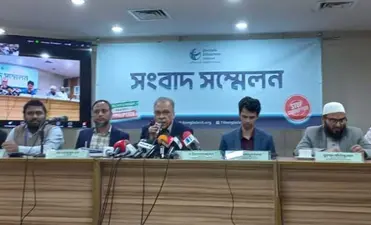

Advisors gave no response as women’s commission faced attacks: TIB

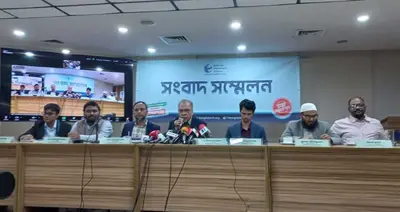
Transparency International Bangladesh (TIB) Executive Director Ifthekharuzzaman has said he repeatedly appealed to members of the interim government for action as hostility intensified around the Women’s Affairs Reform Commission, but no effective response was provided.
Speaking on Saturday at the opening session of the Bangladesh Energy Summit at the Military Museum in Dhaka, he said he had directly approached at least seven advisors while “abusive” campaigns escalated and commission members faced growing security threats.
He noted that he had urged the advisors to clearly express the government’s stance in support of the commission, but was only told that the report was “not a government report.” He questioned why a commission’s findings should be dismissed on that basis and said such reactions had emboldened groups attacking the commission’s work.
According to him, the government failed to show the resolve needed to confront the vulgar attacks or to defend the commission’s recommendations. Instead, he said, the authorities appeared to concede ground to those leading the campaign against the reforms.
The interim government, formed after the fall of the Sheikh Hasina administration, has established 11 reform commissions. The Women’s Affairs Reform Commission submitted its report to the chief advisor on Apr 19, containing 433 recommendations. Backlash erupted almost immediately, targeting both the commission and its proposals.
Earlier in the event, Environment Advisor Syeda Rizwana Hasan urged civil society and the private sector to engage more proactively rather than relying solely on the government. She encouraged them to reach out to her or relevant ministries directly, even via WhatsApp.
In response, Ifthekharuzzaman said that even direct appeals to advisors had failed to yield action. He added that women’s rights had suffered a severe setback over the past 18 months, leaving Bangladesh far behind its potential progress.
He linked this situation to political dynamics and powerful groups resisting equality across religious, cultural, and identity lines, adding that expectations for improvement after the end of authoritarian rule had not been met.