Cost of Two New Metro Rail Lines Expected to More Than Double Previous Estimates
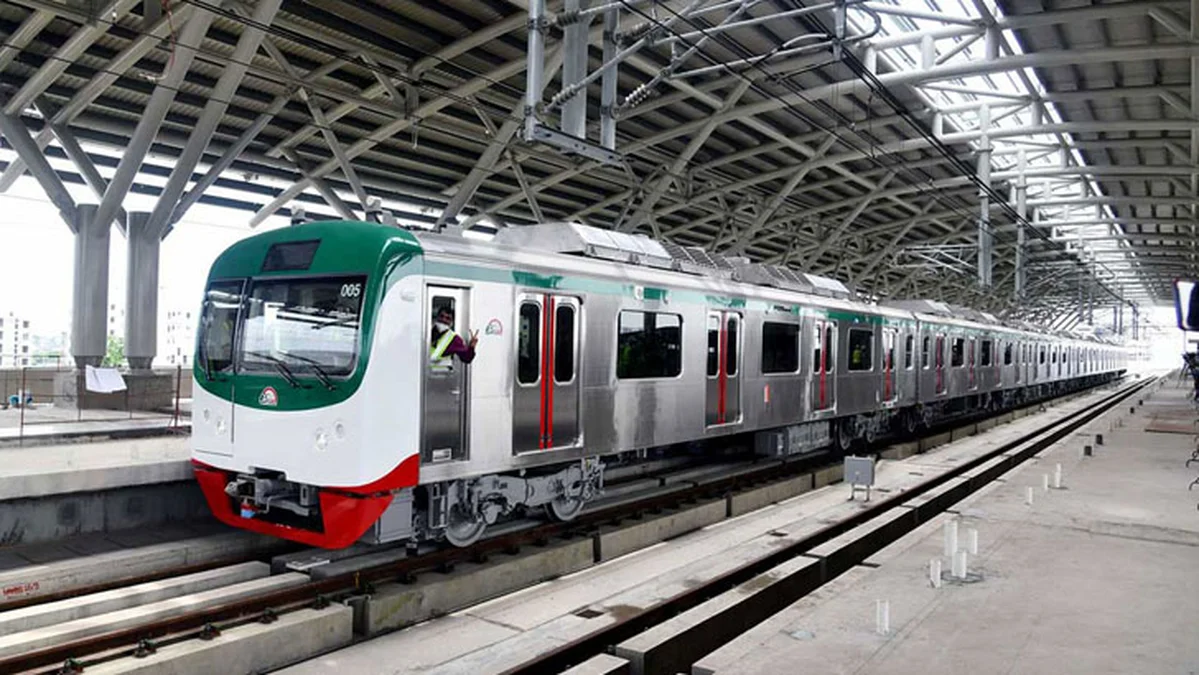
The construction cost for two new metro rail lines in the capital is projected to be more than double the previous estimates. On the Uttara–Motijheel line, the average cost per kilometer was 15.74 billion BDT, whereas for MRT Line-1 and Line-5 (North), the potential cost is projected at 36.18 billion BDT per kilometer. According to contractor proposals, the total cost could reach around 1.845 trillion BDT, nearly twice the approved budget.
MRT Line-1 (Kamlapur–Airport and Nadda–Purbachal, over 31 kilometers) and MRT Line-5 (North) (Hemayetpur–Mirpur–Gulshan–Vatara, nearly 20 kilometers) will both include partially elevated and partially underground tracks. When approved in 2019, Line-1’s cost was estimated at 525.61 billion BDT; current tender analyses suggest it could rise to 965 billion BDT. For Line-5 (North), the estimated cost could increase from 412.38 billion BDT to 880 billion BDT.
At the center of concern are the conditions set by the Japanese development agency JICA, the project financier. According to DMTCL officials, engineering requirements have limited competition primarily to Japanese contractors, reducing tender competition and driving costs up abnormally. Analysts say that without open competition, cost control is unlikely.
Questions have also arisen regarding the tender process. Although 13–15 companies submitted preliminary bids for the two packages, only two consortia submitted final offers — one led by Shimizu Corporation and another joint consortium of Taisei Corporation and Samsung C&T. In one package, Shimizu submitted the lowest bid, while in the other, Taisei-Samsung was the lowest bidder, raising suspicions of collusion. DMTCL has decided not to accept the Taisei-Samsung bid and is also considering not appointing Shimizu.
For comparison, the expansion of the Uttara–Motijheel (current MRT-6) line, covering 21.26 kilometers, cost a total of 334.72 billion BDT. The new lines, however, are approaching three to four times that cost per kilometer. Analysis from other Asian countries suggests that excluding land and salaries, per-kilometer costs range from 15–45 billion BDT. This raises concerns about gaps in planning and procurement.
The situation also has political irony. In the past, the BNP-led opposition claimed that the cost of one metro line could fund three to four more lines. Today, the reality is that the cost of a single new line is three to four times higher than before. With Prime Minister Tarek Rahman sworn in on February 17, the government faces a difficult decision: proceed with the high-cost projects or renegotiate loan conditions and open tender competition.
DMTCL has already submitted a proposal to the Ministry of Road Transport and the Planning Commission recommending project amendments, including relaxing JICA conditions and ensuring open tenders. Without cost control, servicing the loan with future revenue could be challenging, as current line ticket sales generate about 40 billion BDT annually, while annual debt repayment ranges from 46.5–74 billion BDT.
Experts warn clearly: mega-projects without competition are a debt trap. The question now is whether the new BNP government will curb cost inflation through structural reform or proceed with the projects burdened by soaring expenses.