

TIB Calls for Cancellation of ‘Discriminatory’ Decision to Bear Foreign Observers’ Expenses

Transparency International Bangladesh (TIB) has demanded the cancellation of the Election Commission’s (EC) decision to bear the accommodation and food expenses of foreign observers for the 13th National Parliamentary Election. The organization stated that the decision is imprudent, discriminatory, and creates a conflict of interest, which goes against the principles of impartial election observation.
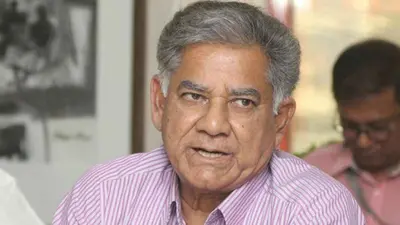
In a statement issued on Tuesday, TIB Executive Director Dr. Iftekharuzzaman said that the EC’s decision, taken on the assumption that the visible presence of foreign observers would enhance the credibility of the election at the national and international levels, may in reality produce the opposite result. According to him, by bearing the expenses of foreign observers, the Election Commission itself is calling into question the neutrality of the observation process.
Dr. Iftekharuzzaman said it is surprising that the Election Commission has failed to realize how discriminatory this decision is. If accommodation and food expenses are borne for foreign observers, the same policy should also apply to domestic observers. Otherwise, it clearly constitutes unequal treatment.
He further said that by accepting such facilities, foreign observers may face the risk of being regarded as “hired” observers. At the same time, questions remain as to how independently, impartially, and free from conflicts of interest they can evaluate the election and the role of the Election Commission after accepting the Commission’s hospitality. This is because one of the key responsibilities of observers is to assess the performance of the Election Commission as well.
Raising questions directed at foreign observers, the TIB Executive Director asked on what grounds they would be interested in carrying out such responsibilities funded by the EC or the Government of Bangladesh. Considering ethical standards and conflicts of interest, he questioned whether they would truly be able to provide objective, unbiased, and impartial assessments.
He recalled that in the 2008 election or earlier elections, there was no need to provide such facilities to foreign observers using state funds. Yet, he questioned why such initiatives were taken in the 2018 and 2024 elections.
Dr. Iftekharuzzaman said that the current Election Commission should consider how successful past efforts were in portraying elections as credible by providing facilities to foreign observers. He also expressed the expectation that the EC should not undermine the public’s aspiration for a free, fair, and credible election that has emerged after the July movement by taking any controversial decisions.