
The Language Movement Month Begins in a Different Atmosphere, Without the Book Fair Spirit
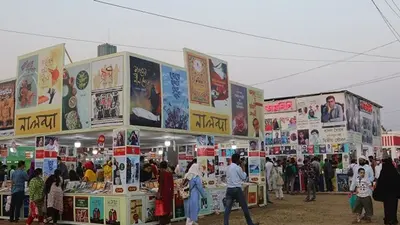
February has begun the month of the Bengali Language Movement. However, this time the beginning of February is different. Breaking a long-standing tradition, the “Amar Ekushey Book Fair” is not starting on the first day of the language month. Due to the national parliamentary elections, the book fair is not being inaugurated at its scheduled time this year.
Every year, alongside various programs commemorating the Language Movement from the very first day of February, the book fair has become an inseparable part of Bengali cultural life. The combined atmosphere of paying tribute to the language martyrs and the book fair usually marks the beginning of the language month. This year, that familiar picture is absent.
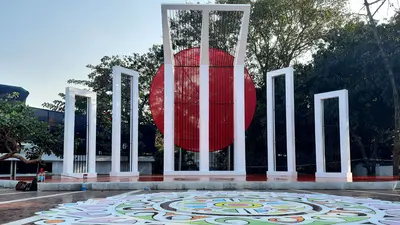
February is not merely a month for Bengalis. It is the month of sacrifice, protest, and the attainment of a language-based identity. On 21 February 1952, through the sacrifice of lives on the streets of Dhaka in demand of Bangla as the state language, the right to the mother tongue was established in the national life of Bengalis. In memory of those who were martyred that day, various programs are observed throughout the month.
The historical significance of the Language Movement received international recognition in 1999. In that year, UNESCO declared 21 February as “International Mother Language Day.” Since then, 21 February has been observed not only in Bangladesh but also in various countries around the world as a symbol of preserving the dignity of mother tongues.
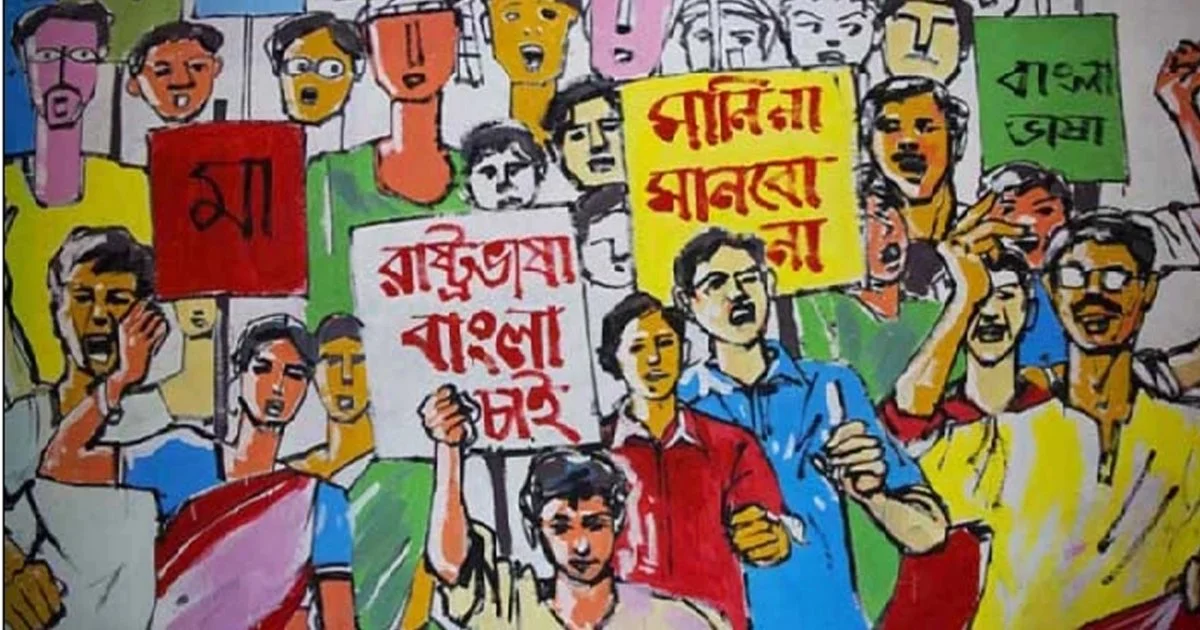
The Language Movement began immediately after the creation of Pakistan. On 21 March 1948, at a public meeting at the Racecourse Ground in Dhaka, Pakistan’s Governor General, President of the Constituent Assembly, and President of the Muslim League, Muhammad Ali Jinnah, declared, “Urdu, and no other language, shall be the state language of Pakistan.” He repeated the same statement at Curzon Hall. A few students present there protested by shouting “No, no.” Later, a group of students submitted a memorandum to Jinnah demanding that Bangla be recognized as one of the state languages of Pakistan. This marked the beginning of the state language movement.
Earlier, in September 1947, a group of students and teachers of Dhaka University formed the Tamaddun Majlish. Through meetings, assemblies, and discussions on the state language question, the organization helped organize the movement. At the same time, the State Language Action Committee was formed, which further expanded the movement.
On 2 March 1948, with the initiative of Tamaddun Majlish, Gana Azadi League, East Pakistan Student League, and other organizations, the All-Party State Language Action Committee was formed at Fazlul Huq Hall. On that day, the decision was taken to observe a general strike across East Bengal on 11 March. During the strike, when 69 people including Sheikh Mujibur Rahman, Shamsul Huq, and Oli Ahad were arrested, strikes were observed in Dhaka from 13 to 15 March.
A new wave of tension emerged in the Language Movement toward the end of 1948. At the All-Pakistan Education Conference held in Karachi, the then Education Minister Fazlur Rahman proposed writing the Bangla language in Arabic script. The following year, on 12 February, at a meeting of the Education Advisory Board held in Peshawar, he announced the abolition of Bangla script and the introduction of Arabic script. In protest, on 24 February 1949, students of the Bangla Department of Dhaka University held a protest meeting and intensified the movement to protect the Bangla script.
Gradually, the movement demanding equal status for the Bangla language gained momentum in East Bengal. To suppress the movement, the government imposed Section 144 in Dhaka, banning processions and assemblies.
On 21 February 1952, defying Section 144, students of Dhaka University and progressive political activists brought out protest processions. Police opened fire in the Dhaka Medical College area, killing Salam, Jabbar, Rafiq, Barkat, Shafiq, and several others.
The language rights achieved in exchange for blood showed Bengalis a new path socially, economically, and politically. Following that path, the movement for autonomy advanced, culminating in the birth of an independent and sovereign Bangladesh through the nine-month Liberation War in 1971.