

A Double-Edged Verdict: Caretaker Government Back, But Not for the Next Election
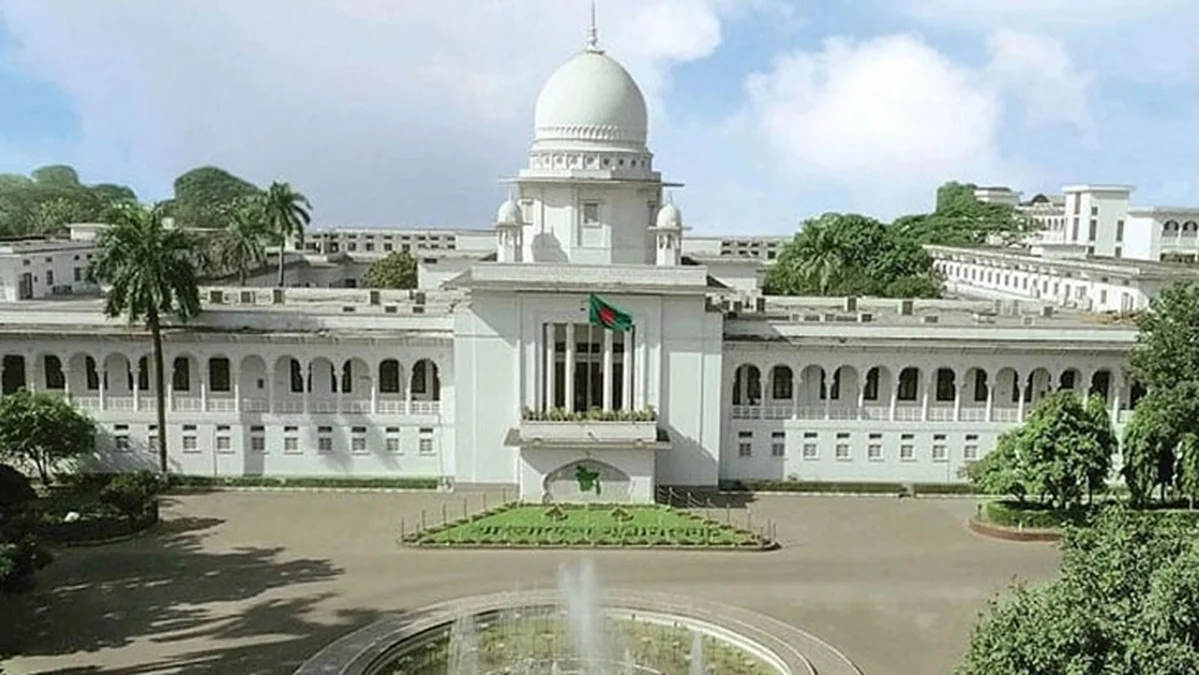
The Appellate Division of the Supreme Court on Thursday at 9:40 AM delivered a historic verdict, declaring the reinstatement of the non-partisan caretaker government system for national elections. A seven-member full bench led by Chief Justice Dr. Syed Refaat Ahmed issued the ruling. The other members of the bench are: Justice Md. Ashfaqul Islam, Justice Zubayer Rahman Chowdhury, Justice Md. Rezaul Haque, Justice S. M. Emdadul Haque, Justice A. K. M. Asaduzzaman, and Justice Farah Mahbub.
In the verdict, the Appellate Division reaffirmed the validity of the Thirteenth Amendment, stating that the caretaker government system was originally incorporated into the Constitution through this amendment in 1996. As the court has now declared it valid, the election-time caretaker government system will be legally restored. However, it will take effect only after the Fourteenth National Parliamentary Election — meaning it will not be implemented within the next six years.
The Appellate Division stated that the upcoming Thirteenth National Parliamentary Election will be held under the current interim government, and the caretaker government system will commence from the subsequent election (the Fourteenth Parliament). The court further noted that the present interim government will remain responsible for conducting the next scheduled election.
Opposition parties including the BNP have long claimed that a free and fair election is impossible under a partisan government. Their political position has been clear: they would not participate in any election without a caretaker administration. Centered around this demand, they have carried out years of movements, programs, and hardline negotiation stances.
But now, the judiciary of the interim government—whom these parties had considered sympathetic—has delivered a verdict that has become a double-edged sword for BNP and other aligned groups. On one hand, the court has reinstated the caretaker system, validating their long-standing political demand. On the other hand, the system will not take effect immediately; it will be implemented six years later. This means the next national election will still be held without a caretaker government.
As a result, the situation is now somewhat uncomfortable for the political groups currently in transitional authority. They may claim that the court has endorsed their position, yet the delayed implementation undermines the very arguments and years-long agitation they used as political leverage — effectively striking at the heart of their previous claims and movements, courtesy of the Yunus administration.
Politically, this has created a situation many describe as something they can neither swallow nor digest. Their demand has technically been fulfilled, but the benefit is not arriving anytime soon.
Overall, this verdict may have a significant future impact on Bangladesh’s electoral framework, but in the immediate political landscape, while BNP and its allies have achieved their stated demand, they also face a new strategic uncertainty. Will they accept this verdict? Will the election be held at the time declared by Dr. Yunus?
For over a decade, they roared in the streets for a “caretaker government.” Now that very roar seems to have tightened into a noose around their own political neck. The ironic question has become inevitable — So, will the next election indeed be held under a caretaker government?