


The New Front: Bangladeshi Youth Joining Pakistan’s Militant Networks
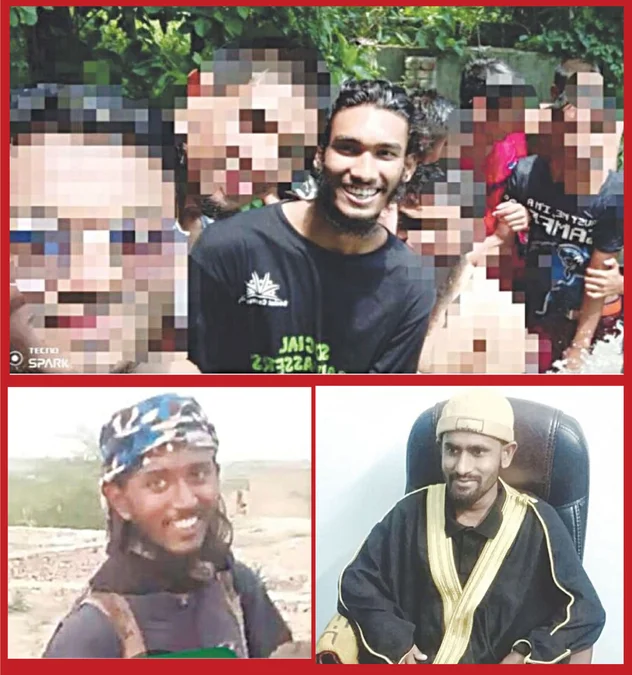
Faisal Hossain told his family he had secured a job in Dubai. In reality, the 22-year-old from Madaripur — around 100 kilometres south of Bangladesh’s capital Dhaka — had travelled to Pakistan to fight for the Tehreek-i-Taliban Pakistan (TTP), a proscribed militant organisation engaged in an insurgency against the Pakistani state to implement its own interpretation of Sharia law.
On September 26, 2025, Pakistani security forces killed Hossain in an operation in Khyber Pakhtunkhwa’s Karak district. His brother, Arman, identified him through photographs of bodies circulated in the media. Hossain is among at least four Bangladeshis confirmed killed while fighting for the TTP, referred to by Pakistani authorities as Fitna al-Khawarij. Bangladesh’s Counter Terrorism and Transnational Crime (CTTC) unit reports that approximately two dozen more Bangladeshis are currently in Pakistan, fighting for the TTP or other militant outfits — a trend that emerged in 2023 and has raised alarms in Dhaka.
Another young Bangladeshi, 22-year-old Zubair Ahmed, is believed to have been killed in April 2025. “At the end of April, I received a call from an unknown number, telling me my son was no more,” his mother, Aleya Akter, told Eos.
The Uncertain Fate of Ratan Dhali
The fate of a third Bangladeshi, 29-year-old Ratan Dhali, remains unresolved. In early November, CTTC officials informed his family that he had been killed in the September 26 operation. But on December 1, a video circulated on Bangladeshi social media featuring someone claiming to be Dhali and declaring he was alive.
CTTC Superintendent of Police (SP) Rawshan Sadia Afroz told Eos that investigators determined the video was fake and would not be conducting a forensic analysis. Meanwhile, a TTP spokesperson in Pakistan, Imran Haider — who initially confirmed Dhali’s death — later retracted his statement, claiming Dhali had merely gone missing.
Dhali’s family remains emotionally devastated. “The police told me that my son had been killed in Pakistan,” his father, Anwar Dhali, said. “Now, only God knows whether my son is alive.”
Ratan last spoke to his family on April 11, 2024 — Eid day — calling from what he claimed was Delhi and saying he would soon travel to Dubai. That was the family’s final contact with him.
Recruitment Pathway
In March 2024, Hossain told his father he intended to go to Dubai, but the family could not afford the expenses. Days later, he claimed someone would sponsor the trip and pay all costs in exchange for repayment from his future salary.
When leaving home, Hossain told his brother his visa would be issued from India — raising suspicions. He continued to call home occasionally, saying he was working in Dubai, until contact abruptly stopped in June 2024.
Around the same time, Dhali also informed his family he was going to Dubai for work at a clinic owned by his employer. Weeks later, he reported being in India, preparing to travel to Dubai — a claim that proved false.
Both men travelled through Benapole Land Port into India on March 27, 2024, later moving through Kolkata and Delhi. According to SP Afroz, they illegally crossed into Pakistan via Afghanistan, eventually joining the TTP. Both had previously worked at the Rof Rof Hijama Centre in Dhaka’s Khilgaon area, which has since moved locations.
Zubair took a different route. After travelling to Saudi Arabia for Umrah in November 2024, he entered Pakistan legally from Saudi Arabia instead of returning home. “After performing Umrah, he told us he would not return yet because he was busy spreading the message of Allah,” his mother said.
Targeting the Vulnerable
The three young men shared similar socioeconomic backgrounds. Dhali had studied only until class five; his father drives an autorickshaw. Hossain’s family lived modestly, and Zubair, though pursuing university studies, came from a middle-class household.
Their families believe they were manipulated and deceived. They demand justice and accountability for the recruiters who exploited vulnerable youths seeking better economic opportunities.
Analysts say such militant networks commonly target financially struggling young men from rural regions by promising lucrative overseas employment.
TTP spokesperson Haider, however, insists these recruits joined willingly — a claim refuted by security experts.
Scale of the Issue
According to CTTC, Bangladeshis are also joining other Pakistan-based militant organisations besides the TTP, such as TLP (Tehreek-i-Labbaik Pakistan) and IMP (Ittehad-ul-Mujahideen Pakistan). Most, however, appear to join the TTP.
Bangladesh police estimate that 25–30 Bangladeshis are currently fighting in Pakistan, with recruitment conducted largely online through manipulated religious narratives.
Security researchers note that Bangladesh has seen rising involvement of youth in foreign militant networks since 2023. The authorities have blocked several attempts and arrested individuals plotting to travel to Pakistan.
Motivations and Ideological Manipulation
Experts call this trend unusual because Bangladeshis have historically fought in various foreign conflicts — but not against a Muslim-majority country like Pakistan. The TTP claims its aim is to establish “Islamic rule” in Pakistan, alleging that the country has never fully implemented Islamic governance.
Islamic scholars in Bangladesh reject this justification, emphasizing that Islam does not endorse waging war against another Muslim state. However, once radicalised, youths often lose the ability to think critically or question extremist narratives.
Militancy within Bangladesh
Although domestic militancy in Bangladesh has declined since the 2016 Holey Artisan Bakery attack, extremist networks have adapted by shifting recruitment online and directing members to foreign theatres of conflict.
In July 2025, Bangladesh’s Anti-Terrorism Unit filed a case accusing several individuals of conspiring with the TTP. Two alleged TTP affiliates were also arrested that month.
Some banned militant groups have attempted to resurface, such as Hizb-ut-Tahrir Bangladesh, which held a public procession in 2024 demanding the establishment of a caliphate.
Meanwhile, the uncertainty facing families like the Dhalis underscores a new phase of extremism: young men disappearing across borders, families suspended between hope and grief, and a threat evolving in digital shadows beyond the reach of domestic law enforcement.
Source: DAWN