



Bloody Retaliation in Dhaka After Bikrampuri Arrest as Moghbazar Attack Kills One

Security analysts do not view the horrific violence that took place in the capital Dhaka following the arrest of al-Qaeda–linked militant leader Ataur Rahman Bikrampuri as merely an isolated criminal incident. According to them, it is a planned militant reaction and a message of retaliation—aimed at the state, society, and the space for free thought.
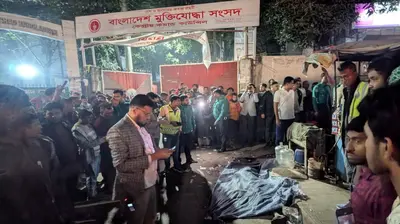
On the evening of 24 December 2025, a terrifying explosion occurred near the Moghbazar flyover in the capital, in front of the Bangladesh Muktijoddha Sangsad Command Council. Eyewitnesses said crude bombs were thrown from the flyover toward the area below, which exploded immediately upon hitting the ground. Panic spread throughout the entire area within moments.
In the attack, 21-year-old Siam Majumder was killed. He was an employee at a local motorcar decoration shop. He died on the spot. One of the busiest roads in the capital was stained with blood due to the death of an innocent young man.
According to security analysts, the site of the explosion was a regular gathering place for theatre activists and cultural workers. The selection of this location was by no means accidental. Rather, their assessment is that the place was deliberately targeted to intimidate free thought, culture, and civic gatherings.
A section of analysts believes that the attack, carried out shortly after Bikrampuri’s arrest, serves as a clear message from militant networks that despite the arrest, they remain active, organized, and capable of carrying out attacks.
Although law enforcement agencies have not yet officially confirmed a direct link, the timing, location, and method of the attack are deepening suspicion.
This incident raises fresh questions: Are militant networks once again re-emerging?
Is arrest alone sufficient, or is a deep, coordinated, and sustained operation necessary to dismantle the network?
One thing is clear—Siam was not merely a young man who was killed; he is yet another bloodstained document of state failure.
If this attack is taken lightly, responsibility will not rest solely with the attackers—the state will also have to bear that responsibility.
Militancy does not give warnings—it announces its presence in the language of blood.
Moghbazar is its latest and most horrific example.