


‘Monga’ Fear Returns as Seasonal Job Crisis Grips Rangpur’s Farm Workers
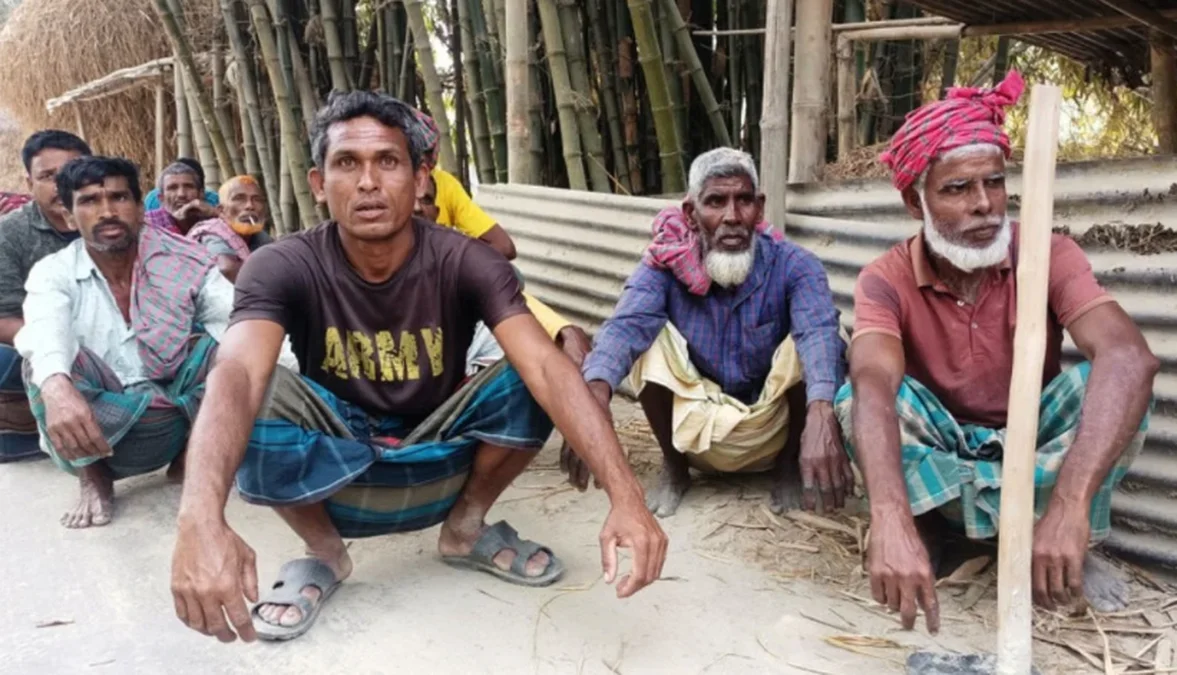
Thousands of agricultural workers in the river basin and remote rural areas of the Brahmaputra, Dudhkumar, Ghaghot, Teesta, and Dharla rivers in Rangpur Division are struggling amid a seasonal employment crisis. With two to three weeks still left before the Aman paddy harvesting season begins, day laborers are facing an acute shortage of work. The combined effect of river erosion and lack of employment opportunities has made the situation even more severe.
Every day, men and women in the chars and rural areas search desperately for work, but most return home empty-handed. Many are now selling their labor in advance at reduced rates or borrowing money at high interest from local moneylenders. The government’s 40-day Employment Generation Program for the Hardcore Poor, which was supposed to start earlier this month, has yet to begin—leaving thousands without income support during this lean season.
In Kurigram’s Phulbari upazila, 55-year-old Mohar Ali said he had been forced to borrow from a local lender at high interest to meet family expenses as the harvesting season had not yet started. In Lalmonirhat’s Kulaghat village, Aklima Begum shared a similar story, saying that both she and her husband had been jobless since early October and were surviving on loans.
Many workers have already sold their labor in advance for lower daily wages. In Rangpur’s Gangachara upazila, Aftab Uddin said he used to earn Tk 400–500 a day during the harvest season but had now agreed to work for Tk 300 a day in advance payment. In Kurigram Sadar’s Char Jatrapur area, Salem Ali said that he worked under the government’s 40-day project last year but this year it has not started yet, leaving many like him without income.
Local farmers and moneylenders are also under pressure. Hamidur Rahman, a farmer from Barovita village, said many workers were asking for advance payments, but it was impossible to help everyone. Mizanur Rahman, a moneylender from Char Kalimati, said he had been lending small amounts at low interest to help laborers, who would repay after the harvest.
According to Abdullah Al Mamun, Deputy Director of the Department of Agricultural Extension in Kurigram, this labor shortage is expected to continue until mid-November. He said that such seasonal unemployment occurs every year during this period before the Aman harvest begins.
Data from the Department of Disaster Management and Relief show that about 68,000 ultra-poor families across five districts of the Rangpur region are listed under the 40-day employment generation scheme. Each year, these families receive around Tk 16,000 in wages between October and November.
Officials say the program has been delayed due to a lack of budget allocation. H. M. Majahanur Rahman, Project Implementation Officer of Kaliganj upazila in Lalmonirhat, said the project would start as soon as the funds were released. Abdul Matin, District Relief and Rehabilitation Officer of Kurigram, confirmed that the allocation had not yet arrived and that a letter had been sent to the ministry.
Under the project, laborers typically work on repairing rural roads, filling fields of educational and religious institutions, and similar small-scale infrastructure projects. However, the delay in funding has deprived thousands of poor families of this crucial seasonal employment, raising fears that the long-feared ‘Monga’ — the seasonal famine of northern Bangladesh — could return once again.