



Common People Crushed Under Rising Essential Commodity Prices During Ramadan
As the holy month of Ramadan begins, prices of daily essentials have surged in various kitchen markets across the capital and the country. From iftar items to fruits, fish and meat—prices have increased in almost every category. This has put low- and middle-income people under pressure. A visit to the markets shows that by the second day of fasting, prices of iftar and kitchen essentials are already soaring.
Discomfort in the Iftar Market
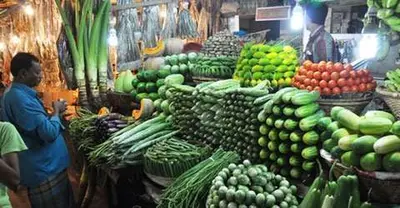
In areas including Karwan Bazar, Farmgate, Bailey Road, Banasree and Segunbagicha in the capital, vibrant displays of iftar items have been set up. However, buyers complain that at the very beginning of this month of restraint, prices of dates, lemons, eggplants, cucumbers and green chilies have gone beyond reach.
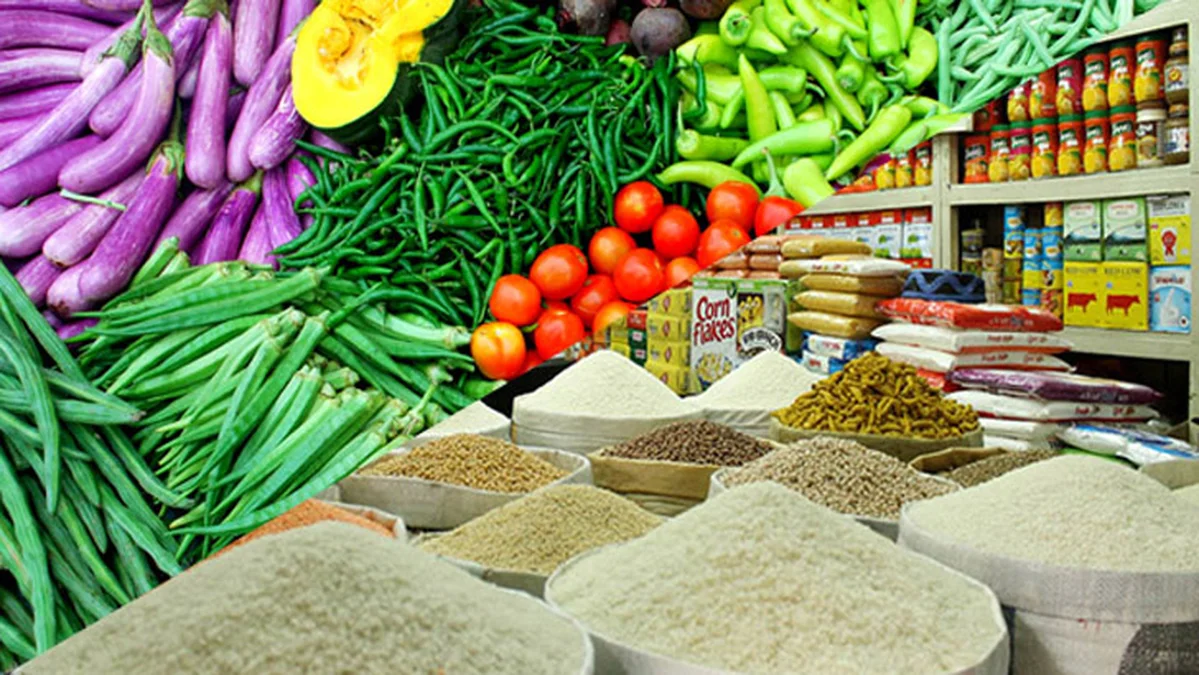
Large lemons are selling at Tk 120 per four pieces and small lemons at Tk 100, which were Tk 40-60 just a few days ago. Eggplants are priced between Tk 100 and Tk 160 per kg; round eggplants at Tk 160 and long varieties at Tk 130-140. Cucumbers have increased to Tk 120 per kg within a week. Green chilies are selling at Tk 160 to Tk 200 per kg.
The market for dates, a key iftar item, has also seen a rise. Zahidi dates are priced at Tk 350-500 per kg, Sudai at Tk 750-800, Kalmi Maryam at Tk 850-900, Mabroom Maryam at Tk 850-950, Sukari at Tk 920-950, Ajwa at Tk 950-1,000, Iranian Maryam at Tk 1,250-1,400 and premium Medjool at Tk 1,650-1,800. Compared to last year, some varieties of dates cost Tk 100-150 more per kg.
However, there is slight relief in sugar and psyllium husk. Sugar is selling at Tk 105 per kg and psyllium husk at Tk 1,000 per kg.
Rakib Hossain, a resident of Farmgate, said, “Prices of iftar items are on fire in the market. Seeing the prices of lemons and cucumbers, we have to buy smaller quantities.” Khairul Haque of Segunbagicha said that with limited income, many items have to be excluded from the shopping list.
Crowds at Iftar Shops, Higher Prices Too
In Bailey Road and Karwan Bazar areas, both temporary and permanent shops are selling various iftar items including chickpeas, beguni, piyaju, jilapi, haleem and kebabs. Chicken paratha is priced at Tk 60, egg chop at Tk 30, chickpeas at Tk 150 per kg, jilapi at Tk 230 per kg and haleem at Tk 400 per kg. Piyaju and beguni are selling at Tk 10 per piece.
At a popular establishment, keema paratha is priced at Tk 150, malai kebab at Tk 120, fish ball at Tk 90 and barbecue chicken roll at Tk 160. Vendors claim that due to rising raw material prices, they have had to adjust the prices of prepared foods.
No Relief in the Fruit Market
Demand for fruits increases during Ramadan. However, prices have also risen significantly this year. Apples are selling at Tk 380-440 per kg, oranges at Tk 350, pomegranates at Tk 560, pears at Tk 440, malta at Tk 300-350 and grapes at Tk 450 per kg. Among local fruits, Sabri bananas are Tk 120 per dozen, Sagar bananas Tk 120-150 per dozen, papaya Tk 150 per kg and guava Tk 130-150 per kg. Watermelon is selling at Tk 120-150 per kg.
Fruit trader Jahangir said that higher wholesale prices make it impossible to sell at lower rates in retail markets. However, buyers allege that raising prices during Ramadan has become a regular practice.
Fish and Meat Prices Also Rise
With the start of Ramadan, fish and meat prices have also increased. In Mohammadpur, Jigatola, Segunbagicha and Banasree areas of the capital, rohu, katla and mrigel are selling at Tk 350-400 per kg. Pangas and tilapia are priced at Tk 300-350 per kg. Hilsa, depending on size, is selling at Tk 1,200-1,800 per kg. Pabda, tengra and boal are selling at Tk 1,200-1,500 per kg.
Beef is priced at Tk 750-850 per kg and mutton at Tk 1,100-1,200 per kg. Traders claim that higher wholesale prices, transportation costs and ice expenses are affecting the retail market.
Call for Market Monitoring
Buyers allege that some dishonest traders raise prices unreasonably during Ramadan. They have demanded regular market monitoring and stronger supply management. According to economists, unless demand and supply are balanced and effective monitoring is ensured, this pressure may continue throughout the month.
The sharp rise in essential commodity prices at the very start of Ramadan has created additional strain on ordinary people’s lives. There remains uncertainty over whether the situation will stabilize in the coming days.