



Clothing Purchases Declining in the U.S. Market
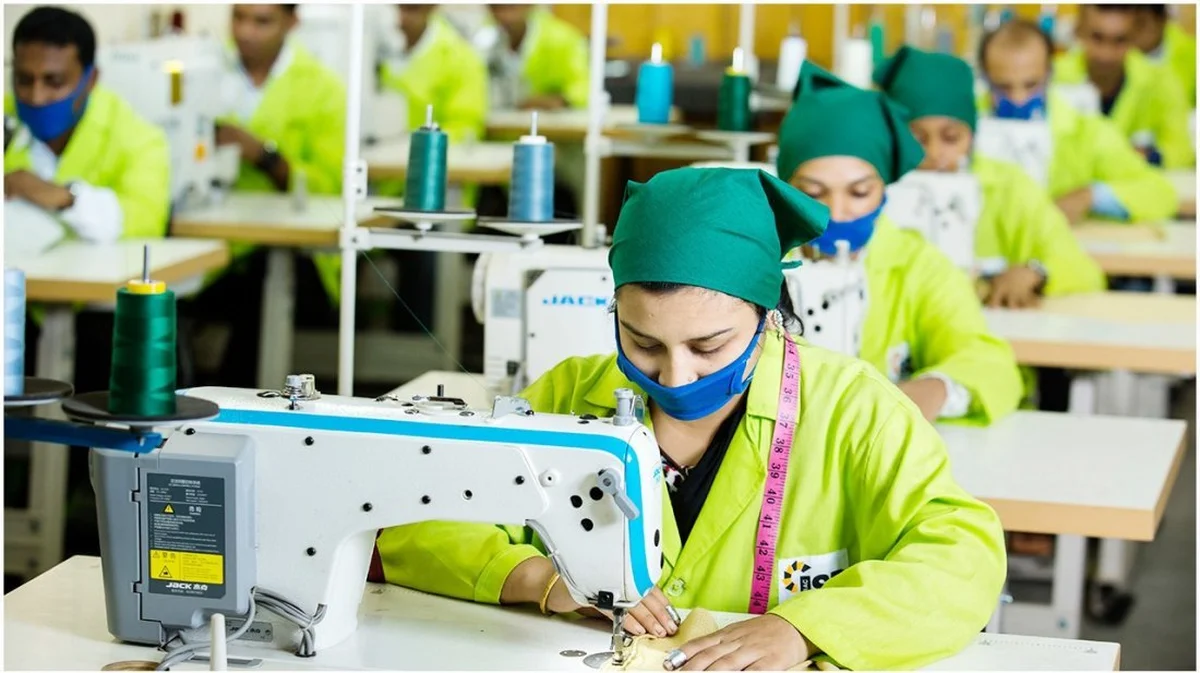
Bangladesh’s readymade garment (RMG) export sector has been facing difficulties for seven consecutive months. During the July–February period of the current fiscal year, overall exports declined by 3.13 percent to $31.90 billion due to a fall in garment exports. In the same period of the previous year, exports stood at $32.94 billion.
Revenue from the garment sector fell 13.21 percent in February, dropping to $2.81 billion. During the first seven months of the current fiscal year, export earnings from this sector declined 3.73 percent, reaching $25.79 billion.
Why garment exports have declined
A new reality has emerged in the United States, the world’s largest garment import market. Analysis of import trends from 2021 to 2025 shows that after the strong recovery in 2022 following the COVID-19 pandemic, the market has slowed down again. As a result, the global garment trade is now experiencing low growth but intense competition.
Experts say that the value of U.S. garment imports is now in many cases close to the 2021 level, and in some cases even below it. In other words, the overall size of the global garment market is not growing significantly. Instead, competition among major exporting countries to maintain or increase their market share has intensified.
U.S. buyers taking a cautious approach
During and after the pandemic, U.S. retailers and brands faced major fluctuations in demand. Although demand increased in 2022, many companies were left with excess inventory. Learning from that experience, they are now adopting much more cautious purchasing strategies.
Currently, U.S. buyers are focusing on several key issues, including strict inventory management, competitive pricing, timely delivery, and compliance with international labor and environmental standards. As a result, factories in supplier countries are under increased pressure.
Industry insiders say buyers are now placing smaller orders than before and increasing pressure to lower prices. This is reducing profit margins for many manufacturers, which poses a major challenge for the long-term stability of the industry.
President of the Bangladesh Knitwear Manufacturers and Exporters Association (BKMEA), Mohammad Hatem, said, “Export earnings have been declining for several months and this trend may continue until June. The impact of the Russia-Ukraine war on the global economy and the crisis in the banking sector are creating major obstacles. Due to banking problems, one factory after another is shutting down.”
Former BGMEA director Mahiyuddin Rubel said, “Exports to Europe and America have decreased, which has affected overall exports. We have not performed well in non-traditional markets either. Working hours were reduced in February due to elections and port closures, causing losses. The new government may offer some hope, but the Iran-U.S. conflict will further impact the global market.”
China’s influence still strong, but declining
For many years, China has been the largest supplier in the U.S. garment import market. The country still holds a significant share, particularly in complex designs, technology-driven garments, and high-value products.
However, China’s market share has been gradually declining in recent years. Several key factors are behind this change. First, labor and production costs in China have increased significantly. Second, trade and geopolitical tensions between the U.S. and China have intensified. Third, many major international brands have adopted a “China Plus One” strategy, sourcing garments from other countries alongside China to reduce supply risks.
This shift has created new opportunities for several countries in South and Southeast Asia.
Vietnam’s strong position
Among these countries, Vietnam has benefited the most from this opportunity. Over the past decade, the country has significantly strengthened its position in the U.S. garment import market.
Vietnam’s success is attributed to several factors, including modern production infrastructure, higher worker skills, and long-standing business relationships with international brands. In addition, Vietnam has benefited from multiple free trade agreements, which have enhanced the competitiveness of its products.
Industry insiders believe that Vietnam is receiving more orders, especially in the high-value and technology-intensive garment segments.
Bangladesh’s strength: volume and price
On the other hand, Bangladesh still maintains a strong position as one of the major suppliers in the U.S. garment market. For many years, the country has been considered an important sourcing destination for international brands due to its large-scale production capacity and relatively lower prices.
The strengths of Bangladesh’s RMG industry include mass production capability, export-oriented industrial infrastructure, and competitive labor costs. Over the past decade, many factories in Bangladesh have also made significant investments to ensure international safety and environmental standards.
Bangladesh is now among the countries with the largest number of green factories in the world, which has increased the confidence of international brands. As a result, Bangladesh remains a strong competitor in price-sensitive and high-volume products.
Rising new competition
However, competition in the global garment market is becoming increasingly complex. Alongside Bangladesh, China, and Vietnam, several other countries are also trying to increase their presence in the U.S. market.
India, Indonesia, Cambodia, and Pakistan are gradually specializing in certain types of products. Some are advancing in cotton-based garments, while others are developing expertise in specific fashion segments.
Additionally, due to geographic advantages, several Central American countries are trying to attract orders by offering faster delivery to the U.S. market. This near-shoring strategy is becoming increasingly attractive to many brands.
Difficult to survive on low prices alone
According to Mahiyuddin Rubel, former BGMEA director and Additional Managing Director of a denim export company, it will not be possible to maintain garment export markets in the current global situation by relying solely on low prices. Buyers are now equally focused on quality, timely delivery, sustainable production, and technological capability.
He said that to remain competitive in the future, supplier countries must focus on increasing production efficiency, developing new products, improving speed-to-market capability, and ensuring environmental and social standards.
At the same time, building long-term strategic partnerships with international brands is becoming increasingly important.
Future competition in the global garment trade
Industry experts believe that the global garment market is currently in a phase where demand is not growing rapidly, but competition is increasing steadily. New U.S. tariff policies, geopolitical tensions, and supply chain restructuring are accelerating this shift.
In this reality, countries that can invest more in technology, skills, product diversification, and sustainable production will lead the market in the future.
According to experts, the winners in the future global garment trade will be those countries and companies that not only offer low prices, but also stand out through innovation, quality, speed, and sustainable production.
Source: Bangla Tribune