



TIB Criticizes Govt for Holding Accused Army Officers in Cantonment Custody

Transparency International Bangladesh (TIB) has expressed deep concern over the government’s decision to hold military officers—accused of enforced disappearances, extrajudicial killings, and torture during a past authoritarian regime—in military custody within the Dhaka Cantonment area, rather than under civilian detention.
In a statement released today, the anti-corruption watchdog said this decision contradicts constitutional guarantees and the principle of equal treatment under the law.
TIB has called on the government to publicly explain the rationale behind treating military officers—accused by the International Crimes Tribunal (ICT) of crimes against humanity—differently from civilian accused individuals.
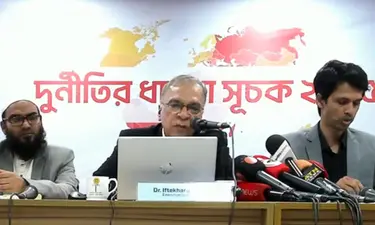
“How can identity or rank be grounds for discrimination in the trial process of crimes against humanity?” asked TIB Executive Director Dr. Iftekharuzzaman.
“There is no room for special privilege in such cases. Granting any accused person privileged treatment violates the principles of justice and equality.”
TIB questioned the justification for creating what it termed as “specialized sub-jails” for military officers inside the cantonment while civilian accused are held in standard custody.
“If every accused person is held based on their professional or institutional background, will the government set up separate sub-jails for each category? This raises serious concerns about the integrity of the legal process,” the statement said.
Violation of Legal and Constitutional Norms
Dr. Iftekharuzzaman emphasized that Article 27 of the Constitution of Bangladesh guarantees equal protection under the law, and international legal norms do not allow for any distinction in the detention or trial process based on profession or status—especially for crimes as grave as those against humanity.
He referenced a past incident where a former military officer, accused of similar crimes, was arrested by the army and handed over to civilian authorities—calling it a "positive example" of accountability.
“If such precedent exists, why are other accused army officers being held under military custody? Both the government and the military must clarify this unequal treatment,” he added.
TIB further warned that this kind of “discriminatory behaviour” may jeopardize public trust in the judicial process of the ICT, particularly among victims and their families.
“The opportunity for meaningful justice—earned through immense national sacrifice—must not be undermined by preferential treatment that contradicts constitutional commitments,” said the TIB statement.
The organization concluded by urging all authorities to take "effective measures to uphold justice, impartiality, and transparency", ensuring that no group is given undue privilege in matters involving crimes against humanity.