

Rising Inflation, Weak Business Climate Drag Bangladesh’s Economy: UN & World Bank

Bangladesh is facing the most severe inflation crisis in South Asia, according to the United Nations, while the World Bank has also lowered the country’s economic growth forecast for the fiscal year 2025–26 due to high inflation and a stagnant business environment. The latest reports from these two international organizations paint a worrisome picture of Bangladesh’s economic outlook.
The UN report highlights that average inflation in Bangladesh reached 8.9 percent in 2025, the highest among the seven South Asian countries. In comparison, India’s inflation stood at 2.7 percent and Sri Lanka’s at just 0.6 percent. Alarmingly, the UN forecasts that inflation in Bangladesh will remain high at 7.1 percent in 2026, still exceeding all other South Asian nations.
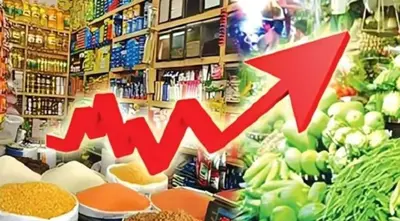
These figures are not merely macroeconomic indicators; they reflect the harsh realities of everyday life. A year ago, a typical family spent around BDT 10,000 per month on groceries, but now the same items cost nearly BDT 15,000. Teachers, salaried employees, day laborers, rickshaw pullers, and small business owners are all struggling under rising costs. Middle-class families are forced to compromise their standard of living, while low-income households are struggling to secure three meals a day.
Analysts point out that Bangladesh’s regional position is particularly concerning. Countries like Sri Lanka and Pakistan, which previously suffered extreme inflation, have managed to stabilize their economies. Bangladesh, however, has remained stuck above 8 percent for over one and a half years. Sri Lanka reduced inflation from 49 percent in 2021 to just 0.6 percent, and Pakistan brought it down from 30 percent to nearly 4 percent.
Meanwhile, the World Bank, in its Global Economic Prospects – January 2026 report, has revised Bangladesh’s growth forecast for fiscal 2026 downward to 4.6 percent from the earlier estimate of 4.9 percent. The World Bank cites high inflation, tight monetary policy, elevated interest rates, and sluggish business activity, which have suppressed investment and credit demand, as factors slowing growth.
However, the World Bank has projected a stronger growth of 6.1 percent for fiscal 2027. This optimism is based on the anticipated reduction in political uncertainty following the national elections on 12 February, structural reforms under a new government, and the potential rise in private consumption.
The World Bank also cautioned that increases in global trade tariffs or policy uncertainty could negatively affect exports and economic activity across South Asia. Given Bangladesh’s comparatively high dependence on the U.S. market, the country is particularly vulnerable.
Economists emphasize that controlling food inflation is critical to alleviating the hardships of ordinary citizens. The lack of consistent and coherent policy has hindered efforts to tame inflation. Market dominance by middlemen and syndicates, weak oversight, and inconsistent policy implementation have further complicated the situation.
The UN and World Bank reports together constitute a sharp critique of Bangladesh’s economic management. While neighboring countries are moving toward stability, analysts believe Bangladesh remains under pressure on both inflation and growth fronts.