



Crude Oil Reserves Under Pressure as New Shipment Delayed

The impact of the ongoing war situation in the Middle East and the tensions surrounding the Strait of Hormuz has begun to affect the reserves of the country’s only state-owned oil refinery, Eastern Refinery Limited (ERL). Currently, about 100,000 tons of crude oil are stored at the refinery in Chattogram, which officials say will allow production to continue for a maximum of another 20 to 22 days. If no new shipment arrives within that time, pressure may build on the refinery’s production system.
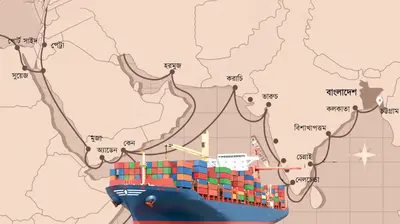
Sources related to the energy sector say a tanker carrying about 100,000 tons of crude oil worth approximately 6 billion taka has been stranded at Saudi Arabia’s Ras Tanura port for the past seven days. Due to increased security risks in the Strait of Hormuz amid the ongoing conflict in the Middle East, the ship has not yet been able to start its journey toward Bangladesh.
According to sources from the Bangladesh Petroleum Corporation (BPC), the tanker named Nordic Pollux was loaded with Arabian Light crude oil on March 3. Although it initially began its journey, the vessel later returned to the outer anchorage of the port due to unfavorable conditions and is currently waiting there.
Another tanker was also scheduled to bring crude oil to the country this month. The vessel named Omera Galaxy was expected to load another 100,000 tons of oil from the Jebel Dhanna port in the United Arab Emirates on March 20 or 21. However, due to the current security situation, the ship’s owners have expressed reluctance to send the vessel there. The ship chartering company has already requested a delay of about 10 days.
In this situation, officials are also examining the possibility of collecting oil from the port of Fujairah, which is located outside the Strait of Hormuz. However, issues such as obtaining a berth for the vessel, supply arrangements, and additional transportation costs need to be considered.
Refinery sources say the facility has a total storage capacity of about 225,000 tons. At present, approximately 100,000 tons of crude oil are in stock. Since about 4,500 tons of crude oil can be refined daily, the current reserves will allow production to continue for nearly three more weeks.
From this stock, it is possible to produce around 40,000 tons of diesel, 15,000 to 20,000 tons of petrol and octane, and about 30,000 tons of furnace oil, according to officials concerned.
Import-Dependent Energy System
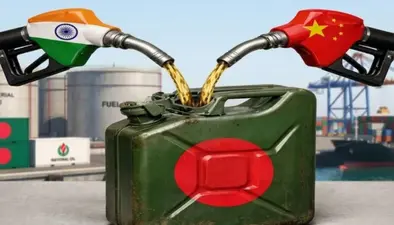
Bangladesh’s energy sector is highly dependent on imports. According to data from the Bangladesh Petroleum Corporation, around 92 percent of the country’s total petroleum fuel currently has to be imported from abroad. Only about 8 percent comes from domestic sources. Most of this domestic fuel comes from processing condensate obtained from gas fields, which produces petrol and octane.
Bangladesh’s annual demand for fuel oil is about 7.2 million tons. Out of the total demand, only about 1.5 million tons of crude oil are imported and refined at Eastern Refinery. Although there has been discussion for many years about building a second refinery in the country, slow implementation has prevented any significant increase in domestic refining capacity. As a result, opportunities to reduce import dependence have become limited.
A large portion of Bangladesh’s fuel imports comes from several Middle Eastern countries. Crude oil is imported through long-term agreements with countries such as Saudi Arabia, the United Arab Emirates, and Kuwait.
On February 28, a new phase of conflict began in the Middle East following attacks on Iran by the United States and Israel. The situation quickly escalated after Iran carried out retaliatory strikes. At the center of this conflict is the strategically important Strait of Hormuz in the Persian Gulf. A large portion of the world’s oil and a significant amount of natural gas are transported through this route. The route is also extremely important for Bangladesh because a large share of the crude oil imported from the Middle East arrives in the country through this strait.
According to BPC sources, around 700,000 to 800,000 tons of Arabian Light crude oil are imported annually through this route from Saudi Arabia’s state-owned company Aramco.