



Four Quakes in 31 Hours, Experts Warn of a Major Earthquake
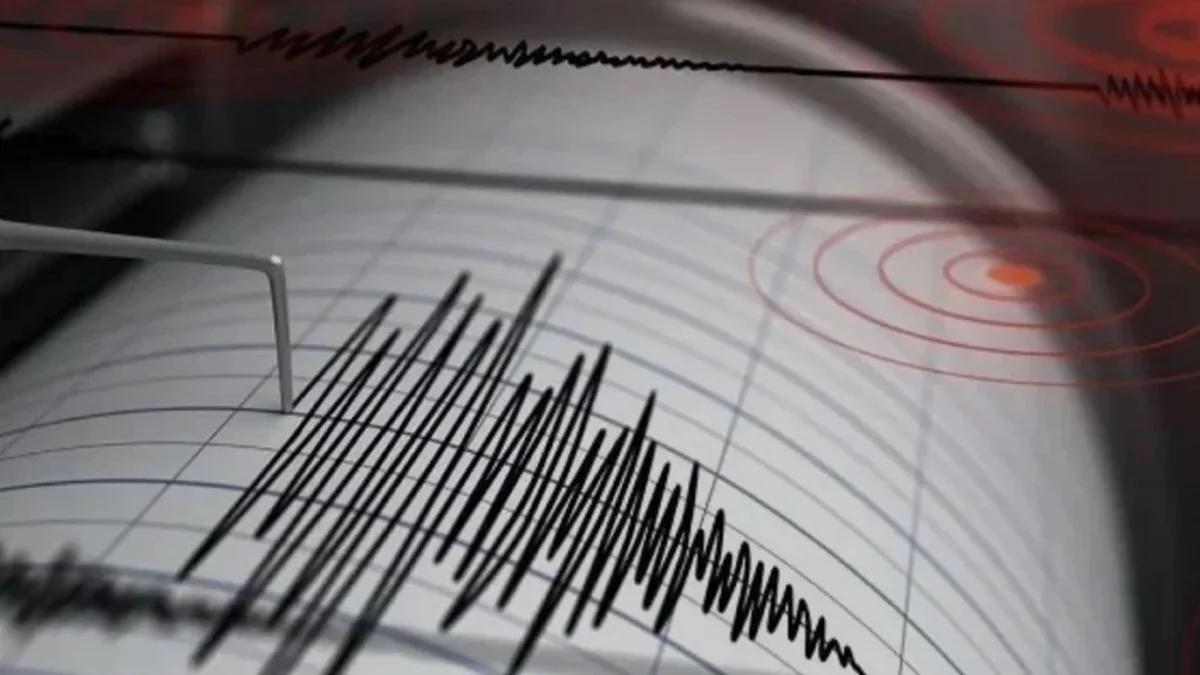
A wave of panic has spread among the public as four earthquakes were felt in Dhaka, the capital, within a span of 31 hours. The tremors that occurred from Friday morning to Saturday evening have once again brought experts’ warnings to the forefront—Bangladesh remains at high risk of a major earthquake, and the recent events may be early signs of a larger impending quake.
Two Earthquakes Within Two Seconds in the Evening
On Saturday evening, two earthquakes were felt in Dhaka just two seconds apart. The first tremor occurred at 6:06:04 p.m. with a magnitude of 3.7, and its epicenter was in the Badda area of Dhaka. Exactly one second later, at 6:06:05 p.m., another earthquake occurred with a magnitude of 4.3, and its epicenter was in Narsingdi. Initially, the Meteorological Department reported Badda as the source of both quakes, but later corrected the information and confirmed two separate epicenters.
Friday’s Devastating Tremor
Earlier, at 10:36 a.m. on Saturday, another mild earthquake of magnitude 3.3 occurred in Palash upazila of Narsingdi. Research centers identified this as an aftershock of Friday’s major quake. On Friday at 10:38 a.m., a powerful earthquake of magnitude 5.7 shook Dhaka, Narsingdi, Narayanganj, and surrounding areas. Panic led people to jump from buildings, cracks appeared in structures, and at least 10 deaths were reported, with over 600 injured.
Discrepancies in International Data
There were discrepancies in data provided by international agencies regarding Saturday evening’s earthquakes. The USGS reported a magnitude of 4.3, with the epicenter located about 11 kilometers west of Narsingdi and at a depth of 10 kilometers. On the other hand, the EMSC stated the magnitude was 3.7, with the epicenter only 8 kilometers north-northeast of Dhaka. However, both sources indicated that the epicenter was close to the Dhaka region.
Emergency Measures in Universities
The back-to-back tremors increased concerns in universities across Dhaka, prompting emergency measures. Dhaka University, in an urgent meeting, assigned a team of BUET experts to assess the risks in old residential halls. If vulnerable sections are identified, students will be relocated. Additionally, all classes and examinations scheduled for Sunday have been suspended. Jagannath University also suspended all Sunday classes and examinations, although office activities will continue.
Four Quakes in 31 Hours: What Does This Indicate?
Earthquake experts say these tremors are not isolated incidents. They are part of a series of energy releases along a high-stress zone of an active plate boundary. Syed Humayun Akhter, former professor at Dhaka University and earthquake expert, warned that the Narsingdi–Dhaka region is a tectonic segment where energy equivalent to a magnitude 8.2 to 9 earthquake is stored. Friday’s quake suggests that the locked segment is beginning to slip slightly, increasing the possibility of a larger earthquake.
Why Is Bangladesh at High Risk?
Bangladesh has long been vulnerable due to its location at the junction of three major tectonic plates. A dangerous subduction zone to the east, densely populated urban centers, non-compliance with building codes, narrow roads, and limited rescue capacity all contribute to heightened collapse risks. History also serves as a warning: the region has experienced major earthquakes before—an 8.7 magnitude quake on the Dauki Fault in 1897, an 8.5 magnitude quake in Teknaf in 1762, and 7.5–7.6 magnitude quakes in the Sylhet region.
According to experts, there is no alternative now to urgent structural audits of buildings, strict enforcement of building codes, improved rescue and preparedness capacity, and increased public awareness. The occurrence of four earthquakes within 31 hours clearly shows that the warning signs of danger can no longer be ignored.