Sheikh Hasina Tells The Print
Banning the Awami League Is Not Democracy, It Is ‘Authoritarianism’
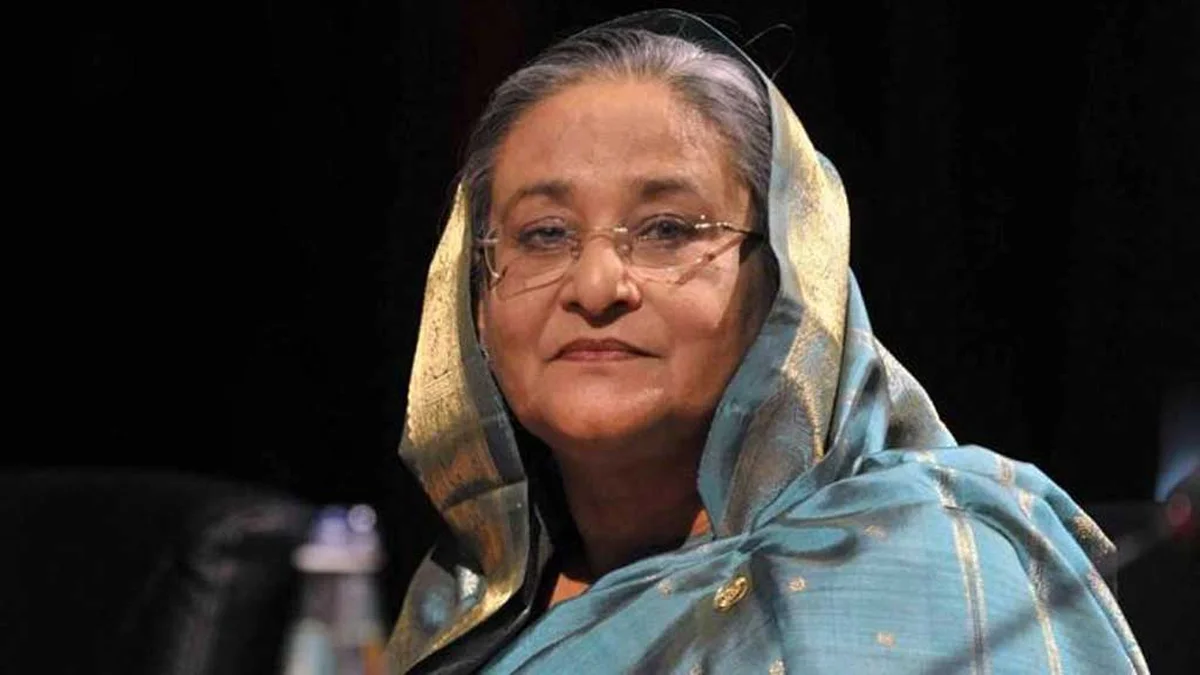
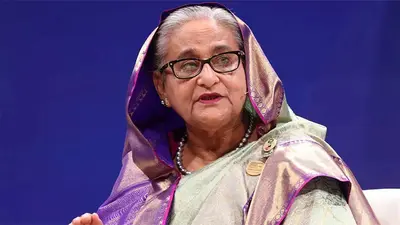
Criticizing the decision to exclude the Awami League from the upcoming 13th parliamentary election, Sheikh Hasina who stepped down from power amid the 2024 movement and led the country for 16 years has called the move “authoritarianism wrapped in the language of transformation.”
In an interview with the Indian news outlet The Print, the former Prime Minister said she is “deeply sorry” for every loss of life that occurred during the 2024 movement.
However, she held Chief Adviser of the interim government Muhammad Yunus responsible for what she described as a “restricted” judicial investigation into the violence.
According to a United Nations report, approximately 1,400 people lost their lives during the uprising, which evolved from the quota reform movement into a single-point demand that ultimately led to the fall of the Sheikh Hasina government.
Bangladesh’s International Crimes Tribunal has already sentenced Sheikh Hasina to death, convicting her of crimes against humanity for attempts to suppress the movement.
Since losing power on 5 August 2024, Sheikh Hasina has been staying in Delhi. In the eyes of the court, she is currently considered a fugitive death-row convict.
The tribunal has also initiated proceedings to try the Awami League as a political party. Until the completion of that trial, the Yunus-led interim government has imposed a ban on all activities of the Awami League.
Due to the ban on its activities, the Election Commission has suspended the Awami League’s registration as a political party. As a result, the party that governed the country for the longest period in its history is unable to contest the parliamentary election scheduled for 12 February.
Sheikh Hasina says that banning her party effectively means “stripping tens of millions of Bangladeshis of their voting rights” in the upcoming election.
In the interview with The Print, she stated, “An election held under such circumstances cannot be called free, fair, or legitimate. Voters must have the freedom to choose their preferred party; excluding a party from participating or forcing people through door-to-door intimidation to vote for the BNP or Jamaat is unacceptable.”
The Awami League President claimed, “The interim government knows that if we were allowed to participate in the election, we would receive overwhelming public support. That is precisely why we have been banned.
“It must not be forgotten that Yunus himself has never received a single vote from the people of Bangladesh, yet he has rewritten the country’s legal framework to legitimize his own unlawful actions.”
In her written interview, Sheikh Hasina said, “You cannot claim democratic legitimacy by banning the country’s oldest and most popular political party. This is not reform; it is authoritarianism disguised as transformation.”
Yunus has consistently maintained that the Awami League has not been ‘banned’ but that its ‘political activities have been temporarily suspended.’
However, according to Sheikh Hasina, this distinction is “meaningless,” because her party cannot campaign, organize, or participate in elections.
Call for an Independent Investigation
In the tribunal case, Sheikh Hasina faced five charges, including incitement, instigation, and issuing orders leading to the killing of 1,400 people during the suppression of the July movement, as well as charges under the doctrines of “superior command responsibility” and “joint criminal enterprise.”
She maintains, however, that her government acted at the time with the objective of “protecting state institutions” and “preventing further loss of life.”
In the interview, she said, “We welcomed the legitimate, student-led movement and allowed it to proceed peacefully. We listened to their demands and abolished the government job quota system, which had been the source of their frustration.”
Referring to arson attacks on government installations and assaults on police stations during the movement, Sheikh Hasina said, “What we did not anticipate was that extremist forces would hijack the movement. It was no longer a spontaneous and peaceful student protest.”
At the time, the Awami League government formed an investigation committee into the violence, but its work did not progress after the interim government took office.
Expressing her “disappointment,” Sheikh Hasina said, “As soon as Yunus came to power, he dismantled that investigation—surely because he knew it would expose his meticulous plan. That decision raises serious questions about the motives behind the movement and the process of seizing power, including the issue of foreign involvement. These questions deserve an independent investigation.”
Law and Order Situation
Calling for a swift return to “constitutional governance” through a free and fair election with the participation of all parties, Sheikh Hasina warned that the deterioration of law and order must be halted. This comes despite allegations of widespread irregularities under her administration during the last three elections.
According to Sheikh Hasina, “Law and order cannot be maintained through intimidation or selective enforcement of the law.”
She referred to the overnight violence that erupted across the country a month ago following the killing of Sharif Osman Hadi, during which two media offices and institutions like Chhayanaut were attacked.
On that issue, Sheikh Hasina said, “This is a direct consequence of an unelected administration without a mandate. They have handed politics over to extremist groups. Instead of reform, they have brought radical forces to the center of power, institutionalized mob justice, and silenced legitimate political voices.”
The interim government, however, has accused the Awami League of attempting to destabilize the country’s law and order situation. Police have stated that those accused in Hadi’s killing were also involved in Awami League politics.
Sheikh Hasina said, “There is no trace of law and order in today’s Bangladesh. The Yunus government has consistently failed to take firm action against violence. Instead, it has encouraged extremists—who spread their rigid ideology through daily brutality, suppress social pluralism, and label dissenting voices as political enemies.”
Sheikh Hasina also criticized the ongoing initiative to amend the constitution.
She said, “Bangladesh is founded on secularism, pluralism, and democratic values. The rehabilitation of Jamaat-e-Islami and other extremist groups threatens the very fabric of our nation. When extremist groups are allowed back into mainstream politics, they do not moderate themselves; they seek to reshape the state in their own image and erase all traces of pluralism.”
Sheikh Hasina expressed concern that the direction Bangladesh is heading toward will deepen social divisions and create distance from international allies.
In her words, if “minority persecution and violence” continue, international allies “will not remain silent.”
Sheikh Hasina also accused the rising influence of Jamaat-e-Islami in Bangladeshi politics of being accompanied by “historical distortion.”
She said, “What we are witnessing today is a deliberate attempt to erase historical truth. Extremist forces have tried to dilute the reality of our independence achieved from Pakistan in 1971—seeking to blur the distinction between victim and perpetrator. This truth may be uncomfortable for the interim government; they want to portray the Awami League as an enemy of the state. But truth remains truth.”