One-Sided Trade Deal with the United States
Like Leaving the Door Open and Losing Control of the House
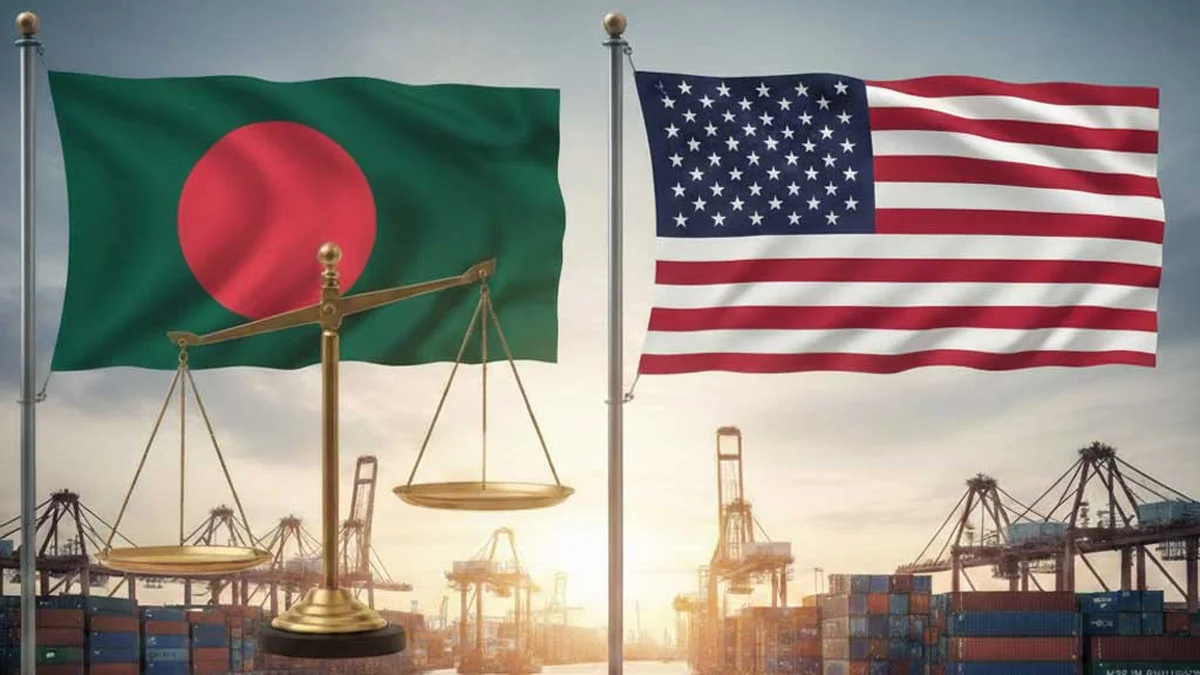
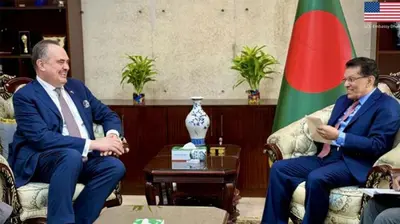
Just three days before the 13th national election, the interim government hastily signed a trade agreement with the United States. Although Bangladesh initially described the agreement as “confidential and not publishable,” the US government published the final copy on its own website the day after it was signed. At first glance, it may seem like an ordinary agreement aimed at protecting the interests of both countries. But as one reads further, it gradually becomes apparent how much someone would have to despise their own country, how self-interested they would have to be, to conclude such an agreement against their own nation.
Bangladesh–US Trade
There is no doubt that the United States is an important trade partner of Bangladesh. Annual trade between the two countries stands at $8 billion, and surprisingly, Bangladesh is ahead. This means Bangladesh exports more than it imports. On average, it exports $6 billion worth of goods annually while importing $2 billion worth.
In April last year, when US President Donald Trump announced a 37 percent tariff on Bangladeshi goods, the reason cited was a $4 billion trade deficit. To reduce the deficit, Bangladesh began diplomatic efforts in Washington. After negotiations, on August 1 President Donald Trump announced that the tariff for Bangladesh would be reduced to 20 percent. The Bangladesh government expressed satisfaction, claiming victory in negotiations. It was said that the trade agreement to be signed between the two countries in return would not be “a big deal.” Finally, on the 9th of this month, the agreement was signed, and in exchange, tariffs on Bangladeshi goods were reduced by another 1 percent to 19 percent.
The agreement consists of six chapters, 29 articles, and more than 200 sub-clauses, along with three annexes. In the 32-page agreement, apart from a single line stating that “if American cotton is purchased, garments will receive concessions and tariffs will be reduced by 1 percent to 19 percent,” there is not a single clause that effectively favors Bangladesh.
What Is in the Agreement?
Under the agreement, Bangladesh will purchase 14 Boeing aircraft from the United States, buy $15 billion worth of fuel over 15 years, import cotton as raw material for the ready-made garment sector, and import nearly $3.5 billion worth of agricultural products annually. While these large figures have caused much discussion, the main problems lie elsewhere. Almost every clause prioritizes US interests: eliminating import duties for US goods, mandatory imports from the United States, opening Bangladesh’s security arrangements to the US, restricting technology trade with other countries, and prohibiting subsidies to domestic institutions.
US Goods Enter Duty-Free, Bangladesh Must Pay Tariffs
Once the agreement comes into effect, Bangladesh will have to reduce or eliminate tariffs on more than 6,500 US products, resulting in significant revenue losses. Meanwhile, the US will import only about 1,500 Bangladeshi products, and tariff levels will depend on its discretion. Bangladesh will fully open its doors, but whether the US keeps its doors open will depend entirely on its will.
The list of products covered is astonishing: agricultural goods, processed foods, pharmaceuticals, machinery parts, meat, cheese—almost everything. Clause 5.1 states that the US will participate directly in mineral exploration, extraction, transportation and distribution, and must be given equal opportunity alongside domestic investors. If an American company enters, will Petrobangla’s role remain intact?
No Quality Checks on US Products
Bangladesh will not be able to impose quotas or conduct inspections or quality control on US goods. If institutions like BSTI find excessive chemicals in food or unsuitable seeds, such objections will not be accepted. Regulatory bodies like the Drug Administration, Food Safety Authority or BSTI will have no authority over US imports.
Unilateral Labor Law
Labor laws in Bangladesh must align with US preferences. WTO standards will not apply. If Bangladesh fails to comply, the US can unilaterally punish it by raising tariffs.
Loss of Data Localization Rights
Bangladesh will not be allowed to enforce data localization, impose digital service taxes, or set independent cybersecurity policies. If the US takes security-related trade measures, Bangladesh must follow, including actions against third-country companies. It will not be allowed to purchase nuclear technology from other countries.
No Protection for Domestic Industry
Domestic companies must offer the same benefits to US firms, but Bangladesh cannot penalize US firms for environmental damage. Subsidies to local companies will be prohibited.
For example, if tax-free US pharmaceuticals enter Bangladesh or US firms begin producing locally, can domestic firms survive?
Identical Agreement, Unequal Punishment
If Bangladesh violates the agreement, the US can immediately impose extra tariffs. But if the US violates it, Bangladesh has no effective remedy, nor can it approach a neutral body for arbitration. Both sides can withdraw with 60 days’ notice.
Cotton Condition and Garment Tariff Relief
Bangladesh mainly imports cotton from India, the US, Brazil, Uzbekistan and West Africa. Indian cotton is cheaper and arrives faster. US cotton is more expensive and takes longer to ship. The interim government promoted that buying US cotton would allow duty-free garment exports to the US. In reality, only garments made with US cotton would be exempt from tariffs.
Bangladesh exports only 18–20 percent of its garments to the US. Will it buy 100 percent of its cotton from the US for that 18 percent? Increased production costs could cause Bangladesh to lose major markets.
Crisis for the New Government
The BNP has formed the government. But if this agreement remains in effect, governance will be difficult. After US courts struck down President Donald Trump’s reciprocal tariffs, Bangladesh plans to seek clarification from Washington. However, the Trump administration has already moved to alternative legal measures, initially announcing a 10 percent tariff and then increasing it to 15 percent within 24 hours.
The question remains whether Bangladesh has the capacity to cancel or renegotiate the agreement. Reading the agreement gives the impression that the post-uprising government was effectively a government of lobbyists who placed Bangladesh in the global market and bargained it away.
Source: bdnews24