
21.4% Ballot Fraud Detected; Questions Remain Over Inclusiveness of Awami League-Free Election
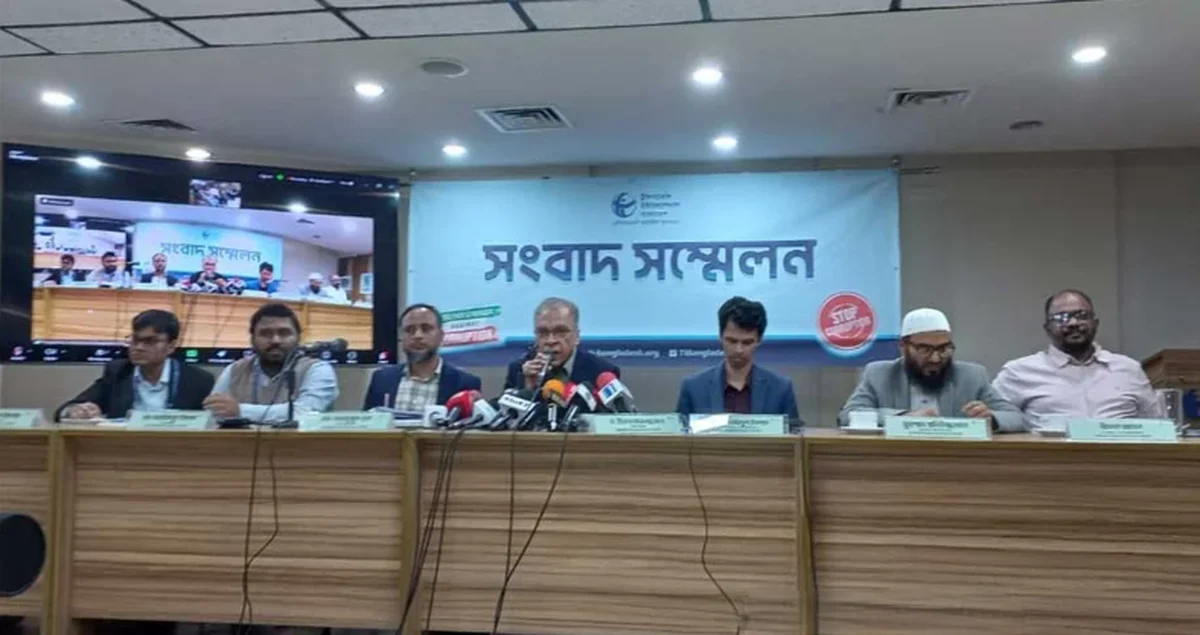
Although the recently held 13th National Parliamentary Election was described as “acceptable in terms of fairness and competitiveness,” the question of how “inclusive” the election was, given the exclusion of the Awami League, may become more pronounced, said Dr. Iftekharuzzaman, Executive Director of Transparency International Bangladesh (TIB).
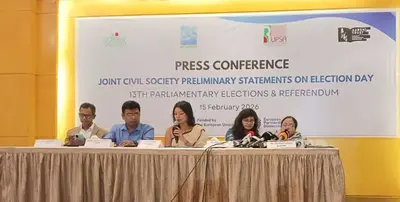
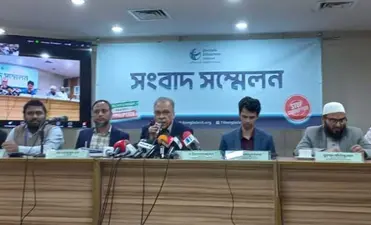
These observations were presented on Monday at a press conference held at TIB’s office in Dhanmondi, Dhaka, where a report titled “Observation of the 13th National Parliamentary Election Process and Affidavit-Based Analysis” was unveiled. According to TIB, while the election initially showed signs of relatively healthy competition, over time traditional political practices—such as the use of money, religion, and muscle power—became dominant, undermining a level playing field.
Widespread Violation of Code of Conduct
One of the most alarming findings of the report is that 99 percent of candidates violated at least one of the 58 provisions of the electoral code of conduct. TIB reported instances of violations across nearly all levels, including online and offline campaigning, expenditure control, and polling station management. Although the Election Commission’s efforts were visible, capacity limitations prevented effective action in many cases.
In field-level research conducted across 70 constituencies selected through random sampling, evidence of ballot fraud was found in 21.4 percent of the constituencies. In addition, at least 125 incidents of post-election violence were recorded.
Analyzing the nature of irregularities, TIB observed that in 35.7 percent of cases there were allegations of forced voting; in 46.4 percent of cases voters were prevented from going to polling centres or were subjected to intimidation; in 14.3 percent of cases ballots were stamped before voting began; and in the same proportion, allegations were made of booth capture and obstruction of rival agents from entering polling centres. Administrative inaction was noted in 21.4 percent of cases, and lack of cooperation from law enforcement agencies in 10.7 percent. Allegations of bias by returning officers and other responsible officials were also reported in 10.7 percent of cases.
Question of Inclusiveness
During the question-and-answer session, when asked how inclusive the election was without the participation of the Awami League, Dr. Iftekharuzzaman said that some grassroots leaders and activists of the Awami League had been active under different symbols and had cast their votes; therefore, it could not be described as a “complete boycott.” However, he acknowledged that since the party did not formally participate, questions regarding inclusiveness would inevitably arise.
Regarding allegations of election engineering, he stated, “There may be something behind the scenes, but our observation did not find clear evidence of engineering.” At the same time, he described the election as “acceptable in terms of fairness and competitiveness.”
If the picture from the 70 sample constituencies reflects a national trend, it suggests structural weaknesses in election management. Nearly universal violations of the code of conduct, high campaign expenditure, violence, and administrative limitations have challenged public confidence and the principle of equal competition in the electoral system.
According to TIB’s assessment, while the election partially met its criteria of acceptability, debate remains over inclusiveness and fair competition. As a result, questions of political legitimacy and democratic confidence may continue to dominate discussions in the coming days.