

Fear of Awami League’s Popularity Behind Election Ban, Say Party Leaders
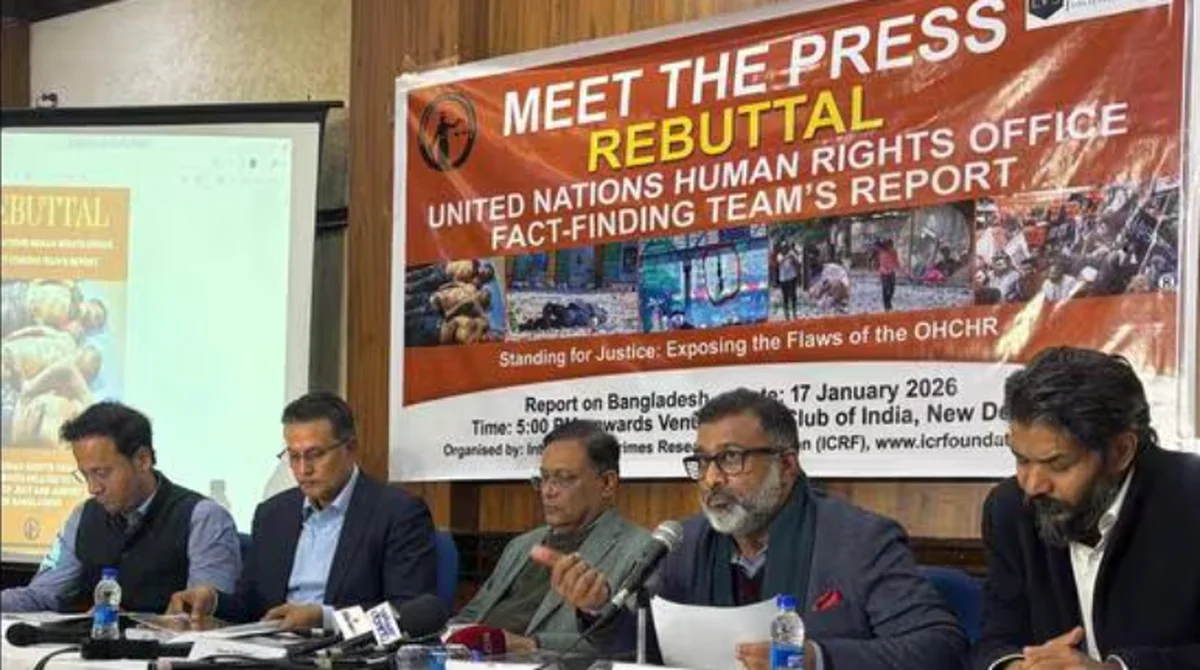
Senior leaders of Bangladesh’s Awami League on Saturday accused the country’s interim government of being incapable of conducting free and fair elections and of deliberately barring the party from participating in the upcoming polls out of fear of its growing popularity.
Speaking in New Delhi, former foreign minister Hasan Mahmud and former education minister Mohibul Hasan Chowdhury criticised the caretaker administration led by Muhammad Yunus, alleging widespread human rights violations and a failure to protect religious minorities. They also rejected a report by the UN Human Rights Office on deaths and violence during the July–August 2024 protests, describing it as biased and one-sided.
This was the first time senior Awami League leaders addressed the media in New Delhi since the fall of Sheikh Hasina’s government following mass student-led protests in 2024. Sheikh Hasina has been living in self-imposed exile in New Delhi since fleeing Bangladesh, while several Awami League leaders are currently based in India or Europe. Mahmud recently arrived in India from Belgium.
Referring to the interim government’s decision to ban all activities of the Awami League—effectively excluding it from the general election scheduled for February 12—Mahmud said elections must be held under a neutral caretaker administration.
“This government is completely hostile towards us and is taking revenge,” he said. “Under this administration, a level playing field for the Awami League will never be possible. We want to participate in the election. We have always come to power through elections because we believe in the people’s mandate.”
Mahmud argued that the Awami League was excluded from what he described as an “arranged election” because public support for the party had increased due to the interim government’s “atrocities, misgovernance, and failure to manage the economy.”
He added, “We are always ready to return to Bangladesh. We are political activists. We have gone to jail before, and Sheikh Hasina has also gone to jail before. There must be rule of law. We will definitely return to the country along with Sheikh Hasina, our leader.”
Both leaders accused the Yunus-led administration of failing to protect minorities, citing the killing of Dipu Chandra Das, a Hindu man who was lynched and set on fire following allegations of blasphemy. They claimed that Hindu homes and temples were looted and burned, and alleged that those responsible for killing Awami League workers were effectively granted impunity.
Accompanied by Awami League activists from the United States and the United Kingdom, Mahmud and Chowdhury also criticised a UN Human Rights Office report presented last year, which estimated that around 1,400 people were killed during the suppression of protests by Sheikh Hasina’s government in July–August 2024. They questioned the role of UN High Commissioner for Human Rights Volker Türk.
Mahmud claimed the report was “fabricated, biased, and one-sided,” alleging that it was designed to shield the Yunus administration. Chowdhury added that the UN appeared to have presumed the Awami League government’s guilt from the outset.
The leaders further argued that UN investigations of this nature are typically conducted only after a resolution by the Security Council. However, in this case, they said, Türk authorised the probe following a request from Muhammad Yunus.
While acknowledging that there were excesses by security forces during the protests, Chowdhury said the report ignored the deaths and disappearances of hundreds of police personnel, as well as attacks on Awami League members after the ouster of Sheikh Hasina’s government.
Source: Hindustan Times