The Teenager Who Faced Death and Stepped Forward: “I Will Go”
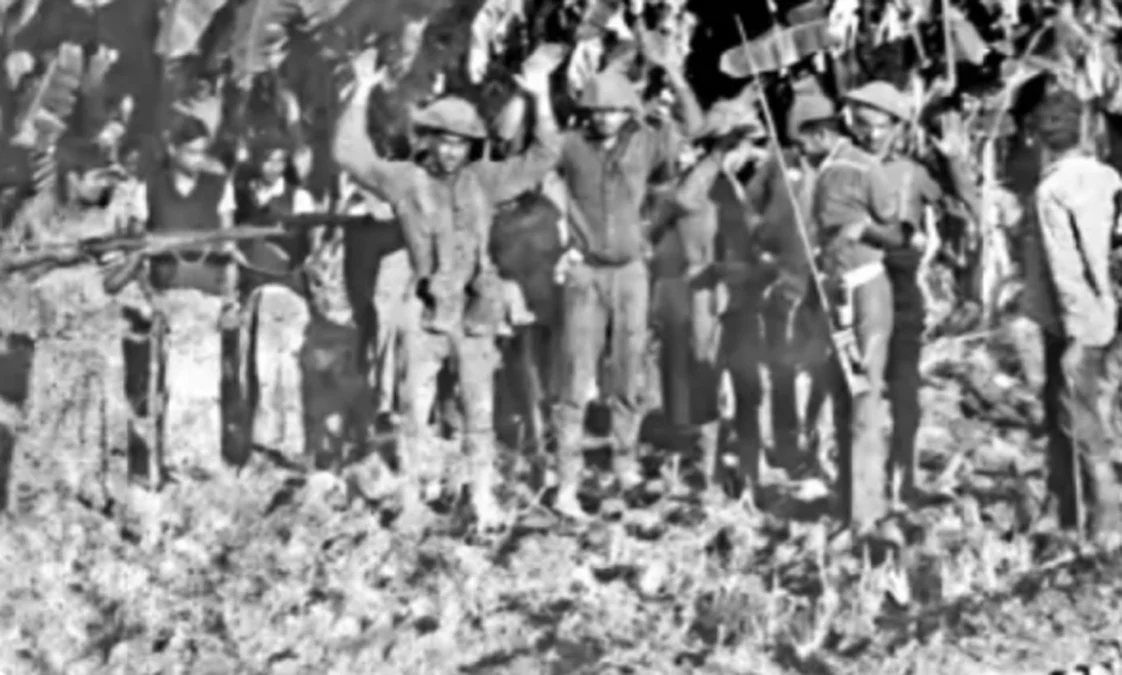
It was 1971. All of Bangladesh was then engulfed in flames. One village after another was being burned, people were being killed, and unspeakable atrocities were being committed against women.
At such a time, a teenager from the border-adjacent village of Lauchapara in Bakshiganj upazila of Jamalpur district made a decision—he would no longer remain silent.
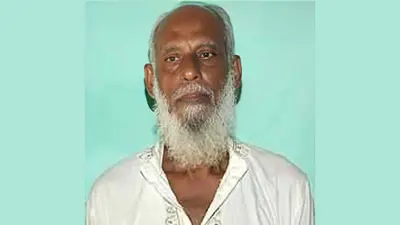
That teenager was Bir Protik Bashir Ahmed.
He was only 15 or 16 years old. A Class Ten student of Dhanua Kamalpur Cooperative High School. At an age meant for carrying books and notebooks, he witnessed Pakistani soldiers killing people and setting villages on fire before his very eyes.
These scenes shook the human being inside him. He made up his mind—his country had to be liberated.
Leaving Home for War
In April, many familiar faces around him were crossing the border into India to receive military training. Bashir wanted to go as well. But he did not receive permission from home.
Then, taking one of his nephews with him, he quietly left home. His destination was the freedom fighters’ camp at Mahendraganj in India.
But disappointment awaited him there. His own teacher, Solaiman Haque, was selecting new freedom fighters.
Seeing Bashir, he said, “You are too young. It is not possible for you to fight in the war.”
Bashir could not defy his teacher’s words. He returned. But the fire of war in his heart had not died out.
Instead of going back home, he stayed at a relative’s house in Mahendraganj for about 15 days. In May, upon hearing that new members were being recruited again, he appeared at the camp once more.
This time he said, “Sir, I do not think about life or death. I will go to war.”
That determination and the fire in his eyes made Solaiman Haque reconsider. Eventually, Bashir Ahmed became a freedom fighter.
War and an Unbelievable Responsibility
Bashir Ahmed fought under the Helal Company of Sector 11. Later, he also joined the Allied Forces. At times he conducted reconnaissance, at times served as an interpreter, and at times fought on the front lines. However, the greatest chapter of his life came at Kamalpur.
Kamalpur was a stronghold of the Pakistani forces. It was called the gateway to Dhaka from the northern region. Capturing this base was a major objective of the Mukti Bahini.
In the last week of November, the Mukti Bahini surrounded Kamalpur. The Pakistani soldiers remained besieged for 11 consecutive days. Food and ammunition were running out. Eventually, only one option remained—surrender.
But the Pakistani forces were unwilling.
“Who Will Go With the Letter?”
When the India–Pakistan war began in early December, the Allied Forces became directly involved. A decision was made—to send a letter calling on the Pakistani soldiers to surrender.
Brigadier Hardev Singh then asked a clear question, “Who will go to the Pakistani camp with the letter?”
Thousands of freedom fighters were present. No one dared to speak. Everyone knew it was almost certain death.
At that moment, a teenage boy stepped forward and said, “I will go.”
That teenager was Bashir Ahmed.
Alone in the Enemy Camp
With a white flag in one hand and the letter of surrender in the other, Bashir began walking toward the Kamalpur camp. An open field all around, enemy guns on every side, and the possibility of death everywhere.
He reached the camp and kept calling out. For nearly half an hour, no one came forward. Instead, Pakistani soldiers gestured for him to come inside the camp.
Leaving all the fears of his life behind, he stepped forward that day.
Amazingly, he was not killed. Instead, a Pakistani officer came forward and said, “Mukti, tum mat ghabrao” (Freedom fighter, do not be afraid).
He was given food and protection. The Pakistani soldiers were instructed that no one was to approach him.
A Moment That Turned History
Meanwhile, the Allied Forces assumed that Bashir had been martyred. Airstrikes began.
Later, when another teenage freedom fighter, Anisul Haque Sanju, went with a second letter, the pressure intensified further.
Eventually, the morale of the Pakistani forces collapsed. Captain Ahsan Malik agreed to surrender.
This surrender was historic, as it was the first surrender of Pakistani forces in the Mymensingh region. More than 150 Pakistani soldiers and collaborators laid down their arms that day.
Source: The Daily Star