
Debapriya Urges Review of Interim Government’s Foreign Agreements
CPD Distinguished Fellow Debapriya Bhattacharya has urged a review of the foreign agreements signed during the tenure of the interim government.
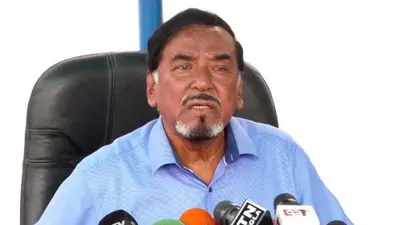
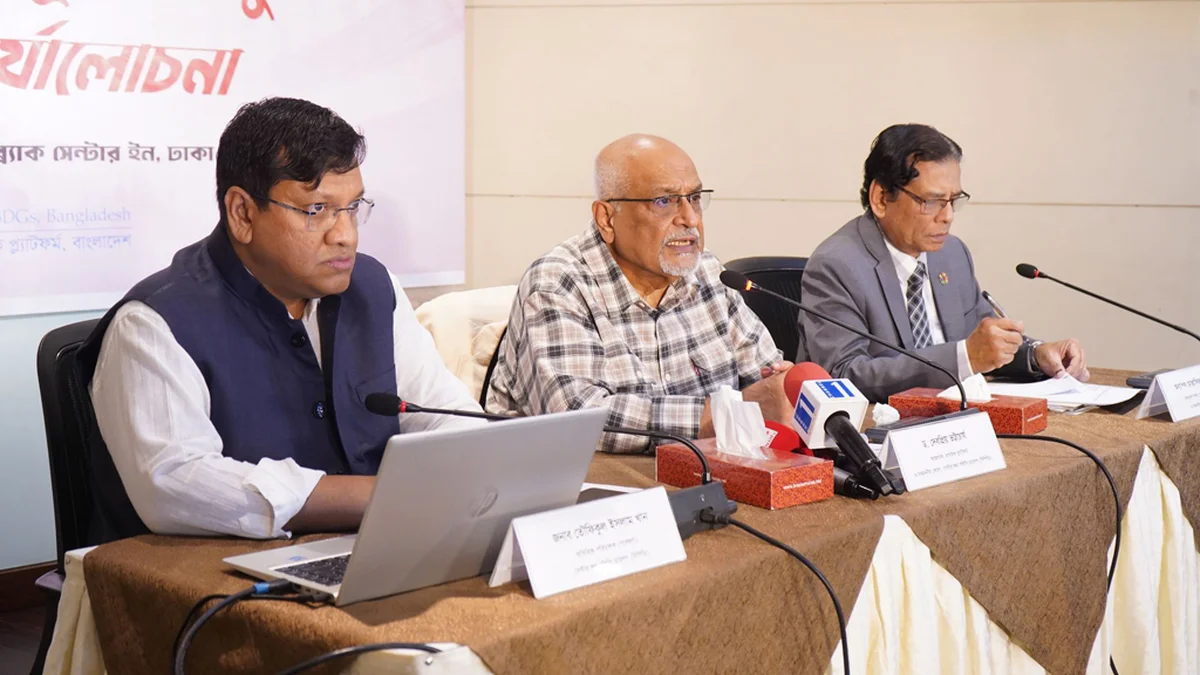
Speaking at a briefing organized by Citizens Platform on Thursday, he made this call to Tarique Rahman’s new government.
As convener of the organization, Debapriya said, “Before leaving office, the previous government signed various types of foreign agreements. These agreements were not made only with the United States, nor only regarding handing over our ports. There were others as well, in different sectors, about which we may not yet be fully informed.
“All these foreign agreements should be reconsidered so that the nature of the obligations and liabilities for the new government can be examined.”
Explaining his position, Debapriya—who headed the Economic White Paper Committee formed by the interim government after the Awami League was ousted from power during the 2024 movement—said, “Since you are willing to reassess LDC graduation, I believe these agreements must also be brought under reassessment and reconsideration.”
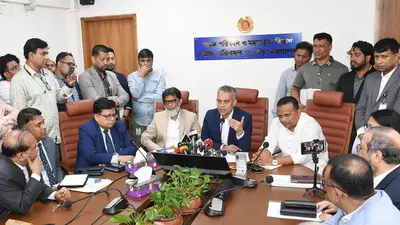
The briefing titled “Starting Point of the New Government: An Economic Review” was held at BRAC Centre Inn in Mohakhali, Dhaka.
Debapriya also advised the government to be patient regarding its 180-day action plan. The CPD distinguished fellow expressed his opposition to implementing the plan within the remaining period of the current fiscal year. He urged the government to show restraint in economic matters.
Addressing the newly formed government, he said, “Be realistic; we must move forward in a statesmanlike manner.”
Among several challenges facing the new government, he also spoke about debt and liabilities. He said the interim government left the debt situation in a worse state than it had inherited.
“The interim government has left the debt and liability situation in a slightly worse condition than it found it. That is the truth. We can explain why this happened. It may be due to lower revenue collection, or because they could not reduce current expenditure.
“It may also be because no adjustment was made in the Annual Development Programme. However, the debt situation that the BNP is inheriting is somewhat weaker and more fragile than the condition in which the interim government had received it.”
On inflation control, Debapriya said, “If we have a plan to control inflation, then we should not even dream of printing money.”
Regarding the 180-day action plan, he said, “I am against rushing. If you are talking about preparing a 180-day action plan, I would say be patient. Nothing significant will happen in the remaining time of this fiscal year. Formulate a plan. In the next fiscal year, it should be viewed as part of a medium-term plan with proper financing.
“If you begin implementing programmes from tomorrow without knowing whether the house is one-storey or two-storey, whether it is made of wood or tin, and yet you want to build more floors on top of it—be realistic.”
He also expressed the view that the implementation of the family card programme should be carried out after the upcoming local government elections.
On the market system, the CPD distinguished fellow said, “The leaders who have said they will break the syndicates from day one—we are waiting to see. We know the political strength those syndicates possess.”
He also raised the question of whether those syndicates had financed elections.
In his concluding remarks, he said, “Ramadan has begun, a month of restraint. This is the last time to show restraint in economic management.”
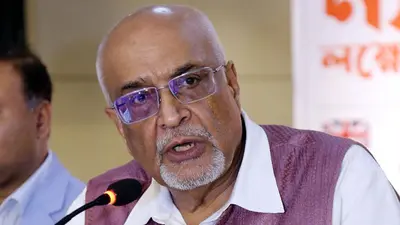
At the event, the keynote paper was presented by CPD Additional Director (Research) Taufiqul Islam Khan. Another distinguished fellow, Professor Mustafizur Rahman, also spoke.