Khaleda Zia Laid to Rest Beside Her Husband with State Honours
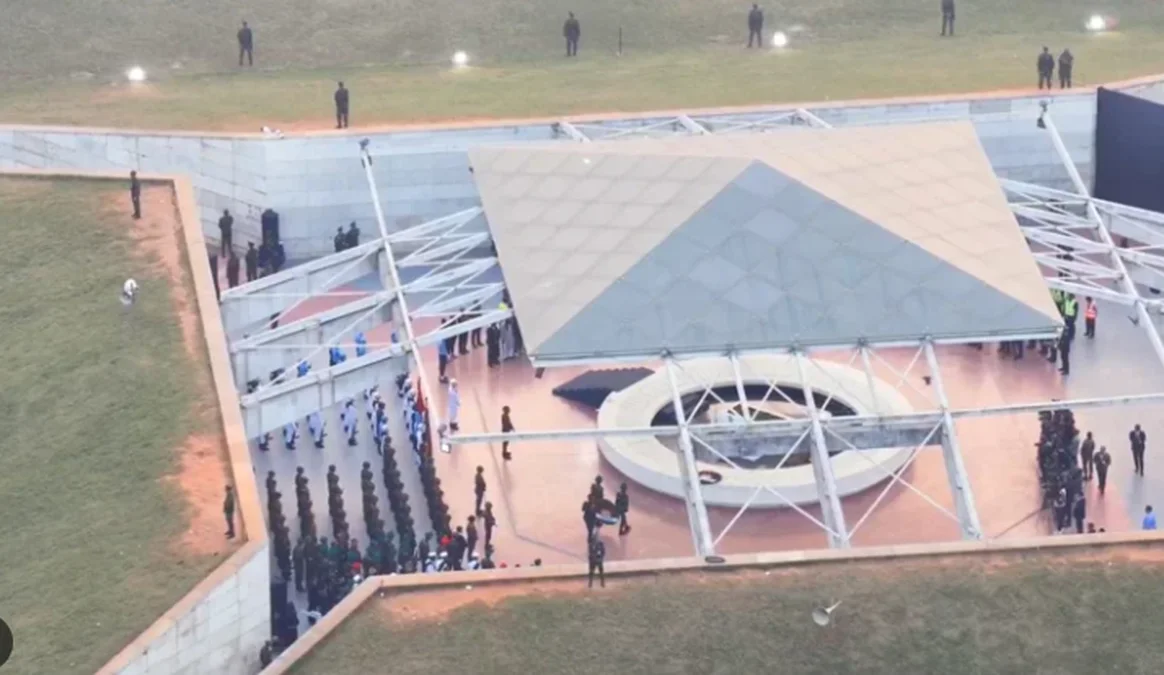
Bringing an end to a long chapter of Bangladesh’s political history, former Prime Minister and BNP Chairperson Begum Khaleda Zia has been laid to eternal rest beside her husband. She was buried with state honours next to the grave of BNP founder and former President Ziaur Rahman at Chandrima Udyan in the capital. The burial was completed at 4:30 pm on Thursday (December 31).
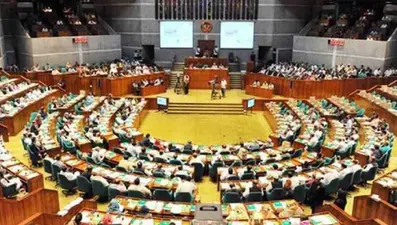
Earlier, on Wednesday at 3:02 pm, her funeral prayer (janaza) was held amid a sea of people on Manik Mia Avenue in front of the National Parliament House. The inner grounds of the Parliament, the surrounding areas, and nearby roads and alleys were filled to capacity with political leaders, activists, and people from all walks of life. Separate arrangements were made to ensure women’s participation. The janaza was led by Abdul Malek, Khatib of Baitul Mukarram National Mosque, while it was conducted by Nazrul Islam Khan, a member of the BNP Standing Committee.
On June 2, 1981, the janaza of Ziaur Rahman had been held on this very Manik Mia Avenue. Four decades later, the funeral prayer of his wife, Khaleda Zia, at the same location became an emotionally charged repetition of history.
State and Political Presence
Those present at the janaza included Chief Adviser Professor Muhammad Yunus, Chief Justice Zubayer Rahman Chowdhury, Army Chief General Waker-Uz-Zaman, Navy Chief Admiral Mohammad Nazmul Hassan, and Air Force Chief Air Chief Marshal Hasan Mahmood Khan. Members of the Advisory Council were also present, along with BNP Secretary General Mirza Fakhrul Islam Alamgir, members of the Standing Committee, and leaders and activists from all levels of the party.
Representatives from various political streams were also seen at the event. Among them were Jamaat-e-Islami Ameer Shafiqur Rahman and Secretary General Mia Golam Parwar, Gonosanghati Andolon leader Zonayed Saki, NCP leaders Nahid Islam and Hasnat Abdulllah, Bangladesh Khelafat Majlis leader Mamunul Haque, Labour Party Chairman Mostafizur Rahman Iran, and Gono Odhikar Parishad leader Nurul Haque Noor, among others. Also present were poet and thinker Farhad Mazhar, former DUCSU Vice President Sadik Kayem, and Ahmadullah of As-Sunnah Foundation.
International Tributes
To pay tribute to Bangladesh’s first female Prime Minister, several foreign dignitaries arrived in Dhaka. They included India’s External Affairs Minister S. Jaishankar, Speaker of Pakistan’s National Assembly Sardar Ayaz Sadiq, Nepal’s Foreign Minister Bala Nanda Sharma, Bhutan’s Minister for Foreign Affairs and External Trade Lyonpo D. N. Dhungyel, Maldives’ Minister for Higher Education, Labour and Skills Development Ali Haidar Ahmed, and Sri Lanka’s Foreign Minister Vijitha Herath. Diplomats from China, the United Kingdom, the United States, and other countries stationed in Dhaka also joined the final journey.
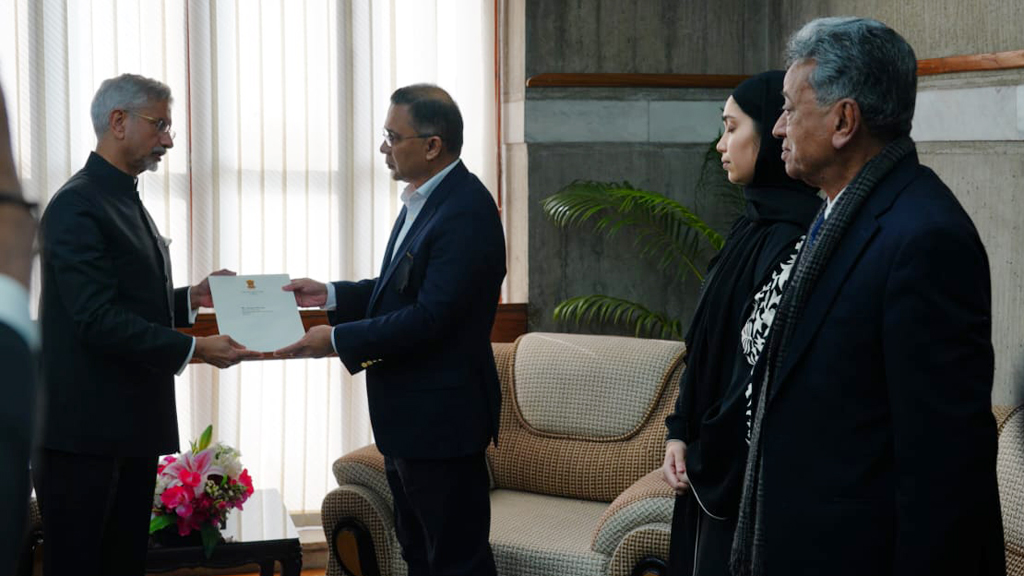
On the same day, India’s External Affairs Minister S. Jaishankar and Pakistan’s Speaker Sardar Ayaz Sadiq met BNP Acting Chairman Tarique Rahman and conveyed condolences on behalf of their respective governments and peoples.
Emotional Statement by Tarique Rahman
Before the janaza, speaking briefly on behalf of the family, Tarique Rahman said, “If the late Begum Khaleda Zia left behind any debts or dues to anyone during her lifetime, I will take responsibility for repaying them. At the same time, if anyone was hurt by any of her words or actions, I sincerely apologise on her behalf. Please pray for her.”
After spending more than a decade and a half in exile in the United Kingdom, Tarique Rahman returned to the country with his family only last week. Within a week of returning home, he is now facing the grief of losing his mother while simultaneously shouldering the heavy responsibility of party leadership during the ongoing 13th National Parliamentary Election.
Brief Political Background
Khaleda Zia married Captain Ziaur Rahman of the East Bengal Regiment of the Pakistan Army in 1960. During the Liberation War of 1971, Ziaur Rahman served as the commander of Sector No. 1 and the Z Force, and after independence, he was awarded the gallantry title Bir Uttam. He was killed in a military coup in Chattogram on May 30, 1981.
Following her husband’s death, Khaleda Zia entered politics. In 1984, she was elected Chairperson of the BNP, a position she held until her death. She served as a Member of Parliament five times, Prime Minister three times, and Leader of the Opposition twice.
Final Farewell
After receiving treatment at Evercare Hospital in Dhaka for 40 days, Khaleda Zia passed away at 6:00 am on Tuesday. Following her death, a three-day state mourning was declared across the country, and Wednesday was observed as a public holiday.
Amid tears, respect, and love from millions, the influential woman leader of Bangladesh’s politics was finally laid to rest beside her husband, entering eternal sleep.