



Operation Jackpot
The Daring Naval Commando Mission That Shook Pakistan in 1971
The simultaneous operation at the ports of Chattogram, Mongla, Chandpur, and Narayanganj was the first mission of Bangladesh’s naval commandos during the Liberation War. The freedom fighters knew that if their mission succeeded, it would take the Bengali nation closer to the port of victory. And the result of failure would be death. For this reason, that life-and-death mission with limpet mines was named “Operation Jackpot.”
August 15, 1971. A life-defining midnight moment for the naval commandos of the Bangladesh Liberation War. Their journey began from the Harina Camp at Palashi. According to the plan, they decided that they would simultaneously reach their respective areas—Chattogram, Mongla, Chandpur, and Narayanganj. One of the most difficult moments of the Liberation War, Operation Jackpot, was essentially a guerrilla operation conducted by the naval commandos. The heroes who participated in the war were the brave freedom fighters of our country. On the golden jubilee of independence, we extend our pure love and respect to them.
During the Liberation War, Sector 10 was formed covering all inland waterways, ports, and coastal areas of the country, which consisted mainly of the naval forces. This sector had no specific sector commander. During operations, the naval commandos worked directly under the Mujibnagar Headquarters, with the cooperation of the sector commanders of the respective areas. Among the 41 submariners under training in the French Toulon Submarine Dockyard for the Pakistani submarine PNS Hangor, 13 were Bengalis. Upon hearing through international media about the genocide of March 25, they decided to flee and come to Bangladesh. Eight of them set out for Bangladesh on March 30 and reached Delhi, India on April 9, 1971. They were Md. Rahmat Ullah, Syed Mosharraf Hossain, Md. Sheikh Amanullah, Md. Abdul Wahed Chowdhury, Md. Ahsanullah, Md. Abdur Raqib Mia, Md. Abdur Rahman Abed, and Md. Badiul Alam. Later, a guerrilla team of 20 members was formed by adding a few more to these eight, and they were given special training in India. After being sent to the country, they were connected with Colonel M.A.G. Osmany.
On May 21, a naval commando force was formed with 300 selected freedom fighters. After M.A.G. Osmany approved opening the naval commando sector, a secret training camp was set up on May 23 on the bank of the Bhagirathi River beside the historic Palashi Memorial. This training camp was given the code name C2P.
Before the training began, photographs of the selected trainees and their signatures were taken in a commemorative form. It stated, “I am willingly undertaking this training to sacrifice my life for the independence of the country, and if I die in the war, no one will be held responsible.” The training camp was supervised by Indian naval officers Commander M.N. Samant and Commander J.M. Martis, along with 20 other Indian trainers. Among the trainers were also the eight submariners who fled from France. The trainees underwent tough land and water combat training in the swift-flowing Bhagirathi River. In winter and monsoon alike, the fighters had to remain in water continuously for 48 hours. After nearly three months of training, it ended in the first week of August. At the same time, plans for simultaneous attacks on two seaports and two river ports were finalized, along with coordination among the four sectors.
The first batch of trained fighters was divided into four groups—two teams of 60 and two teams of 20. Leaders for the four groups were appointed. In early August, a 60-member commando team led by Md. Wahed Chowdhury was assigned for operations at Chattogram port. Shah Alam was the deputy leader. They flew from Kolkata’s Dum Dum Airport to Agartala and entered Bangladesh on August 11. Team leaders were informed that the signal for the operation would be two songs. When the songs were broadcast on Akashvani Radio, they would know the time had come. On the plane, General Aurora asked Wahed Chowdhury, “Do you know your D-Day?” He replied, “No, sir.” Then General Aurora hinted—it might be the 15th. The two songs chosen as the operation signal would be broadcast in a special program for eastern listeners from Kolkata Akashvani, either from 6:00–6:30 AM or 10:30–11:00 PM. The frequency and song details were shared only with the team leaders and deputies. If Pankaj Mallik’s “Ami Je Tomake Shuniyachhi Koto Gaan” played, they had to launch the operation within 48 hours; if Sandhya Mukhopadhyay’s “Amar Putul Aajke Jabe Shoshur Bari” was broadcast, they had to finish the operation within 24 hours.
The 60-member team arriving from Harina Camp was divided into three groups of 20. Groups 1 and 2 traveled through different routes toward their designated base camps in Chattogram and received the first signal on August 14. After receiving this signal, they moved with weapons to their base camp at Char Lakshya on the eastern bank of the Karnaphuli River. On August 15, they received the final signal via transistor and completed all preparations. The mines had to be fixed to the ships that very night. Timing was crucial, otherwise the schedule for Chandpur, Mongla, and Narayanganj operations would be disrupted. Hearing the signal song, the team of 40 commandos crossed the river before 11 PM with the objective of completing the mission within 24 hours. Thirty-three of them would attack the ships at 11 PM—three commandos per ship. Each group would attach three mines—one on the front, one on the back, and one in the middle, six feet underwater. Each target ship would be hit by three fighters. The remaining seven would stand by in the shelter.
Five minutes before midnight, the commandos entered the water. After planting mines on the ships, they regrouped by 12:15 AM and discarded the remaining gear.
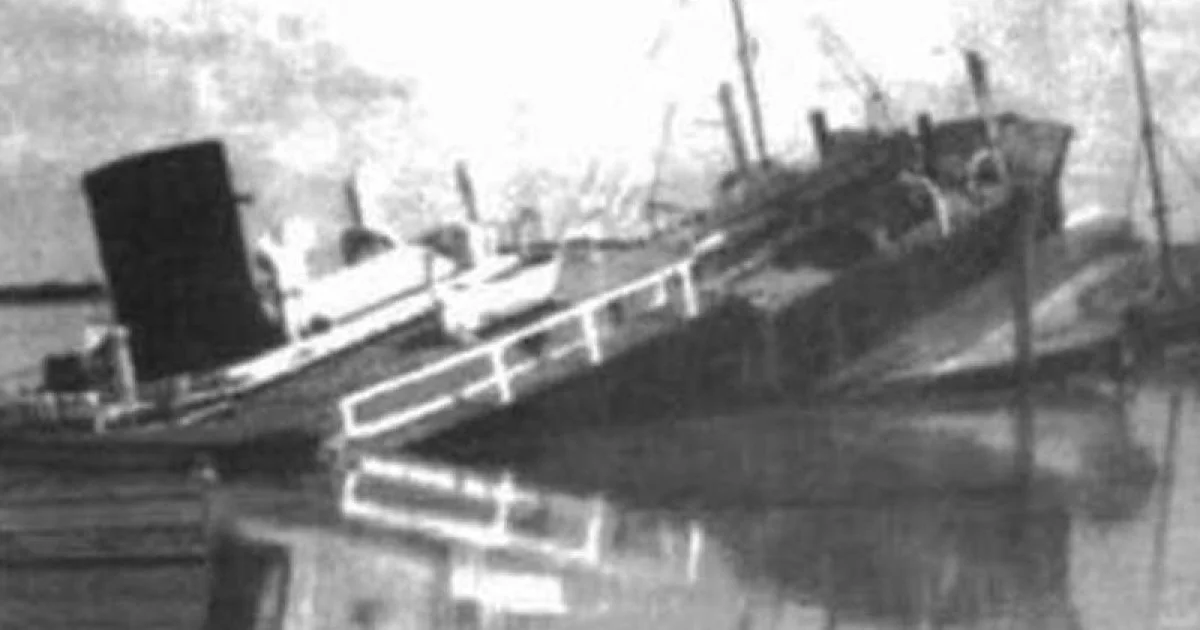
Wearing swimming costumes, the group of 40 took shelter in the cowshed of a nearby house. Then they waited for the sound of explosions. At 1:40 AM, the first explosion occurred. Then all the mines detonated one after another. Three large arms-carrying ships were destroyed in this successful operation. These major ships were:
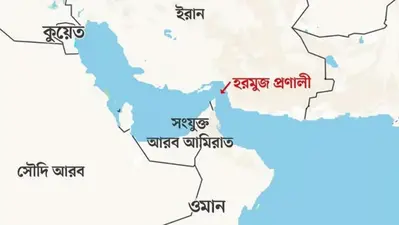
(1) MV Hormuz — arrived at Chattogram port on August 14. Carrying 9,910 tons of arms and ammunition, it was anchored at Jetty No. 13.
(2) MV Al-Abbas — carrying 10,418 tons of military equipment, it had been at Jetty No. 12 since August 9.
(3) Orient Barge No. 6 — loaded with 6,276 tons of arms and ammunition, located in front of the Fish Harbor Jetty.
One after another, the explosions sank these three ships along with many adjacent vessels. On the morning of August 16, the news spread—“Nine ships have been sunk at Chattogram port by miscreants.” The Pakistanis sent a signal worldwide: “Chittagong Port is non-operational; Chittagong Port damaged by the terrorists.” After sinking nine ships in that operation and crippling the Chattogram port, the morale and backbone of the Pakistanis were shattered.
Writer: Shahab Uddin Mahmud; Researcher