

Historic Flashback
December 6: India Grants Diplomatic Recognition to Bangladesh
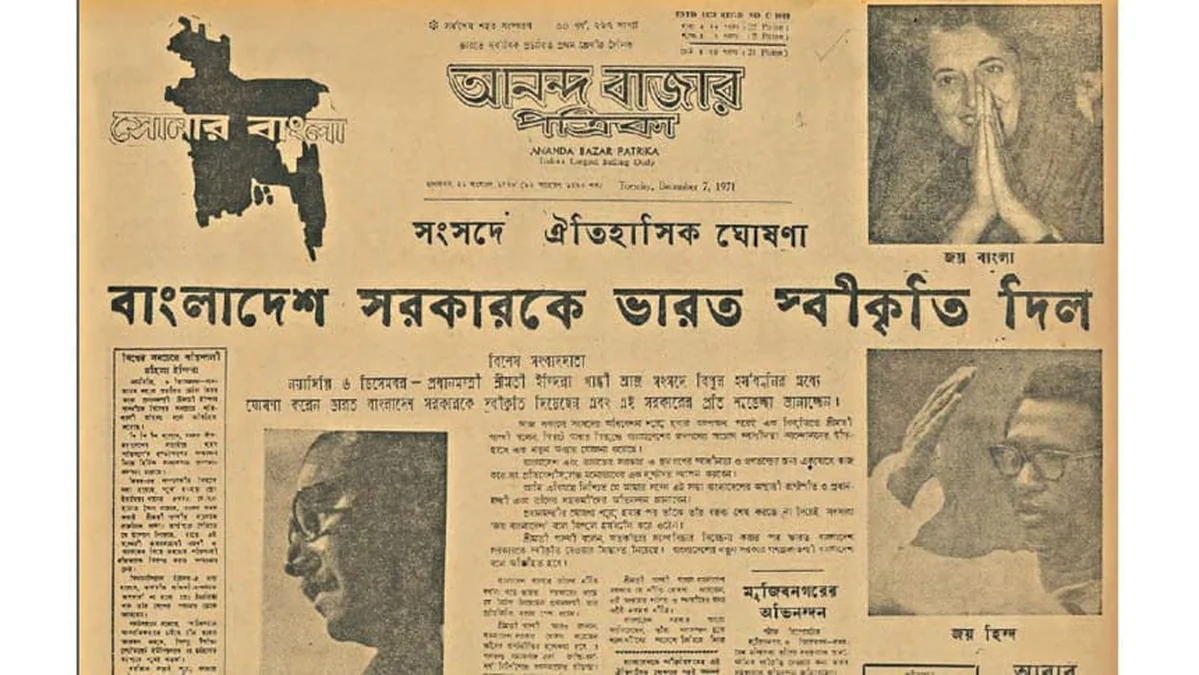
Amid thunderous applause and jubilant celebrations in the Lok Sabha, Indian Prime Minister Indira Gandhi announced today that India has formally recognised the government of Bangladesh.
“I am glad to inform the House that, in view of the prevailing circumstances and in response to repeated requests from the Government of Bangladesh, the Government of India has, after the most careful consideration, decided to grant recognition to the Gana Prajatantri Bangladesh,” Indira Gandhi declared.
The announcement sparked overwhelming excitement, with members of the Lok Sabha rising in joy as chants of Joy Bangla echoed through both houses of the Indian Parliament.
The Prime Minister expressed confidence that many other nations would soon follow India’s lead in recognising Bangladesh, enabling the new state to take its rightful place within the international community.
Extending India’s heartfelt greetings and warm felicitations to Bangladesh’s acting president, prime minister, and people, Indira noted that the Bangladesh government had emphasized its deep desire to ensure the swift return of its citizens to their homeland—an effort India pledged to support in every possible way.
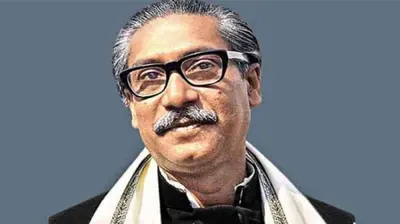
“Our thoughts at this moment,” she added, “are with the father of the new state, Sheikh Mujibur Rahman.”
Indira Gandhi also stated: “The people of Bangladesh, fighting for their very existence, and the people of India, battling to repel aggression, now find themselves united in a common cause. As for the legitimacy of the Bangladesh government, the world now knows that it reflects the will of the overwhelming majority of its people—something few governments can claim.”
India’s recognition was formally conveyed by Foreign Secretary T.N. Kaul to K.M. Shehabuddin of the Bangladesh mission in New Delhi. Kaul handed over a sealed letter from External Affairs Minister Swaran Singh to Bangladesh’s Foreign Minister Khondakar Mostaq Ahmad, along with copies of the prime minister’s parliamentary statement.
The Bangladesh government welcomed India’s recognition, expressing its “thanks and deep sense of gratitude for the material and moral support extended to the People’s Republic of Bangladesh by the people and Government of India under the courageous leadership of the Prime Minister.”
Bangladesh’s leaders further declared: “On this great and auspicious occasion, we pledge the fullest support of our people and our forces in the common task of defeating our shared enemy. We look forward to an era of enduring friendship, peace and cooperation between our two countries—an example we believe will resonate across the Afro-Asian world. We shall uphold human rights and human dignity, and, with your cooperation, strive to promote global peace and stability in this region.”
Meanwhile, The New York Times reported that Pakistan had privately urged the Soviet Union not to follow India in recognising East Pakistan as the independent nation of Bangladesh.
Nixon’s Letter to Brezhnev
In a letter dated December 6, 1971, U.S. President Richard Nixon appealed to Soviet General Secretary Leonid Brezhnev to use his “great influence in New Delhi” to restrain India, arguing that the “territorial integrity of Pakistan” must be preserved and military hostilities brought to an end.
Nixon wrote, “I regret to say that what is now happening in South Asia—where you are supporting the Indian government’s open use of force against the independence and integrity of Pakistan—only worsens an already grave situation. More importantly, this development runs counter to the recent positive trends in international relations to which our two governments have so significantly contributed.”
He continued, “I must frankly state that it would be an illusion to think that India could resolve the issue through military action and that the matter would then simply end. A reality achieved in this manner would long complicate international affairs and undermine the confidence our two nations have worked so hard to build. It could only negatively affect a broad range of other important issues.”