
The Greatest Sons of the Nation, Victims of Brutality, Eyes Glaring, Hearts Ripped Out by Bayonets
Today, December 14, is Martyred Intellectuals Day. On this day in 1971, the occupying Pakistani army, along with their collaborators—the Razakars, Al-Badr, and Al-Shams—killed the brightest intellectuals of Bengal. This horrific massacre, which took place just before Victory Day, was attributed to two central leaders of the Jamaat-e-Islami’s then-student wing, Islami Chhatra Sangh—Ashrafuzzaman Khan and Chowdhury Moinuddin. Their trial was completed in absentia at the International Crimes Tribunal, where it was stated that under their direct patronage, 18 intellectuals—including 9 teachers from Dhaka University, 6 journalists, and 3 doctors—were abducted and killed during the war of liberation. Ashrafuzzaman, who is currently residing in the United States, and Moinuddin, who is in the United Kingdom, are both fugitives. The tribunal’s observation reveals that, after 1975, Moinuddin was allowed to return to the country under police protection, which has been severely criticized by the judges.
In 1971, renowned individuals from various professions, including university professors, doctors, artists, and journalists, fell victim to these killings. The Al-Badr forces assisted the Pakistani military in carrying out these executions. On the night of December 14, multiple intellectuals were abducted from their homes and murdered. Researchers assert that the intellectual killings didn’t happen solely on this day; from the midnight of March 25, the country saw widespread murder, rape, looting, and the selective killing of prominent figures on a near-daily basis, continuing even after the victory. The entire nine-month war was marked by the planned assassination of intellectuals. Two days before the Pakistani aggressors’ surrender, on December 14, this brutal and inhumane massacre occurred—an atrocious and savage incident in history. After curfews were imposed in Dhaka on December 4, preparations for the intellectual killings began by December 10. The final phase of the plan was executed on December 14, when the nation’s finest sons were killed and thrown into mass graves.
Among the martyred intellectuals were Dr. Alim Chowdhury, Professor Munir Chowdhury, Professor Muniruzzaman, Dr. Fazle Rabbi, Sirajuddin Hossain, Shahidullah Kaisar, Professor GC Dev, Jyotirmoy Guhathakurta, Professor Santosh Bhattacharya, Mofazzal Haider Chowdhury, journalist Khondkar Abutaleb, Nizamuddin Ahmed, SA Mannan (Ladu Bhai), ANM Golam Mustafa, Syed Nazmul Haque, and Selina Parveen, among others.
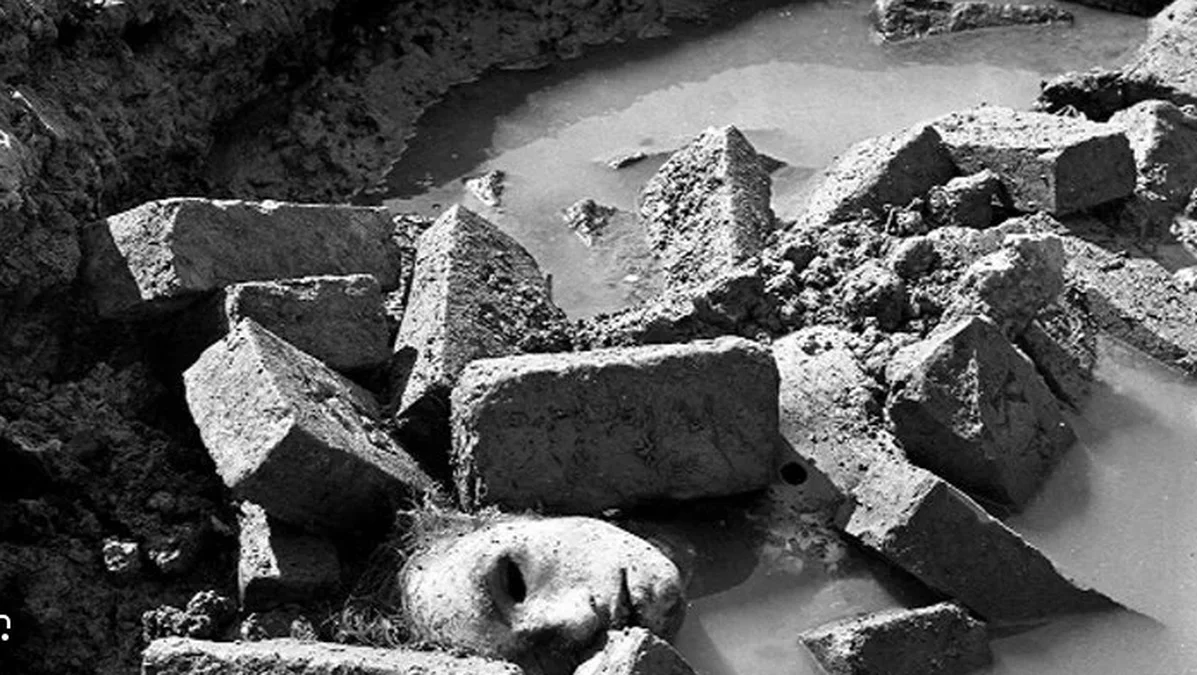
On the day after the victory, the bodies of the martyrs were found scattered in the ponds, ditches, and open areas of Mirpur and Rayer Bazar, Dhaka. Some of the bodies were bullet-ridden, while others were severely mutilated due to inhuman torture. Many of the victims had their hands tied behind their backs and were tortured with bayonets. Some had their internal organs brutally extracted.
Books on the liberation war frequently mention the abductions and the mud-streaked microbuses used for transportation. During curfew and blackout, the Al-Badr forces would go from house to house in jeeps, abducting intellectuals and loading them into mud-covered buses. These buses would take them first to Al-Badr’s headquarters at the Physical Training College in Mohammadpur for torture and interrogation. During her testimony at the tribunal, Dr. Fazle Rabbi’s daughter, Nusrat Rabbi, recalled how her father was abducted. She said, “On December 15 at around 3 p.m., Al-Badr’s men surrounded our house. They had a mud-covered microbus, and they took my father away in that bus.”
While the martyrs’ memories remain vivid in the pages of history, intellectuals' children and liberation war organizers express astonishment at the negative propaganda surrounding the war. They say that no one can erase history or distort the truth in the political arena.
Liberation war researcher Dr. M. Hasan said, “Though the Martyrs' Intellectuals Day is commemorated on December 14, the killing spree continued for a long period. Many intellectuals were taken away in March 1971. Pakistan didn’t consider us as human beings. They used most of our income for their own purposes. There was inequality and hostility at every level. When Ayub Khan was removed from power, the leadership was largely composed of teachers, which made them targets. Over the next 9 months, they selectively killed intellectuals. But even after all these years, we still haven’t been able to make a complete list. We don’t even know a fraction of the massive genocide Pakistan committed. The lack of proper documentation has allowed attempts to erase the history of the liberation war.”