


77% of People Unaware of What the July Charter Contains: Survey
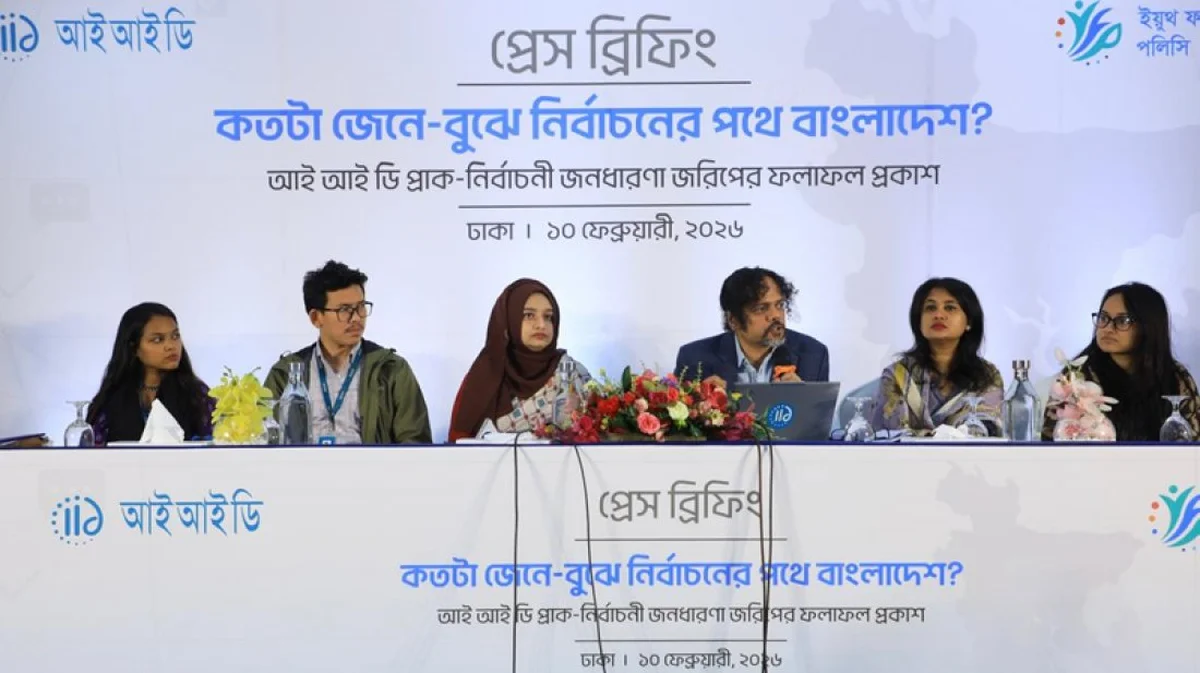
Reforms are being carried out based on the much-discussed July National Charter. The charter will be implemented if the upcoming referendum is won. However, most people do not know what the July Charter contains. This figure stands at 77.2 percent. In contrast, 37.2 percent of people said they know what is included in the July Charter. Even within this group, disparities exist. These findings emerged from the pre-election public perception survey conducted by the Institute of Informatics and Development (IID) and Youth for Policy.
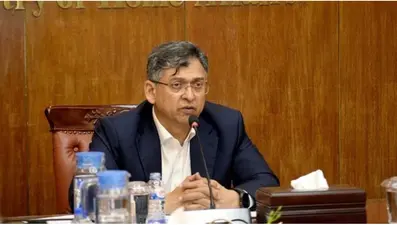
A press conference was held on Tuesday (February 10) at the Pan Pacific Sonargaon Hotel in the capital to present the survey findings, where the report was officially released.
According to the survey results, nationally only 37.2 percent of respondents said they know what the July Charter contains. However, behind this average lies significant disparity. Among voters aged over 35, only 23.2 percent said they know about the charter, whereas among those aged 18 to 35, the figure is 45.7 percent. Among rural respondents, 32.4 percent said they know what is in the charter, while 41.4 percent of urban respondents said the same. Among those with no formal education, only 8.4 percent said they know the contents of the charter, while 77.2 percent said they do not know.
The survey also found that awareness of specific reform issues is weak. For example, only 43.1 percent said they know what changes have been proposed regarding fundamental rights. Nationally, 55.3 percent said they do not know about this issue, a figure that is higher among older and less-educated respondents.
The survey stated that the biggest risk to pre-election inclusion lies in the ability to read and understand the language of the referendum ballot. Nationally, 72.4 percent said they can easily read and understand the referendum ballot. However, among those aged over 35, this rate drops to 57.4 percent, and among those with no formal education, it falls further to 26.6 percent.
The survey also revealed clear uncertainty in public perception regarding the government’s neutrality in the election. 47.9 percent of respondents said the government is neutral regarding the vote, 11.3 percent said the government is not neutral, and 33.7 percent said they do not know whether the government is neutral or not. Among women, this uncertainty rises to 39.7 percent. An additional 7.1 percent declined to respond.
Regarding post-election stability, the survey’s most strategic warning concerns the acceptability of election results. Only 51 percent believe that the losing parties will fully or partially accept the election results. On the other hand, 35.8 percent were uncertain or unwilling to respond. This uncertainty is comparatively higher among women and voters with no formal education.
‘We Are Moving Toward a Referendum Without Understanding It; Widespread Controversy Will Emerge’
Speaking at the press conference, IID founder and Chief Executive Director Syed Ahmed said, “We are moving toward a referendum without fully knowing or understanding it. We still have time to vote with proper understanding. Our only expectation from the government is to ensure an inclusive election and security.”
He said, “In the context of the July movement, we have arrived at the doorstep of an election. But within the electoral environment, we do not see the anti-discrimination elements. We are moving toward a referendum largely without knowing or understanding it.”
Referring to the survey findings, the IID director said, “People do not clearly know what will happen if ‘Yes’ wins or if ‘No’ wins. Nationally, 29.6 percent lack knowledge about what will happen if ‘Yes’ wins. Similarly, 33.6 percent have no idea about what will happen if ‘No’ does not win.”
It was reported that 9,892 voters participated in the survey. IID said the survey was conducted across the country’s eight divisions on February 6 and 7, 2026.