



Fertilizer Supply Becomes New Concern for Bangladesh Amid Energy Crisis
The impact of the ongoing instability in the Middle East is now beginning to affect not only the energy sector but also the fertilizer market. Experts fear that import-dependent Bangladesh may face major fertilizer challenges in the future due to uncertainty in natural gas supply in the international market, increased transportation costs, and disruptions in the supply chain.
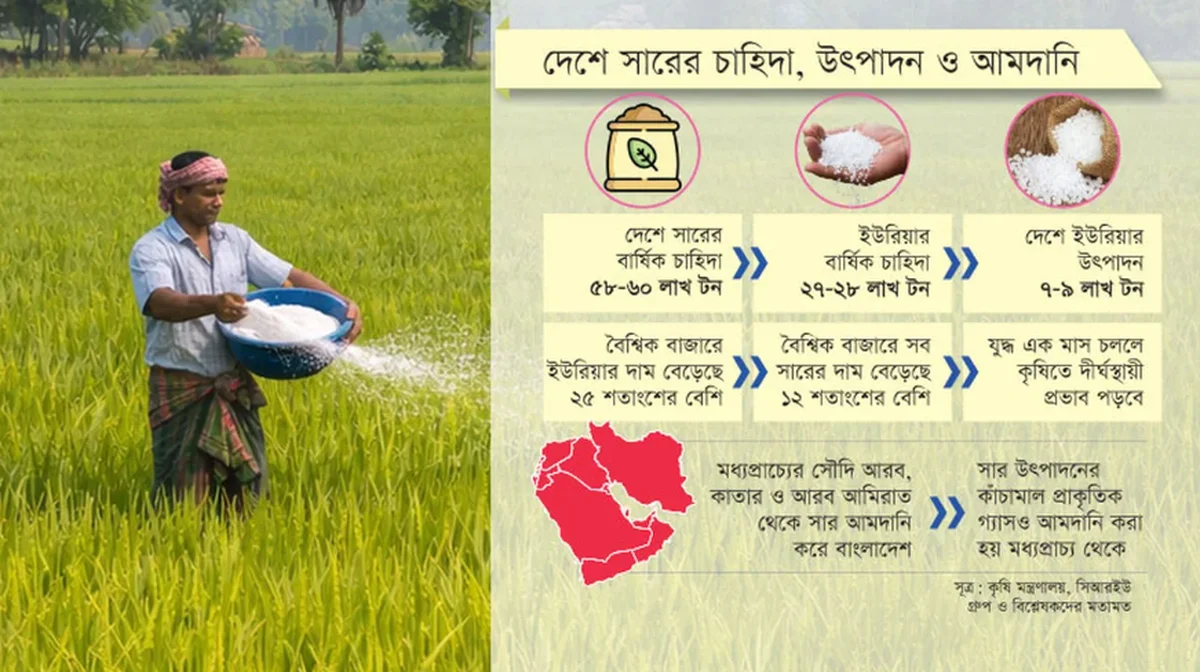
Bangladesh has an annual demand of about 6 million tons of fertilizer. A large portion of this has to be imported from abroad. Major supplier countries include Saudi Arabia, Morocco, China, Russia, and Canada. The responsibility for fertilizer import and management in the country is carried out by Bangladesh Agricultural Development Corporation and Bangladesh Chemical Industries Corporation. In addition, in the private sector, Karnaphuli Fertilizer Company Limited in Chattogram is a major supplier of urea fertilizer.
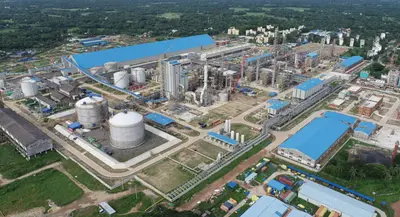
However, due to the gas crisis, five urea fertilizer factories under the Bangladesh Chemical Industries Corporation have been temporarily shut down by government order. These factories produce urea using natural gas. As a result, with the factories closed, dependence on imports is likely to increase further.
Experts say that natural gas is the main raw material for urea production. If gas supply and transportation are disrupted due to tensions in the Middle East, fertilizer prices in the international market rise rapidly. As a result, import-dependent countries have to purchase fertilizer at higher prices.
According to data from international market monitoring organizations, the price of urea fertilizer has increased significantly after tensions surrounding Iran intensified. Last week, the price of urea was around 484 to 490 dollars per ton. Currently, it has increased to about 625 dollars. As a result, fertilizer prices in the global market have increased by more than 12 percent on average.
Analysts say that in a war situation, if transportation of oil, gas, and fertilizer raw materials through the Strait of Hormuz is disrupted, the supply chain faces significant risk. Nearly one-third of the raw materials used in global fertilizer production are transported through this sea route. Therefore, if this route is closed or restricted, it has a major impact on the global market.
Meanwhile, officials from the Ministry of Agriculture said that currently about 1.684 million tons of fertilizer are in stock in the country. This includes all types of fertilizers such as urea, TSP, DAP, and MOP. They believe that this stock will be sufficient to meet demand at least until May–June.
However, agricultural economists say that if the Middle East crisis becomes prolonged, it could affect agricultural production and food security. Therefore, preparations should be taken now to import fertilizer from alternative sources and increase domestic production.