


History of December 11, 1971
Liberation Forces Tighten Grip, Pakistan Seeks Surrender Terms
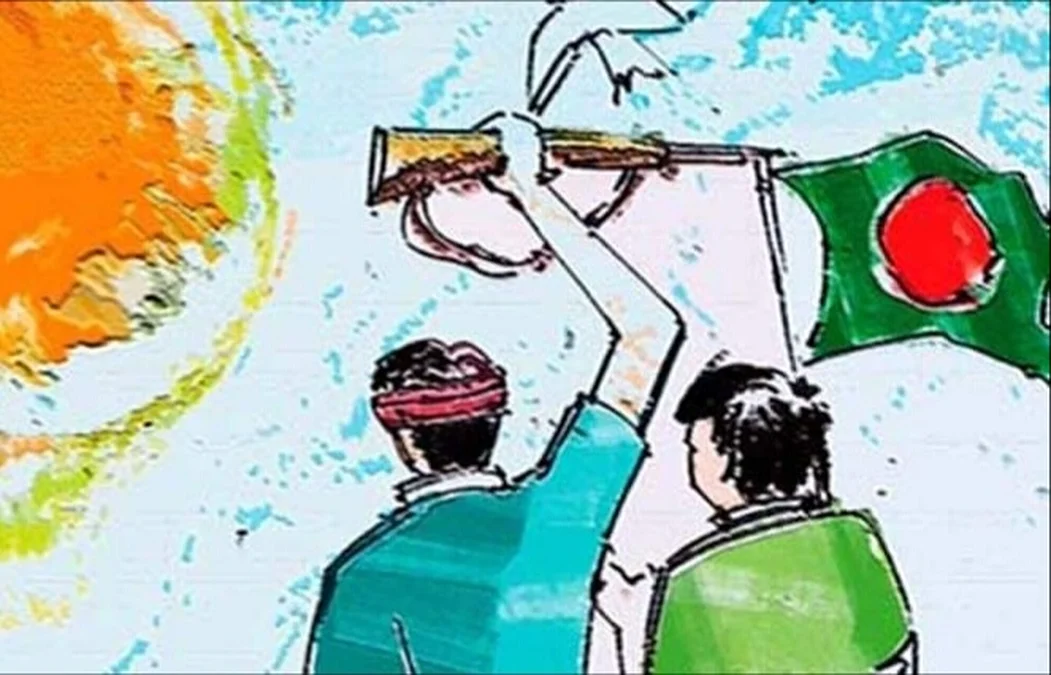
In Dhaka, General Niazi and Rao Farman Ali were disoriented. Pakistan’s defeat in the war was inevitable. Now it was their turn to defend themselves. Pakistan’s defeat was only a matter of time. Civil administration had been established in the liberated areas of Bangladesh. The flag of independent Bengal was flying in the sky.
December 11, 1971. The morale of the Pakistani invaders was shattered. From different parts of the country came only news of victory. Most districts were free from the invaders. But the United States was still desperate to prevent Pakistan’s certain defeat. Yet this powerful country, despite issuing various threats and warnings, could not stop the advancing march of the freedom-loving youth of Bengal from seizing the final victory.
On this blood-soaked day of ’71, then U.S. Secretary of State Henry Kissinger warned Russia’s representative Vorontsov in Washington, saying, “By noon the next day (December 12), India must be forced to accept a ceasefire. Otherwise, the United States itself will take the necessary military measures.”
Such warnings from the United States could not break even slightly the morale of the fearless soldiers of the Liberation Forces and the Allied Forces. To seize the final victory, attacks on the Pakistani invaders became even more intense. War was raging everywhere. One by one, our beloved motherland was being freed. On this day in December of ’71, people around Dhaka tasted freedom. The main objective of the Liberation Forces was the victory of Dhaka, the heart of the country.
With the goal of liberating Dhaka, the brave freedom fighters of Bengal advanced from all directions with tanks and modern weapons. In every locality, village, and town that fell on their path, the freedom fighters raised the flag of the newly independent Bangladesh as they moved forward. On this day in 1971, Jamalpur, Munshiganj, Ashuganj, Tangail, and Hili in Dinajpur, along with various other areas of the country, were liberated from the enemy.
At this time, the Pakistani invaders and their local collaborators were becoming increasingly cornered. However, to liberate these areas, the Liberation Forces and the Indian Allied Forces had to engage in heavy battles. The soil of Bengal was stained with the blood of martyrs. On this day in ’71, in the Madhupur region of Tangail controlled by freedom fighter Kader Siddiqui, 700 soldiers of the Allied Forces landed. They engaged in fierce fighting with a Pakistani brigade.
Meanwhile, on this day in ’71, the Indian Navy’s aircraft and warships conducted extensive operations to completely neutralize Pakistan’s stronghold—Chittagong airport and coastal facilities, ships, and vessels. One after another, bombs and rocket attacks destroyed everything of the Pakistani invaders. Disoriented by attacks from the Liberation and Allied Forces in the air and on land, Pakistani soldiers attempted to flee through river routes. But they did not know that alert guards had already been posted everywhere. As a result, many Pakistani soldiers, abandoning their uniforms and disguising themselves as civilians, were captured by freedom fighters while trying to escape through the rivers.
On this day in ’71, Acting President Syed Nazrul Islam and Prime Minister Tajuddin Ahmad met in the liberated area of Jessore and announced several important decisions. Announcing these important decisions, Prime Minister Tajuddin Ahmad said that Yahya Khan wanted to destroy the Bengali nation, but he failed. Expressing gratitude for achieving independence at the cost of the blood of millions of martyrs, he said that it was the responsibility of every citizen of this country to build this infant state. The Acting President said that Bangladesh’s relationship with India was based on mutual sovereignty and the preservation of independence.
Meanwhile, through Major General Rao Farman Ali Khan, Dr. Malik’s proposal for surrender was submitted to the UN representative stationed in Dhaka. The proposals included:
(1) The Pakistan Army deployed in the Eastern region would surrender to the Indian Army.
(2) No official communication would be made with the Bangladeshi guerrillas regarding this.
(3) Arrangements must be made to send civilian West Pakistani nationals back to West Pakistan.
(4) Arrangements must be made for the gradual withdrawal of the Pakistan Army.
(5) Power must be handed over to the members of the Awami League belonging to the National Assembly.
News of such conditions for surrender sparked jubilation and victory chants among the freedom fighters. Flying everywhere was the red and green flag bearing the blood-soaked map of the land— the sovereign national flag of independent Bangladesh.