



Washington Briefing: Election Without Awami League Questioned
At a U.S. congressional briefing, some participants expressed the view that the election set to take place in Bangladesh without the Awami League will be regarded as “questionable.”
The briefing also raised calls to designate Bangladesh Jamaat-e-Islami as a “terrorist organization”; to impose sanctions on Bangladesh for failing to protect democracy and human rights; and to hold the Yunus government accountable over allegations of “reluctance” in ensuring minority security and granting impunity to those involved in extortion and rape.
The briefing was held Monday on Capitol Hill, three days before Bangladesh’s 13th parliamentary election.
Titled “Violence Against Religious Minorities in Bangladesh,” the briefing was organized by “HinduAction” and the “Coalition of Hindus of North America.”
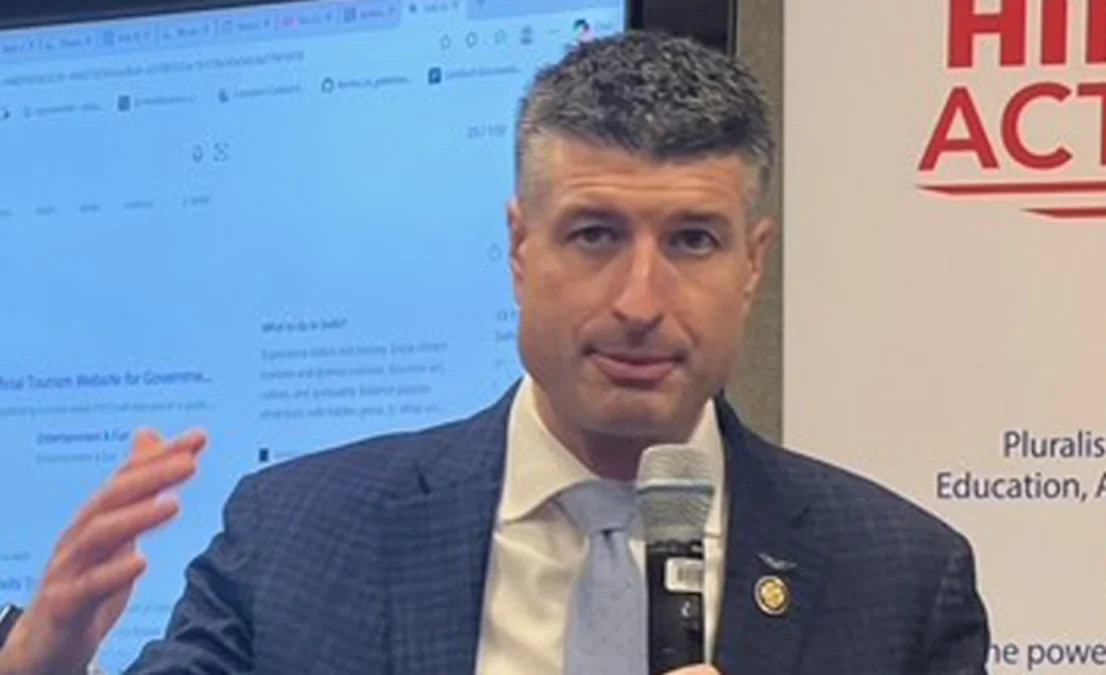
Speaking at the hearing, Michael Rubin, a senior fellow at the Washington, D.C.–based research institution American Enterprise Institute, advocated for declaring Jamaat-e-Islami a “terrorist organization” and banning it.
He described Muhammad Yunus as an “enemy” of democracy and humanity.
Rubin also commented that the February 12 election will have no credibility.
He said, “Jamaat-e-Islami seeks to evade responsibility for wrongdoing, misconduct, and corruption by invoking religion. They are using Islam as a shield to cover up their misdeeds, which will never bring positive results for Bangladesh.”
Referring to a report by The Washington Post, Rubin said, “It can never be acceptable for the Trump administration to build relations with Jamaat-e-Islami. How can the United States maintain relations with those who engage in terrorism under the guise of religion, who do not respect democracy, and who continuously undermine women’s freedom?”
Stating that Republicans and Democrats should work together on this issue, he added, “Muhammad Yunus has become an ally of Jamaat-e-Islami to avenge the defeat of 1971.”
Participating in the discussion, Republican Congressman (Michigan) Tom Barrett said, “Islamic extremists are creating instability in country after country. The United States remains vocal in protecting humanity from their grip.
“We are always committed to maintaining peace and stability in South Asia, including Bangladesh. We do not support anyone being attacked or killed anywhere because of their religious beliefs.”
Virginia Congressman (Democrat) Suhas Subramanyam said, “The increase in violence against the Hindu community in Bangladesh is unacceptable. Likewise, the attempt to hold an election excluding the Awami League—the country’s oldest party and the one that led the Liberation War—is not right; this election will remain questionable.”
He said, “This is not the time for statements; action must be shown. Relations with the United States must be strengthened, and everyone must be informed that Bangladesh’s election is not truly free and fair.”
Former U.S. Ambassador-at-Large for International Religious Freedom and Co-Chair of the International Religious Freedom Summit, Samuel Brownback, delivered remarks virtually at the briefing.
He said, “When communal harmony is disrupted, its impact does not only alter the country’s social fabric but also affects economic activities. Democracy does not remain credible.”
At the briefing, former President of the National Press Club of Bangladesh, Farida Yasmin, highlighted the state of the media in Bangladesh.
Demanding the release of detained journalists, she said, “Nearly 300 journalists have been accused in murder cases.”
At the event, Priya Saha, President of the South Asian Minorities Collective, said, “Minorities in Bangladesh have no security. Brutality continues even in front of law enforcement agencies.”
Among others who spoke at the briefing were Dilip Nath, President of the New American Voters Association; journalist and organizer Shubho Roy; Associate Professor Arifa Rahman Ruma of Bangladesh Open University; political analyst Rana Hasan Mahmud; policy analyst Ritvik Harry; geopolitical analyst Adel Nazriana; and representatives of the “new generation” Shastika Biswas, Puja Devi, Shayan Shil, and Premjit Achari.
Representatives of Senator Cory Booker of New Jersey, Congressman (Democrat) Mike Levin of California, Congresswoman (Republican) Young Kim, and Congressman (Democrat) Dave Min were present at the briefing.
Officials from several think tanks also attended the event. During the question-and-answer session, Professor Dwijen Bhattacharya of Columbia University participated from among the New York delegates.