



Intellectual Killings and the Razakar Issue in the Accounts of Two Defeated Generals
The victims’ hands were tied behind their backs. The number was 125. Some bore bayonet wounds on their bodies, some showed signs of strangulation, and some were killed by gunfire. The location was a field on the outskirts of Dhaka city.
Local residents found the bodies on December 18, 1971—two days after the surrender of the Pakistani forces. A report published in The New York Times on December 19 stated that the bodies were those of physicians, professors, writers, and teachers. Two days before the surrender (December 14), Pakistani soldiers and Razakars abducted and killed them.
The Times report did not specify the exact name of the location. Citing local residents, it wrote that after killing several people at a factory next to the field, Razakars dumped the bodies into pits. While local residents were gathering at the site, several Razakars were still inside the factory. At one point, they clashed with an Indian patrol team. When two of them were captured, they confessed to killing the intellectuals. They were later beaten to death.
Some bodies were lying in blood-soaked water in the field. Due to severe mutilation, they were almost unrecognizable. When relatives went to identify bodies lying in a brick kiln pit, Razakars hiding in a nearby mosque opened fire on them. The New York Times further wrote, “It is believed that Razakars and Pakistani soldiers abducted the intellectuals to extract concessions by setting certain conditions prior to surrender.”
Accounts of Two Generals
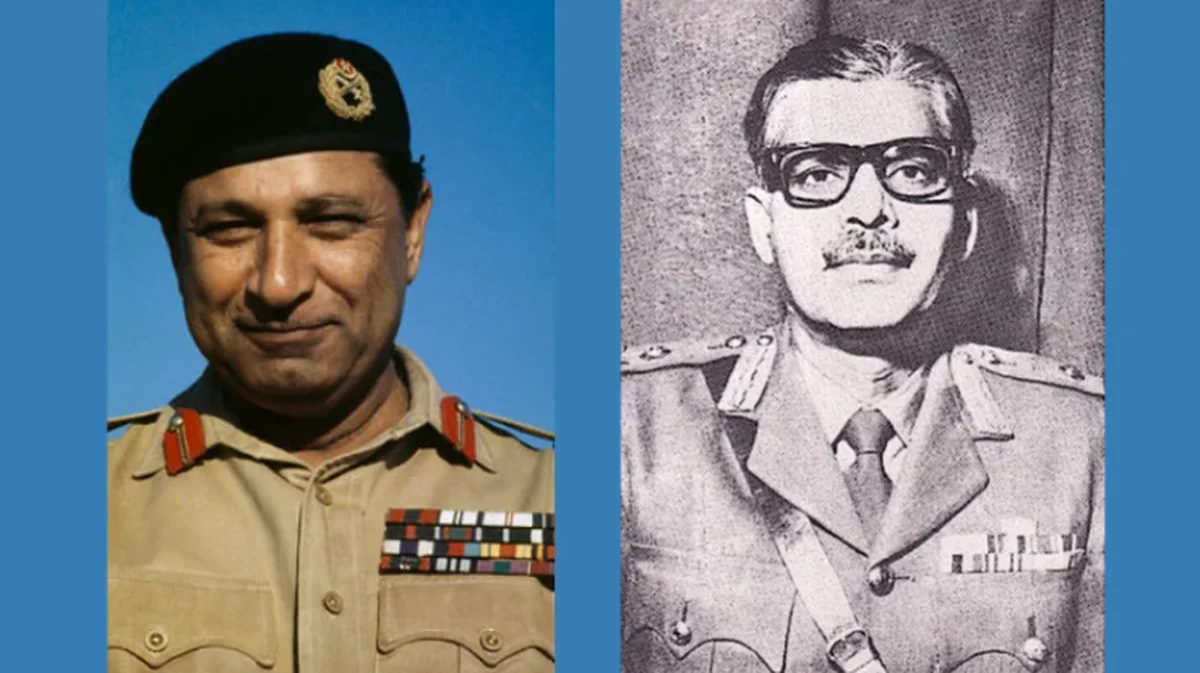
In 1971, the GOC of Pakistan’s Eastern Command was General Ameer Abdullah Khan Niazi. Under his command, Pakistani forces carried out killings in Bangladesh. Several years after the war, the issue of the killing of intellectuals surfaced in one of his interviews.
The interview was taken on March 19, 1998, by Mohiuddin Ahmed, founder of University Press Limited (UPL), and Professor Muntasir Mamun of the Department of History at Dhaka University. Niazi’s interview was published in the book titled Ekattor Pakistanider Drishtite (1971 in the Eyes of Pakistanis).
In the interview, Niazi claimed that intellectuals were not his concern; during the war, his main worry was “armed enemies.” He said he learned about the list of intellectuals from Altaf Gauhar (information secretary during Ayub Khan’s time). Gauhar informed him that Forman (military adviser to the Governor of East Pakistan) had a list of intellectuals. Later, to verify its authenticity, he sent someone to Forman. At his request, Forman removed two names from the list.
However, a different account emerged in an interview of Rao Farman Ali (then a major general), published in the same book. According to Farman, on December 9 or 10, before the surrender, General Shamsher (then CAFO of Pilkhana) asked to meet him. The main purpose was to meet General Niazi. On the way, Shamsher said that some people needed to be arrested. When asked why, he told him to ask Niazi. All of those people were intellectuals.
_1765695258.png)
After the Pakistanis surrendered, the names of intellectuals were found in written documents at the Governor House. For this reason, Rao Farman Ali was held responsible for the killing of intellectuals. In the interview, Farman Ali claimed that many people used to come to the Governor House to meet officials and would provide such lists.
Who Carried Out the Killings
Like The New York Times, Anandabazar Patrika also published a report on the killing of intellectuals on December 19. It wrote that on the night of December 14, some masked men raided the homes of intellectuals. On the night of December 17, locals found several bodies in a bunker beside a road near the Buriganga River. All of them had their eyes gouged out and their hands tied behind their backs. Among those identified were Professor Abul Kalam Azad, Dr. Rabbi, and Munir Chowdhury. They were abducted by members of Al-Shams and Al-Badr, accompanied by Pakistani soldiers.
On the same day, Ittefaq reported: “In the days preceding the fall of the Pakistani military junta and the surrender of its occupying armed forces, their patronised collaborators—Jamaat-e-Islami and like-minded forces Razakar, Al-Badr, and Al-Shams—arrested and abducted Bengali intellectuals, journalists, litterateurs, professors, writers, physicians, political thinkers, and scientists in Dhaka. Almost all of them have been killed by these most heinous perpetrators.”
When Mohiuddin Ahmed and Muntasir Mamun asked General Niazi during the interview about the killings carried out by Razakar, Al-Badr, and Al-Shams, Niazi said he was unaware of them. During the war, he had 38,000 troops who were dying indiscriminately. Their positions had to be filled. Therefore, he appointed members of Al-Badr and Al-Shams to various army divisions. Many of them deserted and ran away and committed various acts.
In the interview, Niazi said, “They were recruited under a religious obligation. They were also used in that manner. They were given weapons.”