


Load Shedding Increasing in Rural Areas Despite Stable Supply in Cities

Due to strain in fuel supply, while electricity supply in cities remains normal, load shedding is being increased in rural areas. On one hand, the summer heatwave is intensifying, and on the other, complaints are rising about increased load shedding. In some areas, electricity is unavailable for four to five hours a day. Although load shedding had decreased over the past few years, it is expected to increase this time, and people will have to adapt to the situation, according to those concerned.
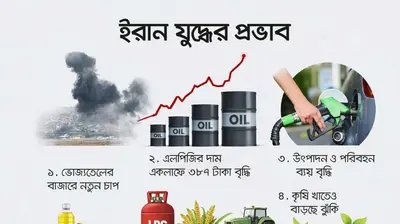
Like other countries, Bangladesh’s energy sector has also been affected by the Iran war. In addition, due to unpaid dues of power plants and insufficient funds to purchase fuel, efforts are being made to manage the situation through load shedding. Power sector insiders believe that unless the Iran war ends, there is little possibility of improvement in the situation.
It is জানা that production from liquid fuel-based power plants has already been reduced. Across the country, production from furnace oil-based power plants with a capacity of 5,500 megawatts has been reduced to 2,100 megawatts. At the same time, imported electricity from India has also declined, with Adani’s supply dropping by half. On Monday (April 6), around 750 megawatts of electricity was supplied during the day. One unit of the plant remains shut due to mechanical faults.
Government sources have stated that even if desired, it is not possible to import fuel oil according to demand. This is the result of a global crisis. Meanwhile, if the supply of crude fuel to Eastern Refinery, the country’s largest supplier of furnace oil, is disrupted, the refinery will have to be temporarily shut down. Due to the Middle East crisis, no crude oil could be imported in March, and none is expected in April either. As a result, the refinery will remain closed for some time. The refinery produces 84 percent furnace oil out of total refined oil, all of which is used in electricity generation. In addition, furnace oil is also imported for power generation.
According to power development sources, daily electricity demand in the country currently fluctuates between approximately 13,500 to 15,000 megawatts. However, due to production shortages, up to 1,000 megawatts less electricity is being supplied. As a result, regular load shedding is being carried out in various areas, especially in rural regions.
Although the country’s total generation capacity is around 29,000 megawatts, a large portion cannot be utilized due to the fuel crisis. Gas-based plants have a capacity of over 12,000 megawatts and coal-based plants over 7,000 megawatts, but due to supply shortages, these plants cannot be operated at full capacity.
Private power producers say that a large amount of government dues remains unpaid, totaling around 47,000 crore taka. Of this, more than 16,000 crore taka is owed to private plants. Due to unpaid dues, they are unable to open letters of credit to import new fuel, causing fuel reserves at many plants to decline rapidly.
On the ground, it has been found that in many rural areas, electricity is going off multiple times a day, with total outages lasting four to five hours in some places. This is increasing public suffering during the heat and also affecting irrigation activities. On one hand, there is intense heat, and on the other, the lack of electricity is worsening the hardship. Rural populations have also become accustomed to electricity usage. They no longer use it only for lighting or fans; many rely on it for water pumps, televisions, and refrigerators. However, the lack of electricity is putting them in distress.
Officials from Dhaka’s electricity distribution companies said that power supply in most parts of the city remains stable with no load shedding, as demand is being fully met.
In contrast, inquiries into rural electricity distribution reveal that load shedding is being carried out regularly due to insufficient supply.
Local rural electricity officials said that over the past few days, load shedding has been necessary, averaging between 10 to 25 percent due to unmet demand.
The power division has stated that the government has taken various measures to manage the situation by saving electricity. These include reducing shop and market hours, adjusting office schedules, and urging people to avoid unnecessary electricity use. It is believed that these steps could save up to 1,500 megawatts of electricity.
Overall, it is clear that load shedding has become the primary short-term solution to cope with the pressure of the energy crisis, with the greatest impact falling on rural areas. In order to maintain normal supply in cities, electricity shortages are being shifted to rural regions. As a result, both daily life and agricultural activities are being disrupted. If the situation does not improve quickly and fuel supply is not normalized, suffering is likely to increase further.