Fuel Crisis Raises Concerns of Eid Travel Disruptions

Nilachal Paribahan operates 350 buses. Of these, 95 run on long-distance routes from Dhaka to destinations such as Cox’s Bazar, Noakhali, and Lakshmipur. Last Thursday, 30 buses were out of service due to the fuel crisis. On the company’s Gabtoli-Narsingdi route, 16 out of 40 buses remained idle because they could not obtain fuel due to long queues of vehicles at filling stations.
Nilachal Managing Director Aftabuddin Masud shared this information and told that if the situation continues, suffering during the Eid journey will be inevitable. A bus traveling to and from the Dhaka–Cox’s Bazar route requires about 350 liters of diesel. To avoid wasting time buying fuel on the way, buses used to fill their tanks with around 400 liters of diesel before departure. But since the crisis began, it has not been possible to obtain more than 100 liters of diesel at a time. With that amount, it is impossible to reach Cox’s Bazar, forcing buses to refuel again on the way.
He added that due to long queues of private vehicles at fuel pumps, it now takes an extra two to three hours to obtain fuel. As a result, not only are passengers facing inconvenience, but bus schedules are also becoming disorganized. The pressure of vehicles will increase during Eid, and traffic congestion will also rise. If the waiting time for fuel is added to this situation, Eid travel will become extremely difficult.
Other transport owners are saying the same thing. According to them, the government’s rationing system has increased the suffering. If fuel cannot be supplied according to demand, the transport sector may face a standstill during Eid. Most buses have already sold advance Eid tickets based on the current fuel price. If the fuel price increases now, losses will also increase. However, Road Transport and Bridges Minister Sheikh Rabiul Alam has assured transport owners that fuel prices will not increase and that supply will improve from Sunday, eliminating the crisis.
Suffering Already Visible Amid the Crisis
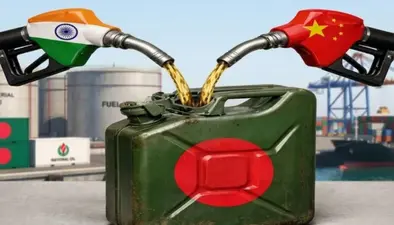
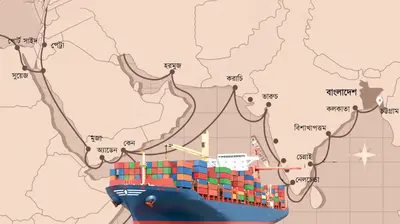
Following the aggression by the United States and Israel against Iran, a global fuel crisis has emerged. Oil imports have decreased. Three ships scheduled to arrive in Chattogram in March have been delayed. In response to the situation, the government has decided to introduce a rationing system.
Under this decision, motorcycles are allowed to purchase a maximum of two liters of fuel per day, private cars 10 liters, and SUVs, jeeps, and microbuses between 20 and 25 liters of octane or petrol.
Diesel-powered pickup vehicles and local buses are allowed between 70 and 80 liters, while long-distance buses, trucks, covered vans, and container-carrying vehicles are limited to between 200 and 220 liters.
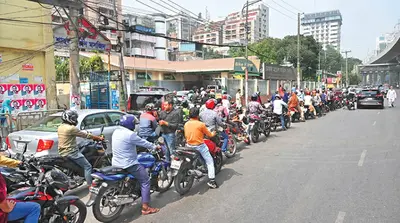
Saiful Alam, General Secretary of the Road Transport Owners Association, said that the rationing system itself has created problems. Fearing that fuel may not be available later, motorcycles and small vehicles are crowding fuel pumps. As a result, buses are also forced to wait in long queues. More than the fuel shortage itself, the long lines have become the major problem. The owners’ association has discussed the issue with the government, and the minister has assured that the problem will be resolved by Sunday.
Mostafa Azad Chowdhury, owner of Agomoni Paribahan on the Dhaka–Rangpur route, said that due to lower passenger numbers during Ramadan, no buses have yet been suspended and no trips have been canceled. However, it is uncertain what the situation will be once pressure increases from the evening of March 16.
He said long-distance buses usually buy fuel from specific filling stations. At the pumps in Gabtoli from which Agomoni Paribahan purchases diesel under contract, long queues of vehicles are already visible. This is causing delays in obtaining fuel. During Ramadan, when passenger pressure is lower, buses are making one trip to Rangpur and back within 24 hours. But during Eid, due to increased passenger demand, buses are expected to operate two trips per day. Without receiving diesel from filling stations on time, this will not be possible, and maintaining schedules will become difficult.
Efforts to Solve the Crisis Creating More Problems
Although the government decided to reduce the supply of diesel, petrol, and octane by 25 percent as part of austerity measures, pump owners and distributors have alleged that the Bangladesh Petroleum Corporation’s quota policy has effectively reduced market supply by nearly 45 percent. Many pumps have been closed due to depleted stocks. To manage the situation, BPC has instructed depots to remain open on Friday and Saturday as well.
Despite the reduced supply, according to BPC data, fuel sales have increased. Rumors of a future shortage have led many people to buy and store fuel. According to BPC statistics, from March to June last year, an average of 12,292 tons of diesel were sold daily. In the first seven days of this month, the daily average sale reached 17,899 tons, which is 47 percent higher than normal demand.
Buses and trucks run on diesel, which is imported. Jeeps, private cars, microbuses, and motorcycles run on octane and petrol, which are produced domestically. However, these fuels are also facing shortages due to increased demand and sales. According to BPC, in March last year, average daily octane sales were 1,217 tons. This month it has increased to 1,594 tons. Petrol sales have also risen significantly. In March last year, daily petrol sales averaged 1,427 tons, but now they have increased to 1,779 tons.
Transport owners say the rush to stockpile fuel has further intensified the problem. Bus owner Mahbubur Rahman said that previously it took at most 10 minutes to fill a diesel tank. Now it takes two to three hours. If such crowds continue during Eid, it will take even longer, reducing the time buses can spend transporting passengers and causing significant hardship.
Problems Also on Highways
Last Saturday, during a journey from Mymensingh’s Maskanda bus stand to Dhaka on a United Paribahan bus, it was observed that the bus attempted to refuel at three filling stations but failed. Two had long queues, while another had no diesel available.
Saiful Alam, one of the owners of United Paribahan, said the company operates 70 buses. Like other companies, they purchase diesel from specific filling stations under contract. However, due to shortages or long queues at those stations, buses are now forced to stop along highways to buy fuel, increasing travel time. During the Eid rush, it will be nearly impossible to maintain schedules if buses must rely on highway filling stations, and traffic congestion around those stations may worsen the situation.
Several transport owners said most buses usually collect fuel from predetermined filling stations to maintain transparency in fuel accounting. Drivers and helpers are not involved in these transactions. Bus owners pay the filling stations according to contractual agreements. However, due to the crisis, buses are being forced to buy fuel from stations along highways, making it difficult for owners to maintain accurate accounts. Fuel theft can occur in such cases, leading to financial losses for owners. For this reason, buses are waiting in long queues at their designated stations despite the delays.
Meanwhile, even on Friday, which is a public holiday, long lines of vehicles were seen at filling stations in areas such as Asadgate, Bijoy Sarani, Paribagh, and Matsya Bhaban in the capital, although the crowds were somewhat smaller than before.
Source: Samakal