

Looking Back: The Bloodstained July Plot and Yunus’s Unconstitutional Grip on Power

What took place on the streets of Bangladesh in July 2024 cannot reasonably be portrayed as a spontaneous student uprising. It was, rather, a meticulously engineered seizure of state power enabled by international networks, extremist fundamentalist groups, and complicit elements within the country itself. The removal of an elected government and the installation of Muhammad Yunus, a financier known for interest-based microcredit, was not only unconstitutional; it was part of a calculated strategy to weaken the structural foundations of the Bangladeshi state.
Thousands of young people who joined the July unrest were largely unaware of the forces manipulating them. What appeared in front of them as a legitimate demand for quota reform concealed a much deeper political agenda. Operating behind the curtain were Jamaat-e-Islami and the BNP two parties that, for decades, have worked to undermine Bangladesh’s democratic progress. Jamaat, which collaborated with the Pakistani occupation forces in 1971 and took part in genocide, rape, and the killing of intellectuals, has now re-emerged as a governing partner under the guise of reform. The BNP, a party born under military patronage during the authoritarian rule of Ziaur Rahman an era marked by institutionalized corruption and terrorism now pretends to champion democracy.
Any objective assessment of the July events shows that they were not accidental. The movement began with quota reform demands that appeared reasonable on the surface. But when the government attempted dialogue and the judiciary issued rulings, the situation abruptly turned violent. Police installations were torched, public infrastructure was destroyed, and civilians were killed. These actions bore none of the hallmarks of a peaceful protest. Those hurling Molotov cocktails, lynching police officers, and burning state property resembled trained operatives far more than unarmed students.
Muhammad Yunus himself must also be examined critically. His global reputation rests largely on his Nobel Prize, but behind that recognition lies a deeply problematic model of microfinance. Under Grameen Bank, Yunus institutionalized high-interest lending that trapped millions of poor Bangladeshis—especially women—into cycles of perpetual debt. Numerous studies have documented how these loans burdened families for generations. Western institutions celebrated this model not because it alleviated poverty, but because it repackaged profit-making as humanitarianism. Yunus succeeded in giving capitalism a benevolent mask.
Today, that same individual has been placed at the helm of the state as “chief adviser,” without any constitutional mandate. An elected government was removed, and an unelected figure installed through extra-constitutional means. This is not reform it is a coup. The involvement of sections of the military in this process is increasingly evident. Bangladesh’s history makes clear what happens when armed forces overstep their constitutional role, as seen during the regimes of Ziaur Rahman and Hussain Muhammad Ershad.
The scale and coordination of the July violence strongly suggest foreign funding and organized conspiracy. Simultaneous unrest across the country, the sophistication of weapons used, and the extent of destruction raise serious questions. Who financed this operation? Who benefited from destabilizing Bangladesh? Whose interests were served by toppling a stable, elected government? The answers are deeply unsettling.
The principal beneficiaries are Jamaat-e-Islami and the BNP. Jamaat, which opposed Bangladesh’s independence and sided with Pakistan in 1971, is now embedded within state power. From positions of influence particularly in education they are attempting to erase the history of the Liberation War, weaken Bengali cultural identity, and rewrite national memory. The BNP, once internationally notorious for corruption and misgovernance, now speaks of reform an irony bordering on absurdity.
Since July, a systematic assault on national identity has been underway. National symbols are being targeted. Cricket, a unifying source of pride, has become a battleground. Shakib Al Hasan, Bangladesh’s most successful cricketer, is branded a traitor simply because he served as an Awami League MP. By that logic, millions of voters would also be traitors. Even the renaming of the Sher-e-Bangla Stadium has been proposed, revealing a broader effort to erode national confidence.
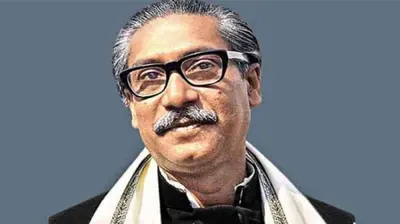
Education and culture are under sustained attack. Bangabandhu Sheikh Mujibur Rahman’s role is being diluted in textbooks. The Liberation War is being minimized. Cultural traditions such as Pahela Baishakh are labeled “un-Islamic” or “Hinduized.” Statues are vandalized, memorials desecrated. These acts are not random—they are part of a deliberate plan to transform Bangladesh into a communal, intolerant state.
While many young protesters may have sincerely hoped for reform, they were deceived. What they are witnessing now is not reform, but retribution. Political opponents are being arrested and harassed, courts are being weaponized, media freedom is shrinking, and journalists and intellectuals are under attack. This is not democracy; it is authoritarianism with a reformist façade.
Bangladesh was born through immense sacrifice. In 1971, independence was achieved through the blood of three million martyrs and the suffering of countless women. The enemies of that independence—Pakistan’s military and its local collaborators—are the same forces now reasserting influence. Their aim is to erase the spirit of the Liberation War and push Bangladesh toward the same path of extremism, instability, and military dominance that has plagued Pakistan since 1947.
Economically, the consequences have been severe. Since July, investment has stalled, foreign investors are withdrawing, garment orders are declining, tourism has collapsed, reserves are shrinking, and inflation is rising. Ordinary citizens are bearing the cost, while those in power remain consumed by political vendettas and self-preservation.
Minorities are increasingly vulnerable. Hindus, Buddhists, and Christians face intimidation, attacks on homes and temples, and growing insecurity. Despite constitutional guarantees, they are being pushed toward second-class status—an essential step in constructing a religion-based state.
Bangladesh now stands at a crossroads. Rebuilding dismantled institutions will not be easy, nor will healing social divisions. But the nation has overcome darkness before. It defeated military dictatorship in 1990 and won independence in 1971. It can do so again.
The current regime knows its legitimacy is fragile. That is why it is rushing to consolidate control over the administration, judiciary, and military—while avoiding elections at all costs. Public resentment is growing, even if it remains silent for now.
Yunus and his allies, who claim to be reformers, are in reality dragging Bangladesh backward. Their commissions lack substance, their vision is absent, and their survival depends on foreign endorsement. But international support is never permanent. Sooner rather than later, they too will be forced to confront reality.
Source: Bangladesh Perspectives