




Rising Violence Against Bauls Raises Alarms Over Religious Extremism
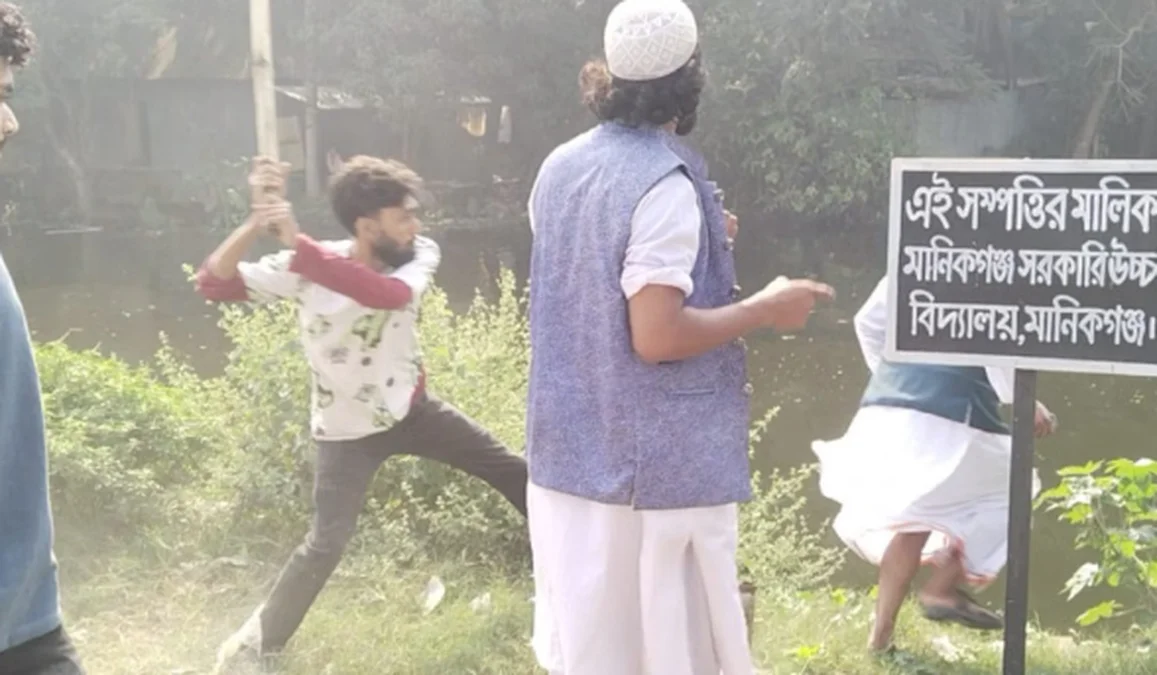
A series of attacks targeting Bauls and their followers has been reported across Bangladesh in recent weeks, with a particular religious group appearing to lead the assaults. The attackers identify themselves as “Tauhidi Janata.”
The first attack took place on 23 November in Manikganj, targeting the followers of Baul artist Abul Sarkar Maharaj. Subsequent assaults were reported on Wednesday in Thakurgaon and Khulna.
The events stem from a musical debate held on 4 November in Ghior, Manikganj, where Abul Sarkar Maharaj participated in a traditional pala gaan performance. That evening, he engaged in a four-hour philosophical debate between two opposing concepts—Jib (all living beings) and Parom (the Divine). His opponent, also named Abul Sarkar, had traveled from Faridpur to debate in favor of Parom, while the Manikganj Baul represented Jib.
A few seconds clipped from the four-hour performance were later circulated online and framed as “derogatory remarks against religion.” A case was subsequently filed, leading to the swift arrest and imprisonment of Abul Sarkar Maharaj.
Since then, his followers and admirers have been demanding his unconditional release. Numerous cultural and social organizations—including prominent public figures, university teacher networks and Bangladesh Mahila Parishad—have expressed concern and condemned the attack.
Following the political upheaval in the country, attacks on shrines, minorities, and dissenting voices have continued, and critics argue that the government has failed to take an active stance. Many have questioned the sincerity of the authorities in addressing the latest incidents.
Statements by several government advisers have further highlighted the administration’s apparent weakness. Cultural Adviser Mostofa Sarwar Farooki wrote on Facebook that he finds the situation “deeply unsettling,” adding that it is primarily the responsibility of the Home Ministry to take criminal action. Information Adviser Mahfuz Alam commented that “the oppressed of yesterday have become the oppressors today,” while the Chief Adviser’s Press Secretary Shafiqul Alam described the incident as “tragic.”
BNP Secretary General Mirza Fakhrul Islam Alamgir condemned the attack on the Bauls as “a disgraceful act by extremist religious zealots.”
On Thursday, Chief Adviser Dr Muhammad Yunus ordered the immediate arrest of those involved in the attacks on the Baul community, according to Press Secretary Shafiqul Alam at a press briefing at the Foreign Service Academy.
History and Context of the Controversial ‘Jib–Parom’ Pala
Playwright and lyricist Shakir Dewan told The Daily Star that the disputed performance was part of the traditional Jib o Parom Pala, a century-old debate-style musical tradition where Jib represents all living beings and Parom symbolizes the Creator. The genre was pioneered by his ancestor Dewan Alef Chan Shah, known as Alfu Dewan.
Shakir explained that pala gaan has long been rooted in philosophical and spiritual traditions, with legendary performers like Malek Dewan, Khalek Dewan, Razzob Dewan, Halim Boyati and Aynal Boyati carrying forward the legacy. The tradition’s aim has always been contemplation—not conflict.
He noted that taking a fragment of a long philosophical debate out of context and using it to justify “violent attacks” is unacceptable. “Humans are compassionate beings. No person should behave with such brutality,” he said.
“A Political Attack” — Forhad Mazhar
Poet and thinker Forhad Mazhar condemned the charges against Abul Sarkar and the attacks on Bauls, announcing plans to organize a major Baul gathering in Manikganj in the future.
He argued that taking a few seconds from a four-hour debate is “politically motivated.” He compared pala gaan debates to Socratic dialogues, calling them a philosophical tradition practiced without books but through oral expression and performance.
Mazhar questioned the intentions behind the violence: “Those who claim to act in the name of Islam while beating Bauls, throwing them into water, and issuing threats of slaughter—who are they? They have no relation to Islam. They are enemies of Islam.”
He suggested that foreign interests or groups trying to disrupt future elections may be behind these incidents. “They must be arrested immediately,” he said.
According to him, the conflict reflects a larger struggle between secular nationalism and religious nationalism. “With the decline of secular nationalism, religious nationalism has grown stronger. It is an ominous force, and we must confront it.”
He warned that the attacks expose deep societal tensions and predicted significant cultural, political, and economic transformation ahead.
“The Oppressor Is the Same—Only the Costume Has Changed”
Theatre personality Syed Jamil Ahmed stated that many people in Bangladesh derive their worldview from Baul philosophy. Bauls do not attack anyone, he said; rather, they speak of humanity, soul, and love.
Addressing the attackers, he said: “If you have greed for land or wealth, say it openly. But if you simply disagree with a philosophical idea, take time to listen and understand instead of responding with violence.”
He argued that those attacking Bauls are no different from past oppressors—their “appearance has changed, but not their behavior.”
Calling for stronger administration, he said that if bureaucracy and the police acted without fear, such incidents would decrease.
Source: The Daily Star