

Bangladesh’s Post-Transition Hope Dims Amid Rising Mob Violence
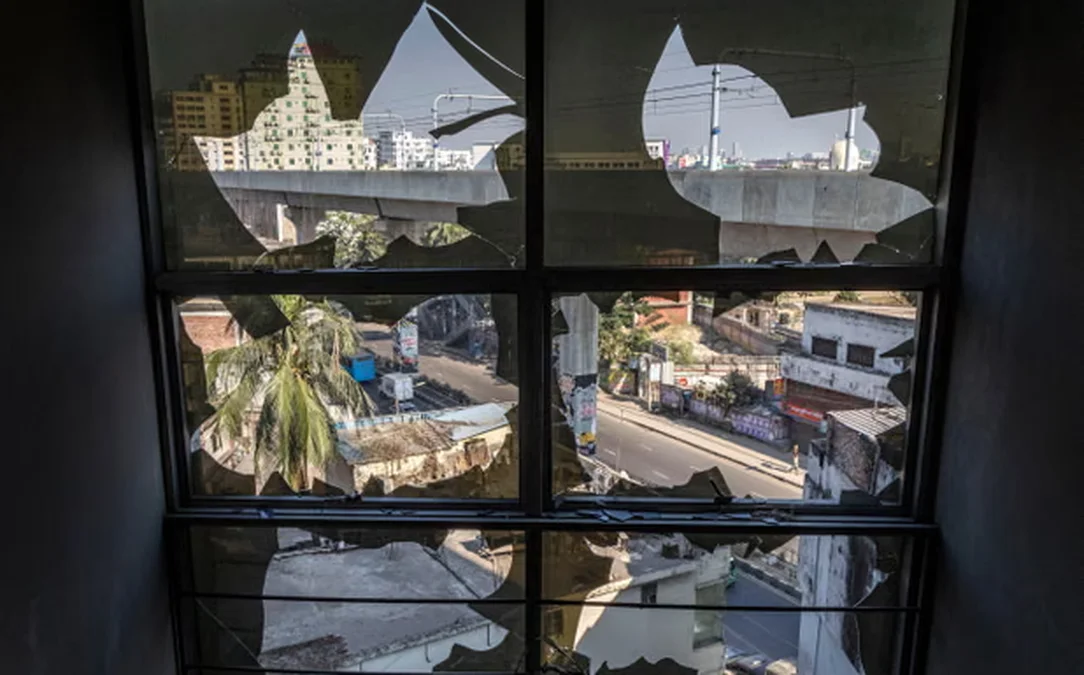
As Zyma Islam pressed “send” on her article for Friday’s edition of Bangladesh’s Daily Star, the sound of an angry crowd was already growing outside. Hoping to escape before the situation worsened, she headed for the exit — but the mob had already surrounded the building.
The violence followed the assassination of Sharif Osman Hadi, a prominent pro-democracy leader who had played a key role in the movement that removed former prime minister Sheikh Hasina from power in August 2024. Authorities said Hadi was killed by loyalists of Hasina who had fled to India. Fueled by anger and suspicion, crowds targeted anyone perceived as being linked to the former regime.
Despite having suffered intimidation, lawsuits, and attacks during Hasina’s rule, both Prothom Alo and The Daily Star were attacked that night. Earlier, Prothom Alo’s offices had already been burned down. By 18 December, unrest escalated further, with newspaper offices and a cultural institution set ablaze — alarming journalists and civil society members who had hoped for democratic renewal after 15 years of authoritarian governance.
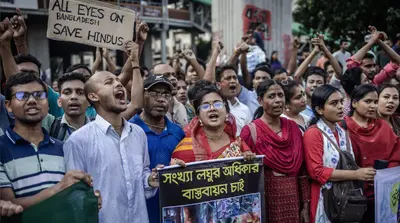
According to the human rights group Ain o Salish Kendra, 184 people had been killed in mob violence by November this year, a sharp rise from 51 deaths in 2023. In one recent incident, a Hindu garment worker was lynched after rumors accused him of blasphemy.
As the mob closed in, Islam and 28 colleagues fled to the roof, fearing the building would be set on fire. Thick smoke filled the air. Believing she might not survive, Islam posted a desperate message on Facebook saying she could no longer breathe.
Despite warnings and repeated calls to authorities, help did not arrive in time. Firefighters attempting rescues were attacked, and it was not until around 4 a.m. that the military escorted journalists to safety. Muhammad Yunus’s interim government later acknowledged its failure to respond quickly, with his press secretary publicly expressing shame.
Journalists say the attacks reflect how far Bangladesh has drifted from the optimism that followed Hasina’s removal. While media freedom has improved compared to the previous regime, the lack of protection during the violence has deeply shaken confidence.
Many reporters now fear harassment while working on the ground. Islam believes security forces should have focused on protecting journalists without resorting to lethal force and warns against mass arrests that fuel cycles of revenge.
Still, she says there remains a narrow window for hope — if the government treats the attacks as a warning and takes meaningful steps to uphold law, accountability, and press freedom.
Source: The Guardian