


Former Prime Minister Sheikh Hasina Slams Upcoming Bangladesh Elections, Questions Legitimacy of Interim Government

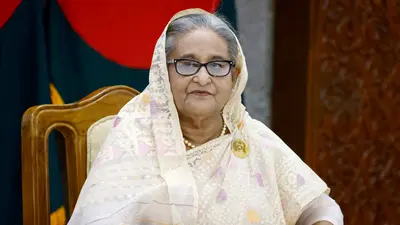
As Bangladesh moves forward with its national elections, the country’s political landscape remains deeply contested. In an exclusive interview published by The Pioneer, the former Prime Minister delivered a strong and comprehensive critique of the current electoral process, describing it as fundamentally lacking democratic legitimacy and warning of long-term consequences for the nation’s constitutional order.
Speaking from abroad, the former Prime Minister stated that the interim government currently overseeing the elections does not possess a legitimate electoral mandate. She underscored that no national vote had conferred authority upon the present administration and argued that governance without direct public endorsement contradicts the core principles of parliamentary democracy.
According to the former Prime Minister, the exclusion of her political party — which governed Bangladesh for 15 consecutive years under her leadership has effectively disenfranchised a significant portion of the electorate. She maintained that banning the country’s largest and most established political force from participating in elections undermines pluralism and weakens democratic competition. In her view, meaningful elections require the participation of all major stakeholders to ensure that citizens are offered genuine choices at the ballot box.
The former Prime Minister also expressed concern over reported constitutional changes and structural reforms undertaken by the interim authorities. She argued that altering foundational democratic frameworks without an elected parliament risks destabilizing institutional continuity. Democratic legitimacy, she emphasized, is not derived merely from administrative control but from the consent of the governed through transparent and inclusive elections.
Addressing the political unrest that preceded the transition of power, the former Prime Minister said that what initially began as peaceful demonstrations was later overtaken by violence and chaos. She suggested that extremist elements exploited the unrest, leading to attacks on public institutions and loss of life. Her departure from Bangladesh, she explained, was not a voluntary political retreat but a necessary step to prevent further bloodshed and protect national stability.
In the interview, the former Prime Minister raised concerns about the treatment of political supporters and media institutions during the current interim period. She indicated that detentions, intimidation, and restrictions on political activities have created an atmosphere of fear rather than democratic openness. According to her, a healthy democracy must guarantee freedom of expression, political participation, and equal protection under the law.
Reflecting on her tenure in office, the former Prime Minister highlighted her government’s commitment to institutional development, economic growth, and social advancement. She suggested that Bangladesh had made notable progress in infrastructure expansion, poverty reduction, and global engagement during her leadership. In her assessment, safeguarding these achievements requires political continuity grounded in constitutional norms and electoral legitimacy.
The former Prime Minister reiterated her belief that the strength of Bangladesh lies in its people’s resilience and democratic aspirations. She called for a return to an electoral process that ensures full participation, transparency, and fairness. Without these essential elements, she warned, questions surrounding legitimacy may continue to cast a shadow over the country’s political future.
As Bangladesh proceeds with its elections under intense national and international scrutiny, the former Prime Minister’s remarks add a significant voice to the ongoing debate about governance, representation, and the future direction of the republic. Her call for inclusive democracy and constitutional order underscores the broader challenge facing the nation: balancing political transition with the preservation of democratic integrity.