


Massive Cost Overrun: Tk 79,834 Crore Added to 65 Projects
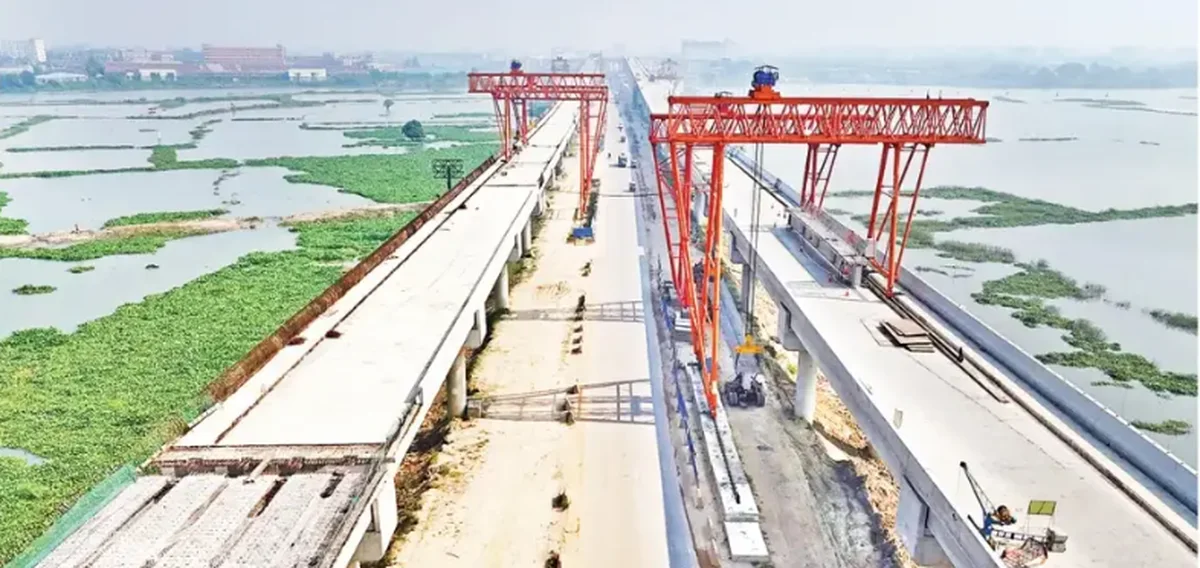
During the one-and-a-half-year tenure of the interim government, the cost of 65 development projects was increased by Tk 79,834 crore, which many economists consider the result of “wasteful” and questionable re-evaluations. The initial combined cost of these projects was Tk 2,24,000 crore; after revision, the expenditure increased by 35.67 percent to Tk 3,04,000 crore.
This information has emerged from a review of the minutes of 19 meetings of the Executive Committee of the National Economic Council (ECNEC) held during the tenure of the interim administration formed in August 2024 under the leadership of Muhammad Yunus. The analysis shows that during this period, ECNEC revised a total of 87 ongoing projects, averaging 4.58 projects per meeting. Among them, the cost of seven projects was reduced by Tk 950 crore (2.45 percent of the estimated Tk 38,750 crore), while the implementation period of 15 projects was extended without changing costs, effectively indicating delays and the risk of increased financial pressure.
Economists say that the expectation of ensuring the best use of public funds through strict scrutiny of Annual Development Programme (ADP) projects has not been fulfilled amid continuous cost escalations. Rather, repeated cost revisions have exposed weaknesses in project management and deficiencies in initial planning.
Although the interim government assumed office on 8 August 2024, the first ECNEC meeting after reconstitution was held on 18 September. At that meeting, four projects were approved, including two revised proposals. The cost of the “Bakhrabad–Meghnaghat–Haripur Gas Transmission Pipeline Construction” project was increased from Tk 1,305 crore to Tk 1,571 crore. The “Tathya Apa: Empowering Women through ICT to Build Digital Bangladesh (Second Phase)” project also saw an increase of Tk 163 crore.
Toward the end of its tenure, the interim government led by Professor Muhammad Yunus approved the first revision of the Rooppur Nuclear Power Plant construction project through ECNEC. Initially approved in 2016 at a cost of Tk 1,13,000 crore, the project cost increased to Tk 1,39,000 crore—an increase of Tk 25,593 crore or 22.63 percent. The cost surge in this much-debated mega project has once again raised questions about transparency and accountability.
The cost of Dhaka WASA’s “Sayedabad Water Treatment Plant (Phase-3)” project rose to Tk 16,015 crore in its third revision. The project, which began in 2015 with an allocation of Tk 4,597 crore, has seen a cost increase of Tk 11,417 crore—an unprecedented 248.35 percent rise.
In addition, the “SASEC Road Connectivity Project-2: Elenga–Hatikamrul–Rangpur Highway Four Lane” project saw an increase of Tk 7,155 crore, while the “Matarbari Port Development” project was increased by Tk 6,604 crore. An additional Tk 1,410 crore was added to the “Chattogram City Sewerage System (Phase-1)” project and Tk 1,324 crore to the “Emergency Multi-Sector Rohingya Crisis Response” project.
The controversial “Upazila Mini Stadium Construction (Phase-2)” project cost increased by 48 percent from Tk 1,649 crore to Tk 2,855 crore. The only exception was the “Dhaka Mass Rapid Transit Development (Line-6)” project, whose cost was reduced from Tk 33,472 crore to Tk 32,718 crore, showing a saving of Tk 754 crore. It was stated that this saving was achieved through rationalization of station plaza development and land acquisition.
Although at the first ECNEC meeting there were commitments to increase project efficiency, expedite preliminary screening—especially for foreign-assisted projects—prioritize small and high-impact projects, reduce dependence on land acquisition, and simplify approval and implementation processes, analysts believe that the continued rise in costs contradicts those commitments. According to them, without strict accountability, these “re-evaluations” have increased the financial burden rather than serving the public interest.