On Today’s ‘Referendum’ and ‘Election’
Yes, No and Different Layers of Legal and Constitutional Righteousness

Generally, a referendum or plebiscite calls upon the electorate of a country to cast direct votes on any proposal, law, economic or political issue. For example, in a referendum staged on June 23, 2016, around 52 percent of the British voters who did took part in it, decided to come out of the European Union (EU). Or, I have seen the news headlines of Pakistan’s call to India for a referendum in Kashmir since my childhood.
Tomorrow Bangladesh is going to have her fourth referendum. Before delving to analyze the pros and cons of tomorrow’s referendum, let us rather have a glance at the past referendums of our country.
Looking back at history: Former referendums of Bangladesh
Since after independence, people of Bangladesh have taken part in three national referendums. Of them, two were administrative and another was constitutional in nature. Each of these three referendums were held in a critical juncture of our nation’s history:
1977: The first referendum was staged under president Ziaur Rahman on May 30. It sought to know the voters’ opinions that if they had trust in his worth as a leader and the policies adopted by him.
Of 38.4 million registered voters in 21,685 polling centers, the official results revealed some 88.1% turnout, with 98.9% voters saying “Yes.”
1985: The second referendum was held on March 21 under the then president HM Ershad, who too sought for public validation of the policies undertaken by him.
The Election Commission manifested a 72.2% turnout, along with 94.5% confirming “Yes.”
1991: After the mass uprising of December 1990 which secured the overthrow of dictator Ershad, Bangladesh Nationalist Party (BNP) came to power after contesting the February 27 parliamentary election of 1991.
The new parliament issued a bill on August 6 to restore the parliamentary form of government in Bangladesh. It is to authenticate this paradigm shift through the 12th Amendment that a countrywide referendum was again held on September 15.
Of the 35.2% voter turnout, 84.38% did cast their ballots for “Yes’ and thus secured the return to parliamentary democracy.
However, each of the aforementioned referendums were organized just on one single issue. But what is the perception of around 127.7millions (Prothom Alo English, 18 November of 2025) of voters on tomorrow’s fourth referendum? Are they well informed about all the proposed 47 constitutional and 37 administrative changes in the July Charter and prepared enough to decide ‘Yes’ or ‘No’ about a total number of 84 reformation proposals, categorized under four larger clauses? Can really the millions of voters, comprising of wide range of people from rickshaw pullers to constitutional experts, decide the fate of 87 proposed constitutional and administrative measures through casting mere ‘Yes’ and ‘No’ ballot on a single day? While many of these 84 issues are as complex as deserving extensive reading, analysis and pondering over? Definitely we do not wish to belittle our farmers, RMG workers or rickshaw pullers. But even judicial experts or political scientists may need ample time to ponder over these issues to decide. How can the fate of 84 complex issues be settled in a single day?
Are the voters well aware about the proposed 87 ‘constitutional’ and ‘administrative’ reformation measures of July Charter?
It seems that most of our voters know very little about the July Charter provisions, the figure standing at about 77.2 percent, according to a pre-election public perception survey conducted by the ‘Institute of Informatics and Development (IID) and Youth for Policy.’
The organization held a press conference on Tuesday (February 10) at the Pan Pacific Sonargaon Hotel in Dhaka to share their survey findings, where their report was officially released and disbursed to the press.
According to the survey results, nationally only 37.2 percent of respondents said they know what the July Charter contains. Among those with no formal education, only 8.4 percent said they know the contents of the charter, while 77.2 percent said they do not know.
Based on a survey carried out within 9,892 voters across the country’s eight divisions on February 6 and 7, 2026, the survey also found that awareness of specific reform issues is weak. For example, only 43.1 percent said they know what changes have been proposed regarding fundamental rights.
The survey stated that the biggest risk to pre-election inclusion lies in the ability to read and understand the language of the referendum ballot.
The survey also revealed clear uncertainty in public perception regarding the government’s neutrality in the election. 47.9 percent of respondents said the government is neutral regarding the vote, 11.3 percent said the government is not neutral, and 33.7 percent said they do not know whether the government is neutral or not. Among women, this uncertainty rises to 39.7 percent. An additional 7.1 percent declined to respond (https://english.bd-voice.com/national/d003e7ad/detail/).
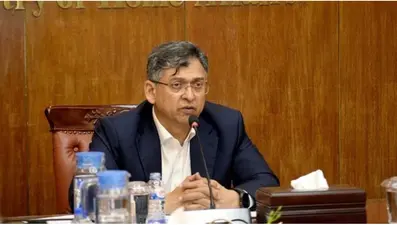
Hence IID founder and Chief Executive Director Syed Ahmed had properly observed, “We are moving toward a referendum without fully knowing or understanding it.’
Referring to the survey findings, the IID director said, “People do not clearly know what will happen if ‘Yes’ wins or if ‘No’ wins. Nationally, 29.6 percent lack knowledge about what will happen if ‘Yes’ wins. Similarly, 33.6 percent have no idea about what will happen if ‘No’ does not win.”
In a nutshell, the entire process reminds us of a particular coinage from our regional history entitled ‘Tughlaki Kanda’ as referring to the maddening activities of Sultan Muhammad Adil Bin Tughluq Shah, the Sultan of Delhi in the 14th century. Bin Tughluq (1290 A.D.- 20 March of 1351) was also recognized by his epithets like ‘The Eccentric Prince’ and ‘The Mad Sultan.’ In fact, tomorrow’s ‘referendum’ seems to be even more ‘maddening’ than the enraged activities of the crazy Sultan from our medieval age history.
What ‘Constitutional’ and ‘Administrative’ changes are being proposed?
The referendum question sketches a number of reformation proposals as recommended by the reform commissions. The ballot for the referendum poses the following broad four questions:
Do you approve of the July National Charter (Constitution Amendment) Implementation Order, 2025, and the following proposals to ensure reform as registered in the July National Charter?
a. The caretaker government during the poll, the Election Commission, and other constitutional institutions shall be established in adherence to the process depicted in the July Charter.
b. The next Parliament shall be bicameral. A 100-member upper house will be constituted on basis of the proportion of votes won by political parties in the national polls, and any constitutional amendment will need endorsement by a majority of the upper house.
c. The 30 reform proposals on which political parties had formed consensus under the auspices of the July National Charter — comprising of enhanced representation of women in Parliament, election of the Deputy Speaker and parliamentary committee chairs from the opposition, tenure restrictions for the Prime Minister, augmented authority of the President, broadening the orbit of fundamental rights, judicial independence, and strengthening of local government — shall be binding on the parties who win the oncoming national polls.
d. Other reforms etched in the July Charter shall be translated into action in accordance with the promises made by political parties.
Now let us discuss the major constitutional and administrative changes the referendum wishes to bring to the nation:
Constitutional changes
If the charter is passed by casting of majority of ‘Yes’ votes, following 47 changes will be brought to the constitution:
- Axing down the ‘Fundamental Principles’ of our Constitution of 1972: Bangladesh Constitution of 1972, the salus populi suprema lex or the supreme law of the land, was adopted after a nine months’ long blood drenched war with the imperialist Pakistan and this sacred document upheld Bengali Nationalism, Democracy, Socialism and Secularism as our fundamental state principles. Sadly enough, the July Charter is going to replace those four mantras through the words like ‘Equality, Human dignity, Social Justice, Religious Freedom.’
- Abolition of Articles 7(A) and 7(B): Abolition of Articles 7(A) and 7 (B) will actually diminish the authenticity and authority of our Constitution. It’s unfortunate to know that when Dr. Kamal Hossain, one of the core authors of our supreme law, had opined that Article 7 should guide our nation in every step as ‘All power in the Republic belong to the people, and their exercise on behalf of the people shall be effected only under, and by the authority of, this Constitution (https://www.thedailystar.net/news/bangladesh/news/let-article-7-guide-us-every-way-3160026),’ the July Charter proposes to erase one of the fundamental articles of our sacred document. Article 7(1) clearly warns against any attempt to ‘abrogate, repeal or suspend this Constitution or any of its article’ and such attempts are warned to be considered as ‘sedition’ and Article 7B stipulates that ‘Notwithstanding anything contained in article 142 of the Constitution, the preamble, all articles of
Part I, all articles of Part II, subject to the provisions of Part IXA all articles of Part III, and the provisions articles relating to the basic structures of the Constitution including article 150 of Part XI shall not be amendable by way of insertion, modification, substitution, repeal or by any other means.’ But why July charter wishes to totally erase it, is really hard to decipher. - Increasing the number of state languages: Okay, the endeavor to adjust with the changing time and initiatives to respect and recognize the mother languages of all the indigenous or ethnic minority groups as ‘state languages’ alongside ‘Bengali’ is a good move. But why then all the religions practiced in Bangladesh will not be acknowledged as ‘State Religion’ besides ‘Islam?’ in July Charter?
- The nationality question: Nationality of the citizens of Bangladesh will be endorsed as ‘Bangladeshi’ through removing ‘Bengali.’ Initially it may seem to be a move to regard and recognize all the ethnic identities of Bangladesh, but a charter which attempts to remove ‘Secularism’ from the Constitution, is never that much egalitarian enough to respect all the ethnic identities of our land. It’s an excuse to destroy the concept of Bengali nationalism which guided us as a pole star in the Liberation War of 1971. Lest we should not forget that already all the faith based political parties including Jamat, BNP and others have declared to introduce ‘Blasphemy Law’ by proclaiming the Kadianis as ‘Non-Muslim’ after being elected in the poll. So, this is the ‘inclusive July’ for us!
- Introducing Bi-cameral Parliament: Article 17 of the July Charter proposes a bi-cameral Parliament with two-thirds votes in the lower house and majority votes in the upper house of the Parliament will be needed to amend the constitution. Problem is the upper house MPs will not be elected by the voters or at least not after today’s poll. Do we know who will be nominated in the proposed Upper House by the members of the Lower House? The very irony is we may be ruled by the people whom we have not elected. Meantime, the power to enhance President’s power has been proposed in a bid to strike a balance of power between the PM and the President. Hence it is not very difficult to assume that the President will nominate most of the MPs of the proposed upper house of the Parliament. And there is a sheer chance of Dr. Muhammad Yunus to be the next President. Maybe it is to extend his power even after the poll that this bi-cameral Parliament is being proposed?
Enhanced reserved seats for women in the lower house: It is being said that reserved seats for women in the lower house will be gradually augmented up to 100 seats although the reality tells us the polar opposite.
It’s sad to know that out of 2,568 election candidates, only 109 or mere 4.24 percent women candidates are contesting today’s poll. Most of the political parties have not nominated any female candidate. Jamat-e-Islami or Islamic Andolan so far has not nominated any woman candidate. Largest Party of this election, i.e., BNP has appointed only 10 candidates. Even a celebrity, young politician like Rumeen Farhana did not get nomination from BNP this time. Out of 109 female candidates, 37 are separate candidates.
According to a report of BD Voice English, ‘As part of the interim government’s endeavors for state reform to bring the country back to a democratic path, it was stated that in the 13th parliamentary election, political parties will nominate at least 5 percent women candidates in the existing 300 parliamentary constituencies. But how far the parties have conformed to this promise?
In this election, more than a hundred women candidates both party-backed and independents submitted nomination papers. Of them, around 65 have survived the scrutiny process. Among the parties that signed the July National Charter, BNP, one of the country’s largest political parties in terms of numbers, is ahead in absolute figures but lags behind in meeting the 5 percent requirement.’
Although more than 300 nomination papers were submitted by BNP due to multiple aspirants in the same constituencies, the party had only 10 women candidates, the report further adds.
In second position is the newly registered party Bangladesh Socialist Party (BASAD–Marxist), which nominated nine women candidates. It is the only party that nominated women for one-third of its total candidates., the BD Voice report informs.
According to Election Commission data, although 51 political parties are contesting the election, at least 30 parties did not nominate a single woman candidate. These parties include Jamaat-e-Islami and Islami Andolon.
- Full freedom of judiciary: Although full freedom of judiciary has been guaranteed in Article 33 of the July charter, the ‘Interim Government’ already manifested very bad precedents through their activities. On 5th August of 2024, the residence of Chief Justice (CJ) along with the residential houses of other Justices came under attack. The CJ and other Justices had to seek shelter to the Army. On 8th August, Mohammad Asaduzzaman took charge as New Attorney General who is former human rights secretary of BNP. He is also contesting the poll while being seated in his present position! On 10th August, a mob under the leadership of Hasnat Abdullah took siege of the Supreme Court and demanded the resignation of the then CJ and warned of making another attack on his residence. The CJ felt compelled to resign while considering the safety issue for other judges and the judges of the Appeal Division had to resign with him. Mr. Refat Ahmed took his oath as CJ on the same day. Four more Judges were appointed in the Appeallate Division on 12th August. The ongoing kangaroo trail of the former PM Sheikh Hasina too does not endorse full freedom of Judiciary. The list may be even taller!
- The 270 days’ tenure: It has been stipulated in the July charter that if the ‘Constitution Reformation Commission’ cannot implement the ‘reformation’ in nine months or 270 days since it’s formation, the charter will be considered as ‘automatically implemented.’ Reminding us of Sultan Tughluq again?
What is more problematic that of all these 84 proposed constitutional and administrative measures, of which only a handful I could discuss here, need to be voted on as either ‘Yes’ or ‘No’ on a single day. Is that humanely possible? To quote from an article by columnist Kallol Mostafa in the Daily Star: ‘ In the first phase, the NCC held discussions with 32 political parties, followed by talks with 30 parties in the second phase. Through this process, the July charter was finalised with 84 reform proposals, many of them accompanied by notes of dissent from political parties. Several parties refrained from signing the charter, citing objections such as proposed changes to the fundamental principles of the constitution, failure to present an accurate historical context, a commitment not to challenge the charter in court, and the absence of clarity regarding the charter’s legal basis and implementation mechanisms.’ (https://www.thedailystar.net/opinion/views/news/yes-no-and-confused-closer-look-the-july-charter-the-referendum-nears-4093996).
‘No consensus was reached on changing the fundamental principles of the constitution, with dissent expressed by Gano Forum, JSD, Bangladesh JASAD, CPB, BASAD, and BASAD (Marxist). Jamaat and several others objected to reforms related to local government autonomy, placing local officials under elected representatives, amending the Official Secrets Act, and recruiting teachers and doctors through separate service commissions,’ the article further added.
Okay, some provisions like following the US Constitutional practice (one person cannot be elected as ‘Head of the Government’ for more than two terms or 10 years) or amendment of the Article 70 of the Bangladesh constitution Article to permit members of parliament to vote independently on all matters except budgetary and confidence votes may sound conforming to the needs of the changing time, but why this hurry to say ‘Yes’ or ‘No’ on 84 complex constitutional and administrative issues on a single day?
Meanwhile, it gets confirmed that no ethnic minority candidate will win a seat in today’s 13th National Parliament election. Only two Hindu candidates may win from BNP while a total number of 14 religious and ethnic minorities won in the 12th national election of 2024. Of them, 11 were Hindu MPs and three were ethnic minorities. Around 20 minority candidates including four ethnic minorities were nominated to contest the poll with the symbol of ‘boat.’
Of total 14 candidates in the 12th National Parliamentary election, 12 were nominated by Awami League and the rest two contested it as separate candidate. This time the number is going to be reduced drastically, according to a report of BD Voice Bangla.
This year the three highly esteemed political parties of Chittagong Hill Tracts, namely JSS, UPDF (Prasit Khisa) and UPDF (Democratic) are not participating in the poll and election scenario in the CHT seems completely dull.
Yes, the former ruling party Awami League may be criticized for not holding a hundred percent fair election during 2014 to 2024. But they did not impose any ban on BNP or any opposition party to take part in election. But this time Awami League has been excluded from taking part in the poll with substantial impact already being felt on women, minorities and other marginal groups of the society. Ultimately we observe the rise of the far right groups who endorse only the Sunni Muslim males in a 92 percent Muslim majority state like Bangladesh.