


Awami League Warns UNDP Over Alleged Vote Manipulation Attempts

Bangladesh’s major political party, the Awami League, has issued a strong warning to the United Nations Development Programme (UNDP), accusing it of interfering in the country’s electoral process.
In an 18-page letter dated November 1, addressed to Stefan Liller, the UNDP Resident Representative in Bangladesh, the party alleged that the UNDP’s “Ballot Project (2025–27)” violates Bangladesh’s democratic principles and the UN’s policy of neutrality.
According to the letter, the Awami League claims that under the current interim government, no election can be “free, fair, or inclusive,” and that the UNDP’s financial and technical assistance would effectively “legitimize the suppression of democracy.”
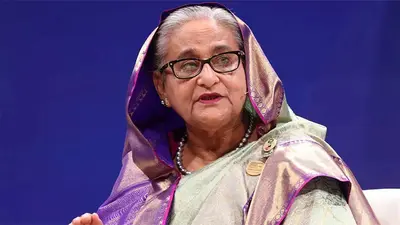
The letter begins by identifying the Awami League as the country’s founding party, established in 1949, highlighting its role in Bangladesh’s independence movement under the leadership of Bangabandhu Sheikh Mujibur Rahman. It credits the party, led by Sheikh Hasina, with achieving remarkable economic and social progress over the past decades. However, it warns that political repression, the rise of religious extremism, and the erosion of liberal values now threaten the country’s stability.
Party Ban and Mass Arrest Allegations
The letter’s most serious allegation is that, on May 12, 2025, the interim government banned all activities of the Awami League by misusing the Anti-Terrorism Act, and the Election Commission suspended the party’s registration, effectively disenfranchising millions of supporters.
It further states that since August 2024, over 44,000 leaders and activists have been arrested, including around 11,000 during Operation Devil Hunt in February 2025. The detainees reportedly include former ministers, MPs, teachers, journalists, judges, and civil servants. Citing human rights organizations, the letter alleges cases of torture and denial of medical care among detainees.
Criticism of ICT and Interim Government
The Awami League also accuses the International Crimes Tribunal (ICT) of being politically manipulated. The letter alleges that the new Chief Prosecutor had previously defended war crimes suspects, compromising the tribunal’s neutrality.
The party describes the interim government as “unconstitutional,” claiming it seized power under the “Doctrine of Necessity,” dissolved Parliament, and attempted to amend the Constitution through decrees — a move it calls the “July Charter.”
It further criticizes the new election law, which forces coalition parties to contest under their own symbols, disqualifies “fugitive” candidates, and expands the powers of law enforcement agencies — labeling these as “instruments of political revenge.”
Allegations Against the Ballot Project
The letter identifies the UNDP’s $180 million Ballot Project as the most controversial issue. Signed on May 28, 2025, the project aims to promote transparent elections, women’s participation, and voter education.
However, the Awami League alleges that the UNDP is implementing the project even after the party’s ban, which it claims “amounts to endorsing the interim government and supporting a one-party election.”
Quoting international law, the letter states:
“This is not neutrality — it is an attempt to legitimize repression.”
It cites the Universal Declaration of Human Rights (UDHR) and the International Covenant on Civil and Political Rights (ICCPR), asserting that arrests for political opinion violate international law.
Demands and Appeals
The letter outlines five key demands:
- Immediate suspension of the Ballot Project;
- Release of all political prisoners and withdrawal of the ban on the Awami League;
- UN-mediated dialogue and deployment of a special envoy;
- Formation of a human rights monitoring mission and a neutral Election Commission;
- Validation of all decrees through parliamentary approval.
The letter was signed by former Education Minister Mohibul Hasan Chowdhury, and copies were sent to the UN Secretary-General, the Human Rights Council, the Commonwealth, and the Inter-Parliamentary Union (IPU), among other international bodies.
The UNDP has not yet issued an official response. However, political analysts say the Awami League’s move could take Bangladesh’s ongoing political crisis to a new level internationally and further intensify the global debate over the legitimacy of the upcoming election.