
No Women Candidates in Jamaat-Led Eight-Party Alliance
An election atmosphere is sweeping across the country. With the 13th National Parliamentary Election approaching, political parties are busy attracting voters through various programs. It can be said that the entire country is now election-focused. More than fifty political parties—large and small—are actively preparing to contest the election. Several parties have already nominated candidates in all 300 constituencies, while others have announced partial candidate lists. In addition, aspiring independent candidates have begun grassroots outreach in their respective constituencies.
Political analysts say that from the perspective of democracy and inclusive politics, a close analysis of these nomination lists has become essential. At the preliminary stage of the election, the contrasting picture of women’s and minority representation among political parties has raised serious questions about the country’s political culture and commitment to inclusivity.
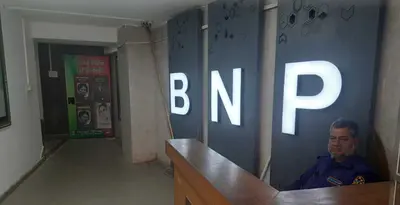
According to available information, the nomination lists of the BNP, the NCP, and the Jamaat-led alliance reflect polarization of differing political ideologies. As of yesterday, in two phases, BNP has announced candidates in 273 constituencies, among whom only 11 are women. NCP has nominated 14 women out of 125 announced candidates. However, the Jamaat-e-Islami–led alliance of eight like-minded parties has not nominated a single woman candidate so far. Leaders of these parties have said the issue is under preliminary discussion.
Political analysts believe that political parties are still reluctant to allocate “safe seats” to women. They hesitate to place women candidates in competitive or difficult constituencies. As a result, women’s access to parliamentary politics remains limited.
Women constitute more than half of the country’s population. Accordingly, the proportion of women and men in political leadership should ideally be equal. However, this is not the case. The expectation is not that high either. According to the Representation of the People Order (RPO) 2008, amended in 2020, political parties are required to ensure 33 percent representation of women at all levels.
The Election Commission has instructed registered political parties to ensure at least 33 percent women’s leadership across different levels of party structures. Although this directive primarily applies to party committees, the extent of political and moral commitment to nominating women directly for parliamentary elections is clearly reflected in the candidate lists.
Analysts argue that even if parties are not meeting the legal threshold of 33 percent, nominating women in at least 15–20 percent of parliamentary seats is not merely a moral obligation but a fundamental characteristic of a modern democratic state. The current nomination scenario, however, shows that major parties remain far from achieving this goal.
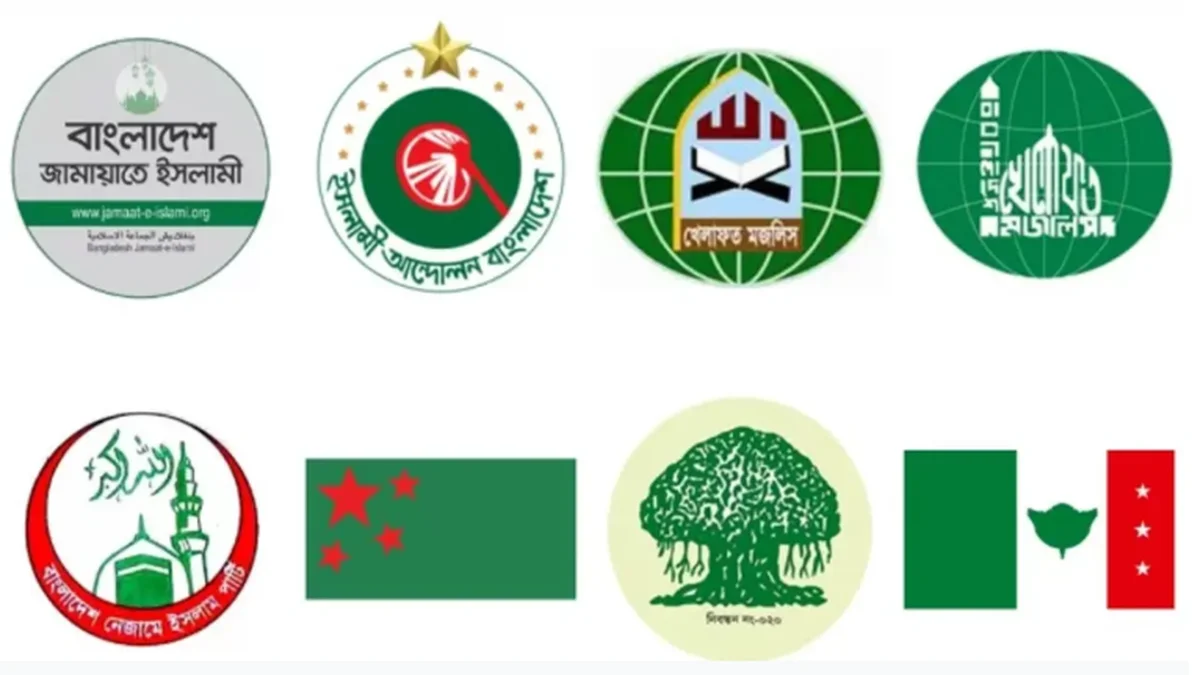
Ahead of the 13th parliamentary election, many parties announced potential candidates early. BNP, Jamaat-e-Islami, Islami Andolon Bangladesh, Bangladesh Khelafat Majlis, and others have already revealed their candidate lists.
BNP has announced candidates in 273 constituencies, with only 11 women included—an extremely disappointing percentage for a major political party. This is particularly striking given BNP’s historical legacy of strong female leadership. Yet, its inability to bring women grassroots leaders into mainstream parliamentary contests is evident.
In contrast, the National Citizen Party (NCP) has emerged as a comparatively positive example. The party has nominated 14 women candidates out of 125 constituencies. Although smaller in size, NCP’s political willingness to value women’s leadership could serve as a lesson for larger parties. This demonstrates that political intent, rather than size, is the key driver of women’s inclusion.
The Jamaat-e-Islami–led alliance of eight like-minded parties has drawn the most attention for having zero women candidates. This absence is seen by many as a clear reflection of the alliance’s ideological and political stance. Although Jamaat leaders have stated that discussions are ongoing, the failure to nominate women even at the final stage suggests a rigid adherence to conservative political thinking.
In a modern democratic system that recognizes equal rights for all citizens, a major alliance having zero women candidates is a serious concern for progressive society and women’s rights movements. Questions remain about how inclusive and representative such an alliance can be in shaping parliamentary democracy.
Additionally, minority representation in the Jamaat-led alliance remains limited or absent. Analysts warn that without meaningful minority participation in parliamentary politics, minority rights and interests may not be adequately reflected in the legislative process.
In this context, NCP’s nomination of seven candidates from minority communities is viewed as a bold and significant political message, reinforcing its commitment to inclusive politics. Meanwhile, Jamaat-e-Islami has nominated a Hindu candidate in Khulna-1 and plans to nominate minority candidates in a few more constituencies.
Jamaat-e-Islami’s Assistant Secretary General Maulana Abdul Halim said that nominating women candidates is still under discussion, citing organizational rules and a lack of interest among women activists.
Bangladesh Khelafat Majlis Secretary General Maulana Jalaluddin Ahmad said their party has no women candidates and has not considered the matter.
Similar views were expressed by leaders of other Islamist parties, who cited lack of interest, organizational limitations, and the demanding nature of elections as reasons for not nominating women.
Leaders of some parties said discussions are ongoing regarding joint nominations, including women and minority candidates, but no final decisions have been made.
Political analysts say the nomination lists clearly show that political parties in Bangladesh are still far from inclusive and gender-equal politics. The courage shown by smaller parties like NCP in nominating women and minorities poses a significant challenge to larger parties.
Democratic maturity is not measured solely by holding elections, but by ensuring representation from all sections of society. Without genuine commitment to women’s and marginalized communities’ political participation, the legislative process will continue to fall short of reflecting social diversity.
Former Jahangirnagar University professor and political analyst Dr. Dilara Chowdhury said Islamist parties remain deeply conservative regarding women’s participation in public life. She also expressed disappointment with BNP, which claims to be a liberal democratic party but failed to meet its own commitment on women’s nominations.
Shahjalal University of Science and Technology political studies professor Dr. Md. Sahabul Haque identified several reasons behind the absence of women candidates in the Islamist alliance, including traditional attitudes, conservative religious interpretations, and strategic reliance on reserved seats rather than direct elections.