

Sajeeb Wazed Joy Says Only Inclusive Election Can End Bangladesh’s Political Crisis
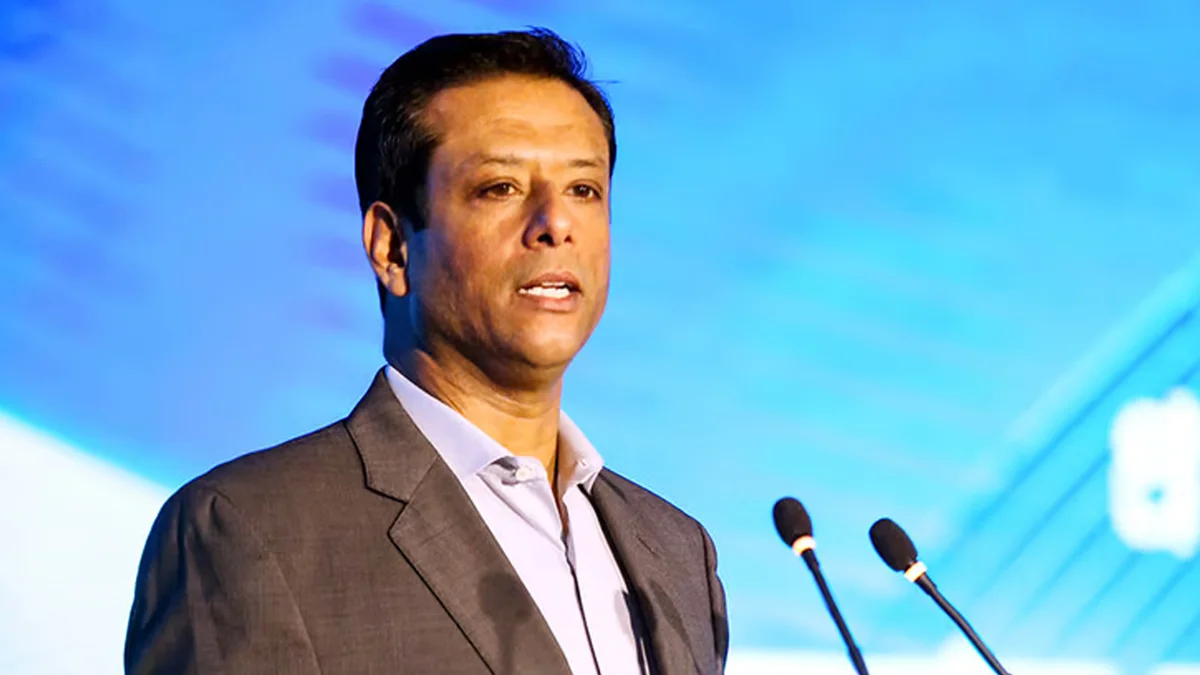
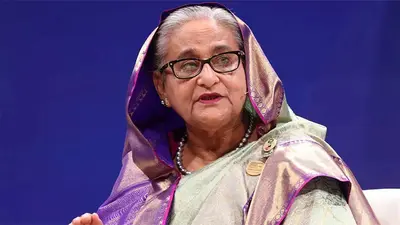
Sajeeb Wazed Joy, son of Prime Minister Sheikh Hasina—who was forced into exile following a student-military assault—has said that only an inclusive election is the sole solution to Bangladesh’s ongoing political and economic paralysis.
In an interview with the Associated Press on Wednesday, Joy stated that if the present interim government fails to hold an inclusive or consensus election, the country will remain politically unstable.
He said, “The ban (on the Awami League) must be lifted. The election must be participatory, free and fair.”
He alleged, “What is happening now is an attempt to keep my mother and the Awami League leaders away from the elections. It is political manipulation under the guise of judicial process.”
Bangladesh is set to hold a national election next February. Last year the government of Sheikh Hasina was overthrown through a wave of riots and attacks, ending her 15-year rule. Since then she has been staying in India. Three days after her departure, Muhammad Yunus took power, pledged to stop the ongoing killing spree, restore law and order and carry out reforms.
The interim government banned the country’s oldest political party, the Awami League, earlier this year in May. More than fifty of its members of parliament, ministers and deputy ministers were arrested. Many ministers went abroad seeking safety.
Sheikh Hasina and her family members, along with senior officials of her government, have been charged with crimes ranging from crimes against humanity to corruption.
Joy stated that if the Awami League is not given adequate time to prepare for elections, neither the public nor international observers will accept that election as legitimate. He said, “We cannot prepare in any manner. Even if the ban is lifted at the last moment the election will be a farce.”
The AP reports that in this parliamentary democracy of 170 million people, 52 registered political parties currently exist in Bangladesh. After Hasina’s downfall the democratic transition process has been disrupted and politics is now facing a crisis.
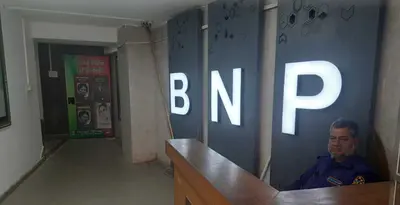
The report says that the major rival party to the Awami League in the upcoming election is the Bangladesh Nationalist Party (BNP) led by Khaleda Zia. Another big party, the Jatiya Party, cannot openly operate: its office was burnt down and rallies have been blocked simply because it was an ally of the Awami League.
Meanwhile the war-crimes accused party Jamaat‑e‑Islami has re-entered politics. Over the past year it has increased its activity and is trying to form alliances with some radical Islamist groups and outfits.
Joy warned: “If Bangladesh remains unstable, Islamist forces will benefit.” He alleged that the Yunus government is supporting them and wants to bring them to power through a rigged election.
He criticised a UN report that claimed 1,400 people were killed in last year’s anti-government movement. Joy said the health adviser of Yunus’s government himself admitted the number killed is around 800. “Every death is regrettable and a full investigation is needed,” he said. He further stated that Yunus’s government issued an indemnity protecting those responsible for killings between August 5 and August 15, preventing any justice.
Joy accused the Yunus government of a dire human-rights record. He said that hundreds of thousands of Awami League workers and supporters have been jailed this past year without bail, and many have been framed in murder cases. “About 500 Awami League workers have been killed in mob beatings, and 31 died in custody,” he added.
He also claimed that during Yunus’s tenure the human-rights situation has been extremely cruel, and minority communities, especially Hindus, are now the primary targets.
He questioned the decision of providing immunity to protesters by the Yunus government. He alleged that the government is conducting a political “witch-hunt” against Sheikh Hasina, charging her with crimes against humanity through so-called tribunals. Last week a prosecutor of such a special tribunal demanded death penalty for Sheikh Hasina. Hasina herself did not appoint a lawyer for that tribunal. Joy called this judicial process a “kangaroo court”.
The interim government has so far declined to comment on these matters.