



Young Bangladeshis, Disillusioned After Sheikh Hasina’s Fall, Look Back to the Old Guard
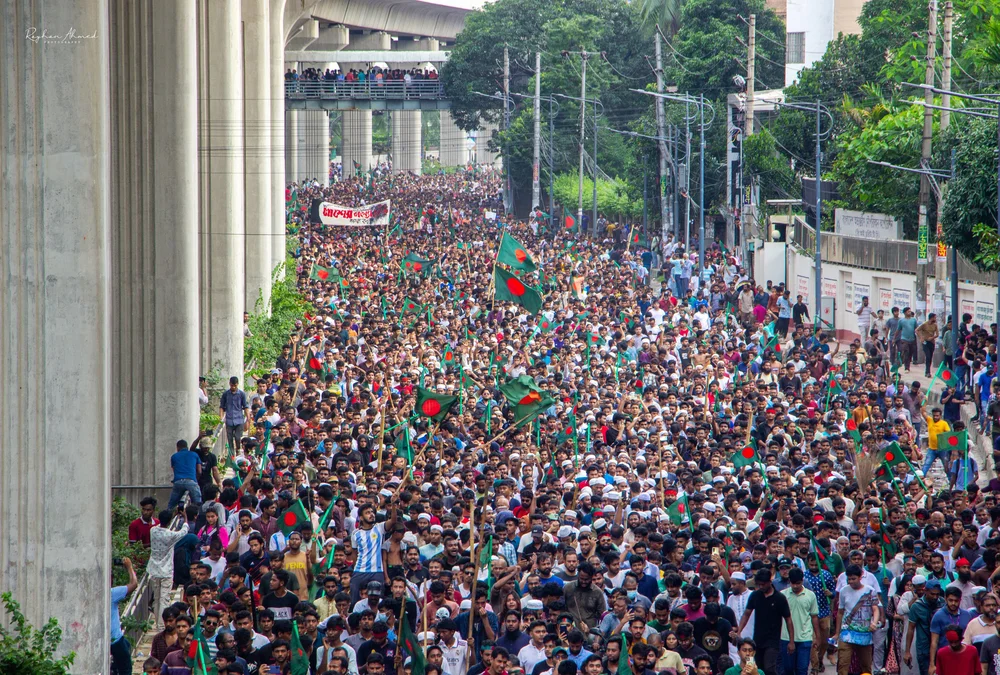
After a youth-led uprising that ended the long rule of Sheikh Hasina, many young Bangladeshis who once dreamed of a dramatic political transformation now find themselves grappling with disappointment and uncertainty. As the country moves closer to national elections in February 2026, the optimism that fueled the protests has faded, replaced by frustration over the lack of meaningful alternatives and the persistence of old political dynamics.
The movement that mobilized thousands of students and young professionals promised a “New Bangladesh” built on accountability, transparency, and opportunity. Young people took to the streets driven by anger over economic stagnation, unemployment, political repression, and the feeling that their futures were being decided without their consent. For a brief moment, it appeared that a generational shift in politics was underway.
However, as time passed, the promise of systemic change failed to materialize. New political forces that emerged from the protest movement struggled to organize effectively, articulate clear policies, or expand their appeal beyond activist circles. Internal divisions, lack of experienced leadership, and controversial alliances weakened their credibility among voters who had hoped for a clean break from the past.
As a result, many young voters now face a familiar dilemma. With limited confidence in newly formed parties, they are increasingly considering established political actors—despite long-standing grievances against them. For some, this represents a reluctant return to the “old guard,” not out of enthusiasm, but out of resignation and the belief that no better options currently exist.
This sense of disillusionment does not mean political apathy. On the contrary, many young Bangladeshis remain deeply engaged, politically aware, and eager to participate in elections they hope will be more competitive and less controlled than those of the past. Their frustration stems not from indifference, but from unmet expectations and the widening gap between the ideals of the uprising and the realities of governance.
Interviews and conversations among youth reveal a complex emotional landscape: hope mixed with anger, civic pride tempered by cynicism. Many speak of wanting reform without chaos, justice without vengeance, and stability without authoritarianism. Yet they struggle to see any political force that convincingly embodies these aspirations.
The post-uprising period has therefore produced a paradox. While political space appears more open than before, the quality of choice within that space remains limited. Young voters who once believed they could redefine the country’s political future are now navigating a system that still feels dominated by familiar power structures.
As Bangladesh approaches its next election, the youth remain a decisive force numerically strong, politically conscious, and socially influential. Whether their energy will translate into lasting reform or fade into reluctant compromise will shape the country’s political trajectory for years to come. The story of post-uprising Bangladesh is no longer just about removing a leader, but about the far more difficult task of building a credible and inclusive political alternative.
Source: Reuters