

Millionaires Dominate the Ballot: 45% Overall, 83% in BNP
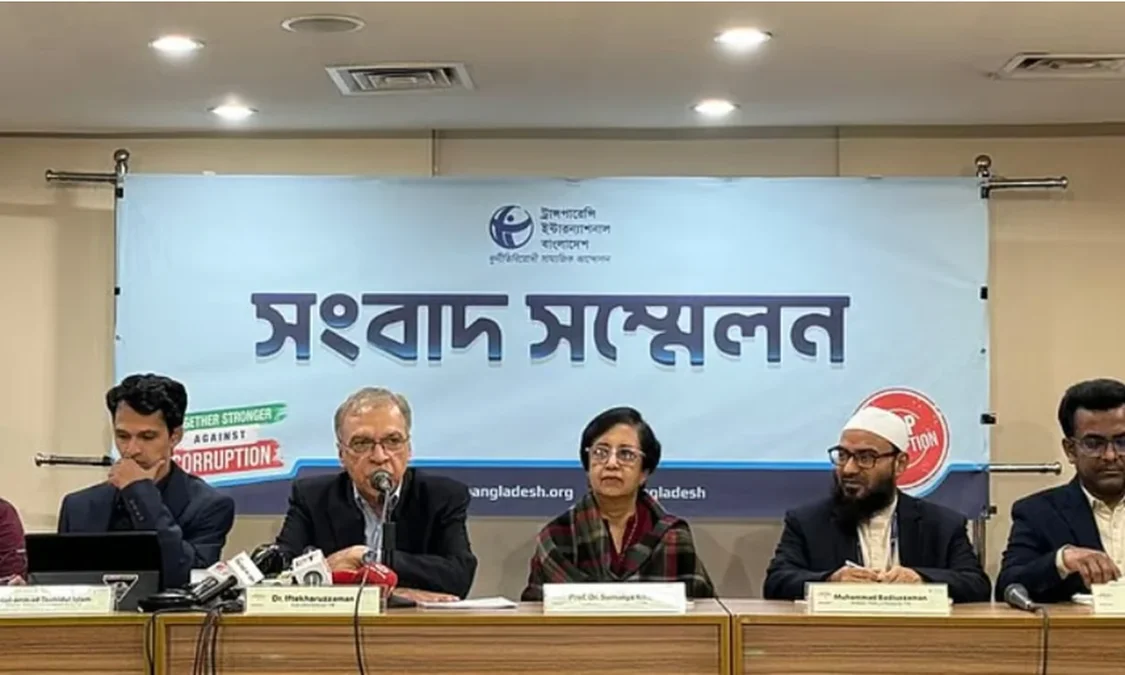
The asset profiles of candidates in the 13th National Parliamentary Election indicate a deep structural crisis in Bangladesh’s electoral politics. According to an analysis by Transparency International Bangladesh (TIB), the number of millionaire candidates in this election has reached 891, the highest in the country’s history. At least 27 candidates possess assets worth more than one billion taka. This means politics is increasingly moving away from being a space for representing ordinary citizens and turning into an exclusive domain of the affluent class.
According to TIB data, considering the current market value of movable and immovable assets, nearly 45 percent of the total 1,981 candidates are millionaires. Among them, the proportion of millionaire candidates is highest in the BNP. Eighty-three percent of the party’s candidates are millionaires, and at least seven are owners of assets worth more than one billion taka. Among the owners of assets exceeding one billion taka, 18 are BNP candidates and nine are independent candidates. However, reports indicate that at least two of these independent candidates have withdrawn their nominations.
Among the 18 BNP candidates who own assets worth more than one billion taka, the value of movable and immovable assets of Md. Aminul Islam of Chapainawabganj-2 constituency is approximately 6.20 billion taka; Abdul Awal Mintoo of Feni-3 has assets worth more than 6.07 billion taka; Md. Zakir Hossain Sarkar of Kushtia-3 has more than 5.81 billion taka; Mohammad Aslam Chowdhury of Chattogram-4 has approximately 4.73 billion taka; Fakhr Uddin Ahmed of Mymensingh-11 has around 3.00 billion taka; Zakaria Taher of Cumilla-8 has more than 2.92 billion taka; Golam Mohammad Siraj of Bogura-5 has more than 2.56 billion taka; Md. Jalal Uddin of Chandpur-2 has more than 2.31 billion taka; Md. Safikur Rahman Kiran of Shariatpur-2 has around 1.86 billion taka; Md. Harunur Rashid of Chandpur-4 has more than 1.75 billion taka; Hamidur Rahman of Dhaka-7 has more than 1.61 billion taka; Naser Rahman of Moulvibazar-3 has approximately 1.42 billion taka; Md. Shahid Uddin Chowdhury Annie of Lakshmipur-3 has more than 1.14 billion taka; Sayeed Ahmed of Shariatpur-1 has more than 1.11 billion taka; Mirza Abbas Uddin Ahmed (Mirza Abbas) of Dhaka-8 has more than 1.09 billion taka; Afroza Khanam of Manikganj-3 has approximately 1.07 billion taka; Mahmud Hasan Khan of Chuadanga-2 has around 1.04 billion taka; and Mohammad Emdadul Haque Bharsa of Rangpur-4 owns movable and immovable assets worth more than 1.00 billion taka.
On the other hand, among independent candidates, S. S. K. Ekramuzzaman of Brahmanbaria-1 (nomination withdrawn) has assets worth more than 4.99 billion taka; independent candidate Salahuddin Alamgir of Tangail-8 has more than 2.83 billion taka; M. A. H. Selim of Bagerhat-1 and 2 has approximately 2.63 billion taka; Mohammad Fazlul Azim of Noakhali-6 has more than 1.88 billion taka; Md. Shah Alam of Narayanganj-4 has around 1.85 billion taka; Jamal Ahmed Chowdhury of Narsingdi-5 has 1.60 billion taka; Farhana Qadir Rahman of Shariatpur-2 has more than 1.59 billion taka; Mohammad Amin ur Rashid of Cumilla-6 has 1.29 billion taka (nomination withdrawn); and Md. Abdul Hannan of Chandpur-4 owns movable and immovable assets worth approximately 1.21 billion taka.
This rise in the number of millionaire candidates represents the culmination of a continuous trend over the past one and a half decades. Comparative statistics show—
In 2008, there were 274 millionaires (17% of total candidates)
In 2014, 202 (37%)
In 2018, 522 (27%)
In 2024, 571 (27%)
In 2026, 891 (approximately 45%)
These data clearly show that not only has the number increased, but the influence of money power in politics has multiplied many times over. Particularly between 2024 and 2026, within just two years, the number of millionaires increased by nearly 320, starkly exposing the dominance of money in the electoral system. Moreover, irregularities and lack of transparency have been observed in the income declarations of many of these millionaires. Comparing affidavits from previous elections with annual tax return data reveals that many candidates’ assets have multiplied several times within just one and a half years, as if by some Aladdin’s magic lamp.
Not only assets, but massive opacity also exists in election expenditures. In this election, the total declared expenditure of all candidates is 4.637 billion taka, with an average expenditure of 2.25 million taka per candidate. The BNP reported the highest expenditure, amounting to 1.195 billion taka. However, according to TIB and other analysts, declared expenses are significantly lower than actual expenditures, indicating a lack of accountability in electoral financing.
Debt-related information is even more alarming. About 25.5 percent of total candidates have some form of debt. The combined debt of all candidates amounts to 188.68 billion taka, of which bank loans alone account for 174.71 billion taka. This means that a large portion of those who will enact laws are deeply connected with lending institutions and financial interests.
Legal complications are also undermining the character of the election. Currently, 530 candidates—22.66 percent of the total—have cases filed against them. In the past, 740 candidates faced cases. Although the number has somewhat decreased, the fact that one out of every five candidates is accused in at least one criminal case raises serious questions about the quality of democracy.
The professional and social composition of politics further exposes its class character. More than 48 percent of candidates are businesspersons. Only 1.56 percent identified politics as their profession. This indicates that politics is no longer a field for professional politicians but has become an investment arena for the business class.
Women’s participation is even more dismal. Only 4.02 percent of total candidates are women, failing to meet even the constitutional target of 5 percent. On the other hand, candidates from Islamist parties have increased to over 36 percent of total candidates, the highest among the last five elections.
In this context, the explosion of millionaire candidates is not merely a statistic of wealth; it is a document of the class-based transformation of Bangladesh’s electoral politics. The entry of ordinary people and the middle class into politics is steadily shrinking. Political power is gradually becoming concentrated in the hands of wealthy groups, fundamentally weakening the very concept of representative democracy.