
Sajeeb Wazed Joy Open to Dialogue, Calls Bangladesh Election a Sham
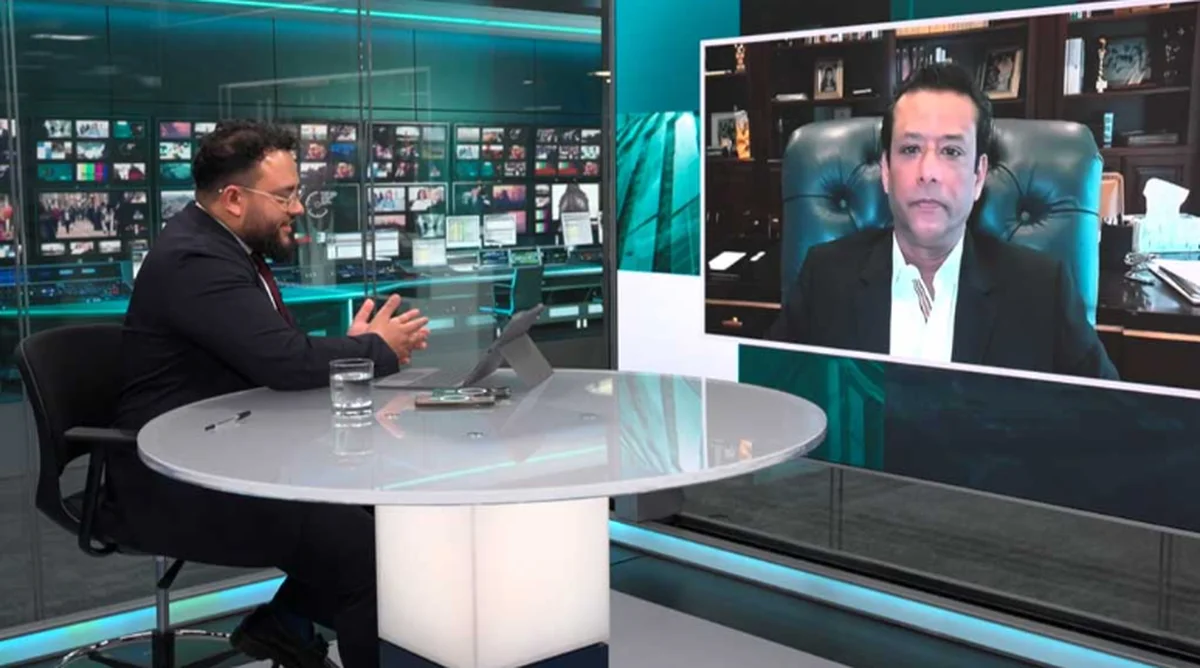
Former Prime Minister Sheikh Hasina’s son Sajeeb Wazed Joy has described Bangladesh’s 13th parliamentary election as a “sham,” yet emphasized that the door to dialogue remains open in the greater national interest. In an interview with British broadcaster ITV, he said he is prepared to engage with any political force even if Tarique Rahman assumes the office of Prime Minister.
Speaking via video conference from the United States, Joy said, “I have always believed in dialogue no matter how difficult it may be or with whom.” He argued that an election held while one of the country’s two major political parties is banned cannot be considered credible and warned that such a process may create further instability in the future.
Joy claimed that the latest vote was structured in a way that disproportionately empowered an Islamist party. According to him, “No election can be called free and fair if the country’s largest party and progressive forces are excluded.” Regarding international observers, he noted that limited and supervised access makes it difficult to fully assess the ground reality.
Addressing allegations of irregularities in the previous three elections, Joy said the claims are “not entirely accurate.” He stated that in one election the opposition boycotted the polls, while in another, multiple surveys including American polls predicted a landslide victory for the Awami League.
He acknowledged that some administrative officials may have committed irregularities on their own initiative, but maintained that these would not have altered the overall outcome.
Referring to the violence surrounding the 2014 election, Joy said the Awami League did not ban any party; certain decisions were made based on court rulings. He described this as a fundamental difference between earlier elections and the most recent one.
Protests, Violence, and Responsibility
On the 2024 protest movement, Joy said it began peacefully and that the demands were legitimate. However, he admitted the government failed to communicate effectively with student protesters a shortcoming he openly recognized. He claimed that extremist groups later exploited the situation, pushing it toward violence, and that the government made mistakes in handling the escalation.
Responding to United Nations casualty figures, Joy noted that many of those killed included police officers and ruling party supporters. “Any death is tragic,” he said, but argued it is not reasonable to place sole responsibility on the government. He added that Sheikh Hasina personally met victims’ families, expressed condolences, and initiated investigations.
Regarding leaked audio allegations, Joy asserted that the circulated clips were taken out of context, and that the full recording emphasized protecting lives and property while addressing violent actors.
On the future of Sheikh Hasina currently in India following her conviction in a crimes-against-humanity case Joy said he is not worried about her safety. He described India as “the safest place in the world for her at this moment” and expressed confidence that she will one day return to Bangladesh. He recalled that after 1975, the Awami League also endured severe setbacks but ultimately returned to power, expressing similar optimism about the party’s future.
Discussing the Awami League’s future, Joy said reform is a continuous process. While acknowledging that party activities are currently constrained, he expressed confidence that circumstances will change. Addressing criticism of dynastic politics, he argued that leadership is determined by grassroots votes and stressed that he has never personally sought power.
Referring to Tarique Rahman’s statement against “politics of revenge,” Joy described it as positive. “If he becomes Prime Minister, we will certainly talk and work with him,” he said, underscoring the importance of dialogue and national reconciliation.
Throughout the interview, Joy highlighted the Awami League’s historic role in Bangladesh’s independence movement and expressed firm belief that political realities will evolve. “Situations always change,” he said, emphasizing that inclusive dialogue remains the only viable path toward democratic stability.