
1.6 Crore People in Bangladesh Likely to Face Food Crisis by December: UN-Backed Report
Nearly 16 million people across Bangladesh’s disaster-prone districts are likely to face a major food crisis by December, while around 1.6 million children may suffer from severe malnutrition, according to a new joint analysis report conducted by the Food Planning and Monitoring Unit (FPMU) under the Food Ministry and three UN agencies.
The report assessed the food security and nutrition status of over 96.6 million people across 36 districts, including the Rohingya camps, and found that food insecurity and malnutrition risks are rising rapidly in most areas.
Compared to the first four months of the year, the number of food-insecure people is expected to increase during the final eight months. However, the total number of food-insecure people has declined compared to last year.
The findings were presented at an event held on Wednesday morning at the China-Bangladesh Friendship Conference Center in Agargaon, Dhaka. The event was jointly organized by the Food Ministry, the Food and Agriculture Organization (FAO), the UNICEF, and the World Food Programme (WFP) under the Integrated Food Security Phase Classification (IPC) initiative.
Five-Phase Classification of Food Insecurity
The analytical report categorized food shortages, malnutrition, and vulnerable populations into five phases:
- Phase 1: Minimal or normal
- Phase 2: Stressed
- Phase 3: Crisis
- Phase 4: Emergency
- Phase 5: Famine
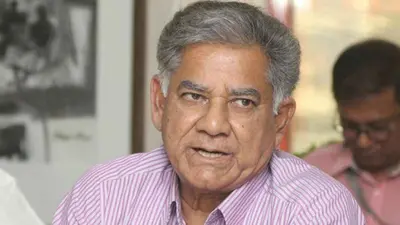
Speaking as the chief guest, Food Secretary Md Masudul Hasan said, “We do not disagree with the IPC report. Problems exist, and we are implementing various programmes to reduce food insecurity.”
He added that 17% of the population in the analyzed districts could face food insecurity between May and December, mainly due to factors such as economic slowdown, climate disasters, lack of funding, poor health and sanitation infrastructure, and limited food diversity.
Cox’s Bazar Most Affected
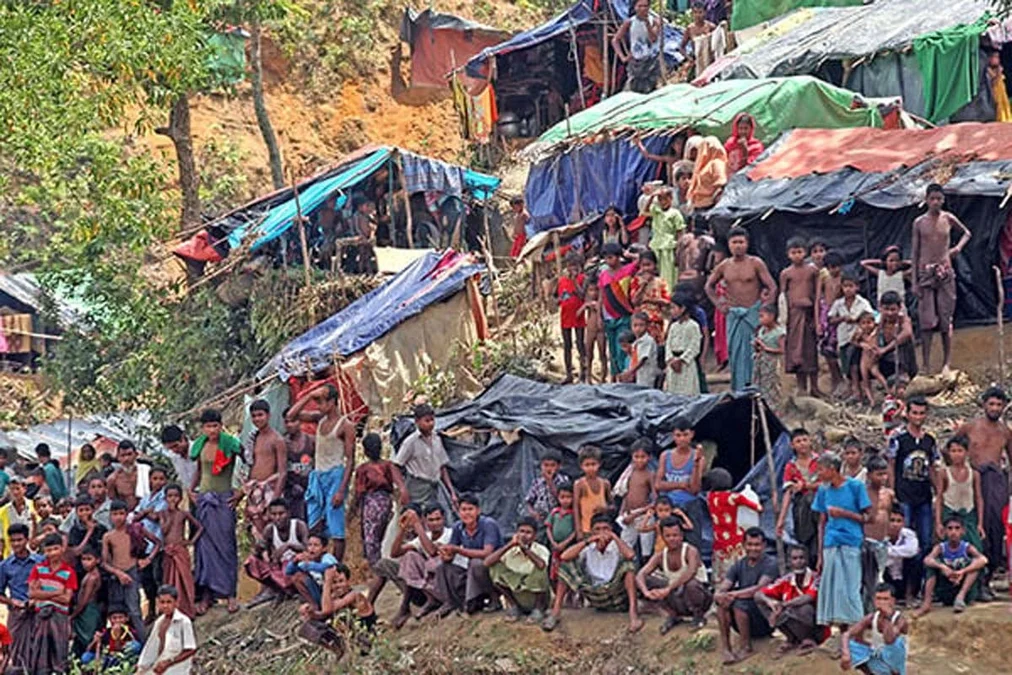
Among the districts, Cox’s Bazar — particularly Ukhiya and Teknaf — is expected to experience the worst food crisis, with 30% of its population likely to face acute food insecurity.
In Cox’s Bazar and Bhasan Char combined, about 40% of the Rohingya population is projected to fall into crisis or emergency levels of food insecurity by December.
The report urged prioritizing life-saving humanitarian assistance, strengthening nutrition services and monitoring, expanding agriculture and fisheries support, and ensuring continuous surveillance of the situation.
The IPC report was presented by Md Moinul Hossain Rony, Food Security Cluster Coordinator (FAO and WFP Bangladesh), and Mohammad Ruhul Amin, Nutrition Cluster Coordinator (UNICEF Bangladesh).
Mostak Hossain, Director (Humanitarian) at Save the Children in Bangladesh, spoke on the significance of the IPC initiative.
13 Districts at Risk of Food Crisis; Cox’s Bazar Most Vulnerable
The “IPC Analysis Report on the Acute Food Insecurity Situation in Bangladesh”, released yesterday, analyzed food security conditions among more than 96.6 million people across 36 districts.
The report confirmed that no area in Bangladesh is currently facing Phase 5 (famine) or is at risk of it.
From January to April, no district was in Phase 4 (emergency), but by December, the Rohingya population in Cox’s Bazar and Bhasan Char could enter emergency-level food insecurity, affecting over 360,000 people.
The report separately highlighted food security risks for January–April and May–December.
Between January and April, about 15.5 million people across 16 districts (including Rohingya populations) were in Phase 3 (crisis).
Between May and December, 13 districts are projected to have 16 million people in the same phase.
The most affected districts are:
Barguna, Bhola, Patuakhali, Bandarban, Rangamati, Bagerhat, Satkhira, Jamalpur, Sirajganj, Gaibandha, Kurigram, Sunamganj, and Cox’s Bazar.
In Cox’s Bazar — both in Rohingya camp areas and non-camp localities — the general population is expected to face worsening food shortages.
About 30% of people in the district are projected to experience food insecurity, while 40% of Rohingyas may face crisis or emergency conditions by December.
The report noted that food insecurity has improved in Noakhali, Habiganj, Moulvibazar, and Sylhet, moving from Phase 3 to Phase 2 (stressed).
Conversely, Bagerhat, which was in Phase 2, has now entered Phase 3 (crisis).
Compared to the 2024 IPC report, the overall food insecurity situation has slightly improved.
Last year, between October and December, 24% of the population faced a food crisis, and 2% were in an emergency phase.
The report attributed the food insecurity in many districts to floods, cyclones, river erosion, and other natural disasters.